Is Working in Higher Ed Still Worth It? Navigating Career Stability in a Shifting Academic Job Market
The question of whether working in higher education is “worth it” has never been more complex. Academia has long been considered a bastion of stability—a place where skilled educators and administrators could build long, secure careers.
Today’s shifting landscape, marked by declining enrollment, funding hurdles, and a rapidly changing academic job market, has many educators and administrators questioning whether the traditional promise of a secure career still holds true. This shifting reality raises pressing concerns and makes the future of careers in higher ed feel more uncertain than ever before.
According to the Bureau of Labor Statistics, employment of postsecondary education administrators is projected to grow 3 percent from 2023 to 2033, slightly below the average for all occupations at 4%. On average, about 15,200 openings for postsecondary education administrators are projected each year from now until 2033. At the current pace, only 6,200 new positions are expected to be added by 2033. In contrast, the BLS projects that the growth of other management occupations during the same period will be double that rate, at 6%, resulting in 227,600 new positions. For context, the total number of postsecondary education administrators in the U.S. in 2023 was 216,400. For educators ready for a change, the opportunities are out there.
The Erosion of Traditional Stability.
Tenure-track positions once represented the gold standard in job security. Today, institutions increasingly rely on adjunct faculty and temporary contracts. This trend, driven in part by budget cuts and institutional restructuring, has created uncertainty about job security, even for those with long-established roles.
According to a “data snapshot” in Academe Magazine, the U.S. academic workforce has undergone a significant shift, transitioning from a majority of full-time, tenured, or tenure-track faculty to a primarily contingent workforce. This includes full-time non-tenure-track instructors, those in positions with no tenure system, and part-time faculty. In Fall 2021, over two-thirds (68 percent) of faculty members at U.S. colleges and universities held contingent positions, compared to about 47 percent in Fall 1987. Furthermore, nearly half (48 percent) of faculty members were employed part-time in Fall 2021, up from about 33 percent in 1987. Only 24 percent of faculty members held full-time tenured appointments in Fall 2021, down from about 39 percent in Fall 1987. This shift underscores the need for professionals to be adaptable and open to new opportunities.
Opportunities Hidden in Uncertainty.
While volatility poses challenges, it also brings new opportunities. Higher education is evolving to meet the needs of an increasingly diverse student population and a technology-driven landscape. For instance, in 2021, 61% of college students enrolled in at least one online class, with 28% taking courses exclusively online. This trend indicates a growing demand for professionals skilled in online learning
Similarly, technological advancements, shifting demographics, and changing economic conditions are driving the need for analysts who can evaluate trends and develop strategies for student enrollment and retention.
As higher education institutions rely more on data to enhance student outcomes, optimize resource allocation, and improve overall efficiency, the demand for Institutional Research Analysts is projected to grow by 23% by 2033.
The Importance of Transferable Skills
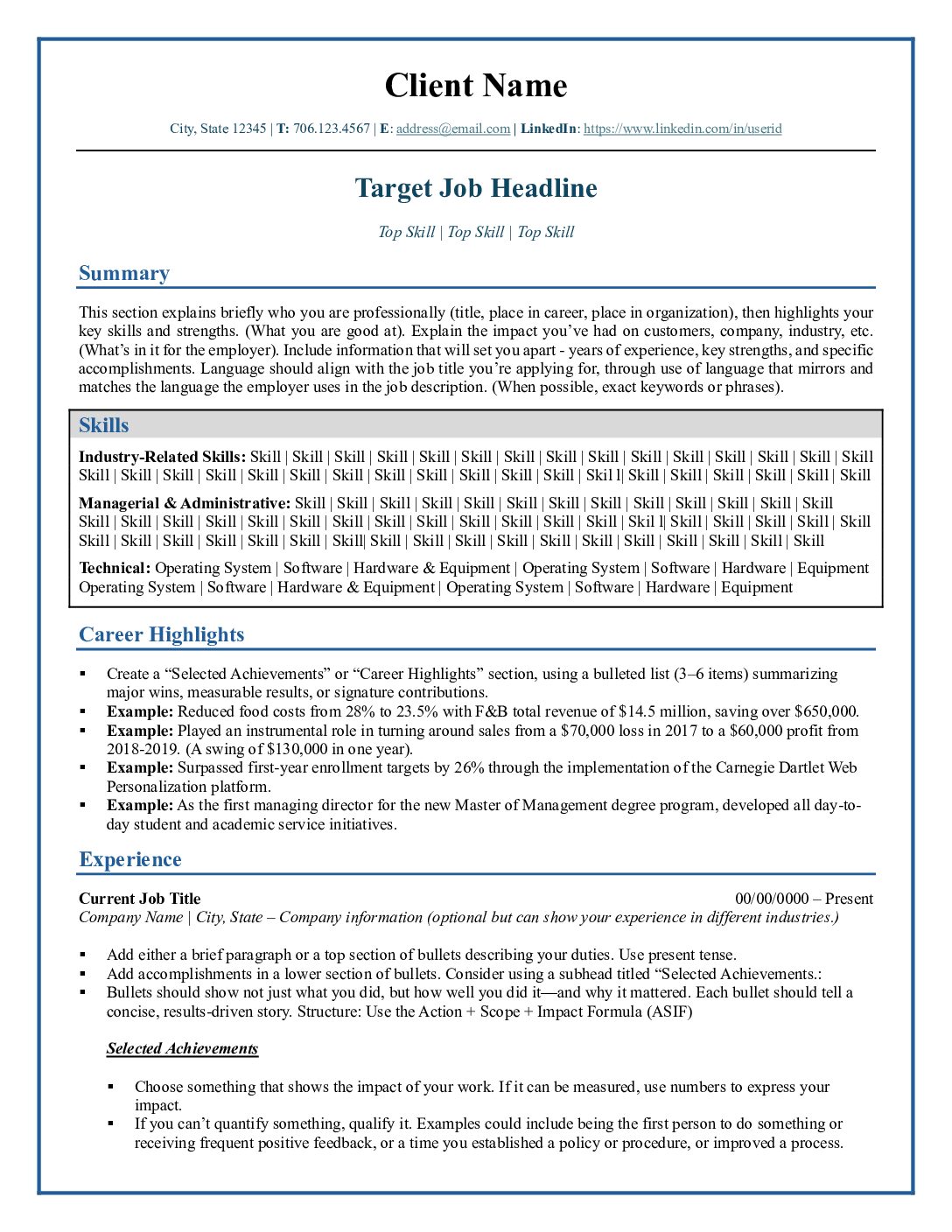
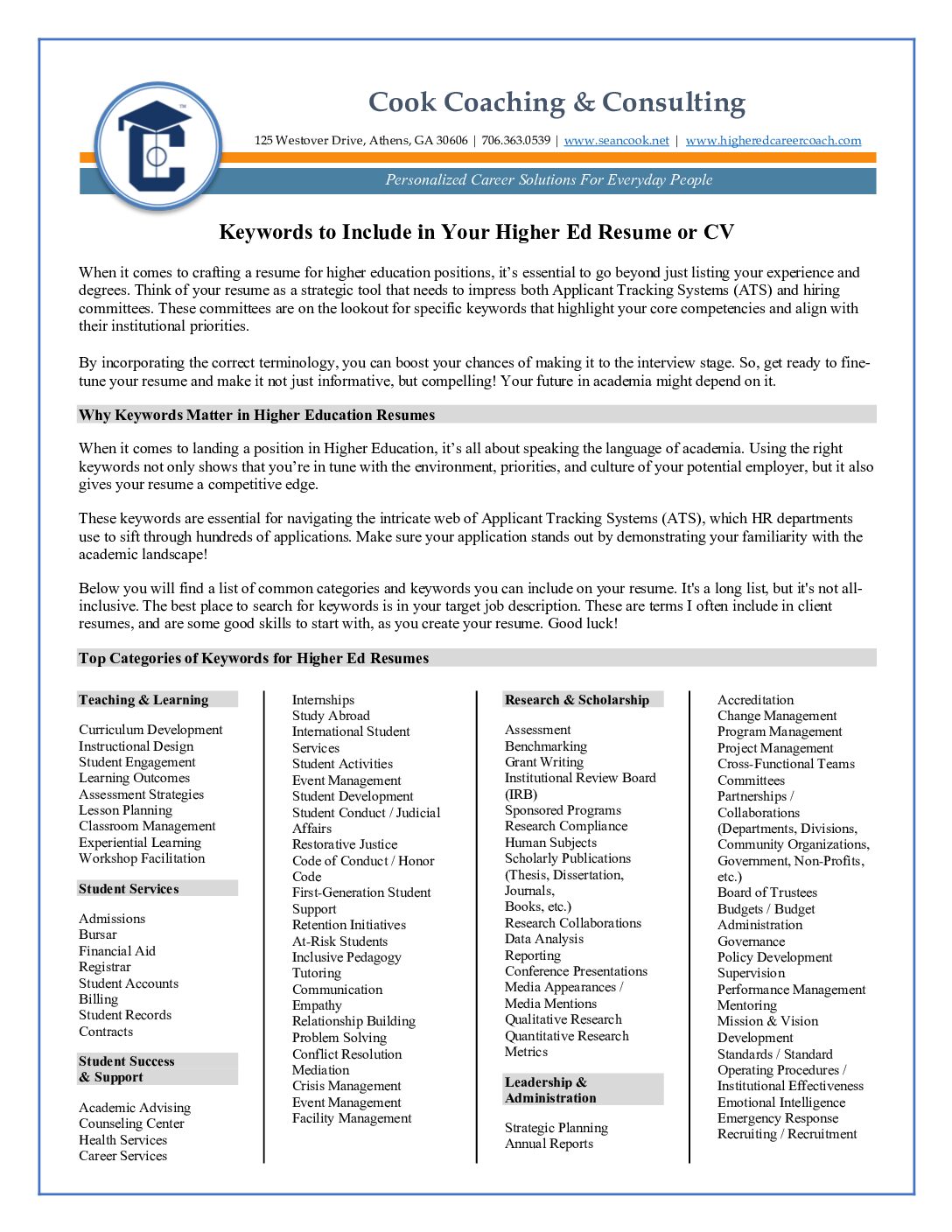
Transferable skills are your secret weapon in the ever-changing job market. These are abilities and knowledge that can be applied across various roles and work environments. Examples of these skills include communication, problem-solving, leadership, and adaptability. Employers highly value transferable skills because they demonstrate a candidate’s potential to succeed in different positions and handle new challenges effectively.
In today’s ever-changing job market, adaptability is crucial. Many skills developed in academia, including critical thinking, project management, research, and communication, easily translate into roles in corporate, nonprofit, and government sectors. Identifying and promoting these abilities can significantly broaden career opportunities beyond the campus gates.
Questions to Ask Yourself
- Am I prepared to pivot if my role changes or disappears?
- What skills do I have that are in demand outside academia?
- Does my current position align with the future direction of higher ed?
Final Thoughts
Higher education can still be “worth it” for professionals who are proactive about career planning, continually developing their skill sets, and open to exploring roles both inside and outside the academy. The crucial point is not to rely on the old promise of security but to create your stability through strategic career management.
References:
Bureau of Labor Statistics, U.S. Department of Labor, Occupational Outlook Handbook, Postsecondary Education Administrators, at https://www.bls.gov/ooh/management/postsecondary-education-administrators.htm (Accessed 12 Aug. 2025).
Bureau of Labor Statistics, U.S. Department of Labor, Occupational Outlook Handbook, Top Executives,
at https://www.bls.gov/ooh/management/top-executives.htm (Accessed 12 Aug. 2025).
Colby, Glenn. “Data Snapshot: Tenure and Contingency in US Higher Education.” Academe Magazine, www.aaup.org/academe/issues/spring-2023/data-snapshot-tenure-and-contingency-us-higher-education. Accessed 12 Aug. 2025.
National Center for Education Statistics. (n.d.) Fast Facts: Distance Learning. Retrieved August 13, 2025, from https://nces.ed.gov/fastfacts/display.asp?id=80#:~:text=Distance%20education1%20courses%20and,remained%20higher%20than%20fall%202019.
Bureau of Labor Statistics, U.S. Department of Labor, Occupational Outlook Handbook, Operations Research Analysts,
at https://www.bls.gov/ooh/math/operations-research-analysts.htm (Accessed 12 Aug. 2025).
“Unleashing The Potential: Transferable Skills Explained In English.” Proceffa, 15 Apr. 2023, proceffa.org/unleashing-the-potential-transferable-skills-explained/. (Accessed 12 Aug. 2025).
Garganta, Rosemarie G. “From Job to Job: The Power of Transferable Skills in Career Transitions.” Columbia University School of Professional Studies, https://careerdesignlab.sps.columbia.edu/blog/2024/10/03/from-job-to-job-the-power-of-transferable-skills-in-career-transitions. (Accessed 12 Aug. 2025).