This week, I’ve been putting out articles on Interview Ecology, and exploring the risks and benefits of introducing the “new and shiny” into the process. We’ve considered whether bringing a iPad into an interview is akin to bringing an invasive species into an eco-system.
This ecosystem approach relies heavily on the idea that anything that distracts or disrupts may destroy the delicate balance of a search process, and bring up dissonance in respect to person-environment fit, resulting in a candidate not getting a particular position.
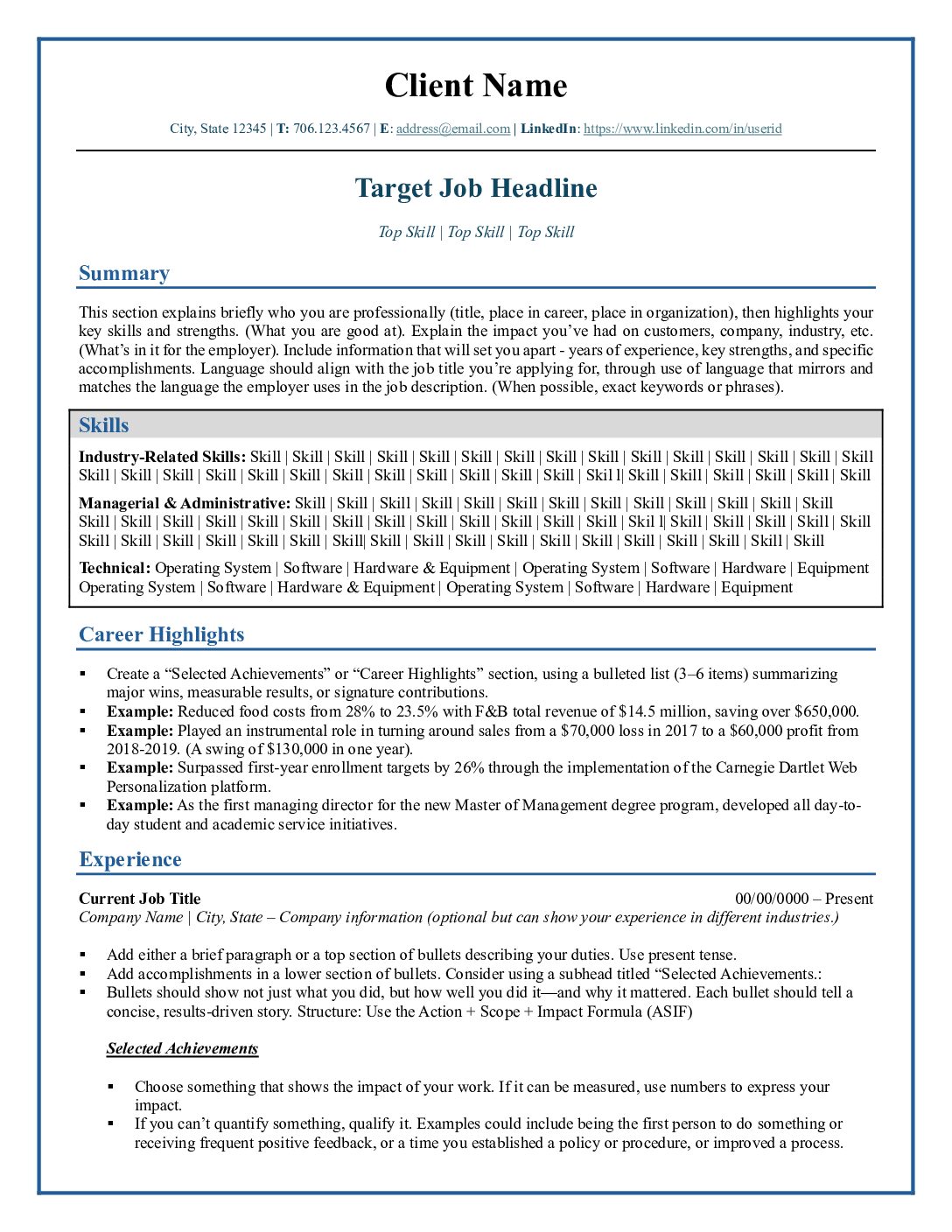
Which forces me to bring up a particular pet peeve of mine: the all-the-sudden popular and ugly-as-sin QR code. I hate them, because like many fads, most people rushing to use them don’t understand how to make sure they add value to the experience. In general, I feel that most people might as well take a poop on their résumé as put one of these on it, because adding a QR code without adding something of value to the “interview ecosystem” is well…just a load of crap.
I’m already anticipating the response from candidates and tech geeks who think these things are cutting edge and allow a new layer of interactivity that wasn’t possible before. Well, I call bullshit. Scanning these blotches into a smartphone just allows lazy people to avoid typing a URL into their browser, as if the 20 seconds of time spent doing so will add up, like all the partial pennies Richard Pryor dumped into his bank account in Superman III, and will result in the résumé screener having a richer, more exciting , and complete view of the candidate.
Bullshit. Bullshit. BULLSHIT.
The same can be achieved by pointing someone toward a regular URL or hyperlink. QR codes only add new functionality to a paper résumé, which you probably aren’t viewing anyway. And anyone with half a salt lick of sense in their head can run a long URL into an URL shortener. So if space on the résumé is your major concern, that’s no argument, either.
Now, I will admit upfront to being a résumé geek and a purist. I don’t believe all the hogwash people throw around about résumés going away. Advances in technology and social media are just changing how they are delivered. And nothing takes away from the basic truths at play:
Your résumé needs to be targeted toward your industry, level of experience, and the level of position you are seeking.
It needs to be scannable (visually scannable)
There has to be a sense of logical and visual flow that draws a reader in, and keeps them reading and scanning. And…here’s the big one…
It needs to be attractive and not full of distracting bullshit.
I had a client recently work with me on his CV and he had a QR code on it, at top right. I asked him why it was there. He replied that he wanted to show himself as cutting edge and tech savvy. So I asked him where the QR Code goes, and what value was added by putting it on there. And…wait for it…it went to an online pdf copy of his CV!
We talked a bit and I told him I didn’t see the point of having it there, if it only went to his CV. He was really tied to keeping it there, so we came to a compromise position. He had also been updating his LinkedIn profile, which had some great recommendations on it, and some other links to relevant information. So we decided to point it there, because doing so added some value to the equation. The result: the QR code went from being poop on his résumé to being rich compost instead.
My criticism of his strategy should not be equated with a critique his level of technical savvy or his readiness for the type of job he was applying for, and I’ve told him as much. In fact, I think he’s a great candidate, or I wouldn’t be working with him. I don’t work with clients I don’t believe in, because that’s not fair to people on either side.
Ultimately, I’m grateful for the perspectives his situation has given me, and what it allows me to share with you.
Here are the big take-aways:
New technology is great, and showing comfort with it is just fine. But using tech badly could actually hurt your candidacy. Make sure that your use of technology is appropriate and that there is a clear point to using it (like adding interactivity or pointing to recommendations or portfolio work.)
If using a new way of doing things distracts from your design, content or flow, you really need to weigh the risks of using it against the value added. And if you can’t do this on your own…
It pays to talk this sort of stuff out with a trusted friend, advisor, or career coach.
What do you think? Tell me in the comments.
Did You Enjoy This Post?
Please take my reader survey and tell me what you think about Higher Ed Career Coach. It’s 11 questions and shouldn’t take long. Also, SurveyMonkey will be selecting one recipient at the end of June to receive a $25 Amazon gift card. So give your feedback and get a chance to win!
Today’s institutions spend a lot of time assessing environments and making sure they understand them, so that people will feel comfortable and welcome. We also spend a lot of time struggling with ways to promote sustainability and integrate new technology into our approaches. So let’s crash these concepts together to examine the ecology of the job search, and apply the resulting framework to different aspects of the job search.
(This is one of those moments when I’m going to get a little de-constructionist, so if you are not interested in the theory behind this strategy, come back later this week, as we explore some particular issues and strategies you might take when working through them and making intelligent career choices. I’ll try to come full circle by ending with some more practical to-dos for those who don’t care about theory.)
Interview Ecology: Definition
One of the great things about mashing up concepts into something new is that you can make up a term to describe the new concept. So I’m going to call this interview ecology: the study of the co-created environment that exists when persons interact with each other during a search process, and the impacts on the shared environment, when new variables are introduced.
Key questions for consideration
If the job search process is an ecosystem, how could we describe the “natural environment” which exists before we introduce humans, interactions, and other variables?
How will the introduction of a new variable affect the environment and the people in it?
How could each human player in a given job-search ecosystem control the introduction of new or unexpected variables into the process, and limit any adverse impacts on the environment?
What new variables might be considered “invasive” (i.e., not present in the “natural environment” of the job search, and creating an imbalance that disrupts or destroys that environment)?
How should one evaluate the risks and benefits of introducing a new variable into a search process?
Did You Enjoy This Post?
Please take my reader survey and tell me what you think about Higher Ed Career Coach. It’s 11 questions and shouldn’t take long. Also, SurveyMonkey will be selecting one recipient at the end of June to receive a $25 Amazon gift card. So give your feedback and get a chance to win!
I recently had a discussion with a fellow coach as part of the Third Tribe Marketing membership site, which connects small businesses with some of the top minds in social media and marketing to help them learn ways to build authority, increase their credibility and get more business.
The discussion was about saying “no” to some commitments so he could concentrate on his business. He was having an awful time doing so, and I could definitely relate to where he was coming from. Like most of the people I work with (and like me!), he has multiple passions and only so much time.
His question was about deciding what to quit and when to quit it. I get it. When you have a business, and want to have a life beyond it, it makes no sense to keep on doing the wrong things, or dividing the time you need to spend on the right things. I suggested that maybe he just needed to re-balance his priorities.
There was a time when I worked at Penn State’s Smeal College of Business, and was responsible for running a student organizations office that supported 32 student groups. I advised four of these directly, and assisted the other 28. I also coordinated the work of the committees for all of the college’s major student events, including a scholarship committee, two award ceremonies, and all of the major leadership and professional development events.
I left that job and went back to Residence Life. In my first position back in that department, I supervised professional staff, planned training events for student and professional staff, created publications, and was responsible for 11 major department tasks and committees, including oversight of a resident assistant training class with 4 to 7 instructors and 70-120 students each semester; admissions events; orientation; welcome week; assessment and writing the department’s annual report. I had so many things on my plate that half the time I met with my supervisor, we talked about what I had been doing lately, and the rest, we tried to click through in our heads all the things I was supposed to be doing, because neither of us could keep up.
Now those were busy jobs. Many people have busy jobs, and those were the duties. I knew that going in. These types of positions are classic student affairs jobs…you wear many hats, largely because of interesting institutional priorities and lack of funding to actually hire an appropriate level of support staff.
Anyway…
What I did in my “free” time was up to me.
Did I relax?
You tell me. Here are a few things I spent my “free time” doing during that period:
Serving on the “nominating committee” for my church to recruit people gullible enough to want to be on the board, or who could be guilted into it.
Acting as student outreach chair and advising the Penn State student group related to the church (yeah, another group!)
Teaching a 26-week sex ed course at the church for junior-high-level kids (10 of them) where they learned about not only plumbing and mechanics, but assertiveness skills, understanding sexual orientation issues, and discussing their values and the role they play in decision-making. (Did I mention this was an unpaid position? My standing joke is that this is about as close as an Unitarian can get to sainthood!)
Serving on the fundraising and events committee for a new non-profit that saved an old movie theater and converted it into a performing arts center. In this capacity, I helped plan a couple of concerts, a 5K and a certified mile race, and helped with open houses during the yearly arts festival.
I also took up gardening, got back into home brewing, and helped found a home brewers club. I was secretary of that group for a while.
Somehow I fit it all in. And for a while, it was okay. Then, I got promoted, had a different scope of responsibility, and my wife and I started a family. I supervised more people, had fewer work responsibilities, but ones with more impact on other people, and I had to learn to say “no” and to let some things go, and scale back commitments to others.
Eventually, I hit a wall with stress, being a new dad, and dealing with everyone else’s needs for my time and energy. I had a health issue crop up, and things got much harder to deal with. Only then did I learn to say “no.” It’s not selfish to take a step back if you need to do so. At least not in the unhealthy, guilt-wracking way most people think about it. Instead, think of it as “self-preservation,” because that’s what it is, really.
I won’t say I did it without encouragement and support from the right people. First, my family. My wife Sarah insisted I stop ignoring my obvious health issue and go to the doctor. My doctor insisted I see more doctors. And my supervisor told me in a meeting that she would support a personal leave of absence. I resisted for a while, but eventually realized I needed to step off the stress train and go look at some trees and grass and get right with how I was taking care of myself and with how I was viewing my work, my life, the world, and my place in it.
Here’s how I did it.
I started saying “I have some other things to deal with right now, and I want to take some time to sort out my personal priorities, so I will be scaling back some duties and not continuing with others.”
I offered to help with an orderly transition of tasks during my leave, and I did so.
Then I left, turned off the cell phone, stopped looking at work e-mail, and spent a few days all by myself at a state park lodge in Berkeley Springs, West Virginia. It was the best thing I ever did for myself. Looking back, I realized I hadn’t given myself enough opportunities for comparison.
That period let me adjust my approach to work and family, and my priorities started to settle themselves out. I spent more time developing my staff, and less time criticizing them; more time talking with students instead of just at them and near them, and I started going home on time to be with my family, work in the garden, enjoy downtime, and think about the kind of person I wanted to be. It led me onto a path toward coaching, and eventually to this group.
Here’s where you have to be bold and unapologetic. I was established at Penn State, and comfortable. You might even say complacent. I’d “topped out,” and after a few searches for the next rung up the ladder didn’t work out, I realized several things about my situation that I hadn’t reflected on enough. First, my opportunities to move up internally, which had been regular and self-sustaining for almost 15 years, dried up. Second, I had moved through the hard transitions of the previous couple of years, and was in good stead with my colleagues and supervisor. Third, the organization was most comfortable with me at the place in the organization I held at that time, and both of us were losing out on growth opportunities because of it.
That’s when I realized my priorities were hopelessly out of sync with where I wanted to go in my life and career. So I took a leap of faith, and went there anyway. It meant leaving my job, moving away from a place I had called home for 15 years, and making new friends. I left at a weird time of the semester (about 5 weeks before Winter closing.) I didn’t want to leave then, because of the weird employment gap it left, and how some people would interpret it. But we had bought a new house, had a buyer for the old one, and I really didn’t want to move from Pennsylvania in December, anyway. So I planned my transition as cleanly as I could, left the lines of communication open, and stepped boldly into creating my own life and career.
I realize that for many, this would have been completely insane. For me, it was only mildly so. I had savings and investments to lean on, the support of my family, and a plan B. (I moved to a college town just in case I needed a more stable stream of income, and I keep the lines of communication open with my old colleagues, supervisor and references, in case I need to get that next job.)
I’ve concentrated my efforts on being recognized as a likable authority in relation to higher education careers. I’m learning to provide content that enhances that reputation and build testimonials that will speak for me. I know I talk too much and that it annoys some people. I can only say I’m working a little on it, and the rest is just who I am. If you respect the value of my advice, knowledge and skills you’ll move past it. What content “expert” isn’t a little bit of a pain in the ass every now and again?
But I’ve digressed, so let me return to you and hopefully help you to focus your efforts: My questions for you are these:
If you can’t fit your priorities into your life, is it your life or your priorities that are the problem?
How could you re-order them without “throwing out the baby with the bath water?” My bet is that you can. And if you are going to get where you need to get, you must.
So which needs and priorities are you going to feel worst about not meeting: yours, or those of others?
What’s the role of faith (in yourself, or something greater, or both) in your career? And how do you know when it’s time to “take a leap?”
The other truth you need to embrace, if you are to move forward, is that the world doesn’t rest on your shoulders. The programs you support will go on, if people are committed to them. You can still be involved in a lesser role if you want to be. You can do your own thing, without walking away mad, or burning the bridge behind you.
To think any less is to imprison yourself by meeting someone else’s expectations. Let them go. Focus on your own. You deserve to be happy and get where you are going.
Do you like this article? If so…
Have new items from this blog delivered to your inbox, so you won’t miss anything! Plus, get special subscriber-only content, special offers and discounts. Click ” target=”_blank”>here to subscribe
Discussing salary is easily the one part of the job search process that causes candidates universal anxiety. One of the search terms that job-seekers look up, before arriving at this site, is “tactfully asking about salary.”
Since asking about salary is such a nerve-wracking experience, here are five ways to find out about salary without asking (or at least asking outright).
Refer back to the job posting and see if a “salary range” is indicated. Anticipate that most hiring agents will make an offer between the minimum and the mid-point of that range, with early-career candidates being offered closer to the minimum, and more experienced candidates being offered toward the mid-point. In very few cases should you expect an offer to be made above the mid-point; organizations want to hire people who can grow into the position before their salary expectations outgrow what the organization can pay. It’s a question of value: no matter how good you are in general, they have placed a maximum value on what the work at that level is worth to the organization. If you need more than that, don’t apply for the job.
Visit the Human Resources website for the institution and see if there is a section with information about salary, compensation and benefits. In this section, search for the terms “pay scale,” “salary bands,” “pay grades,” “salary grades” and “salary levels.” If the institution has this sort of system, see if you can find level at which the position is classified; this may be listed in the posting. Public institutions are more likely to have this information posted, since many states require that information about employee pay scales be released to the public. If you do find these listed, refer back to the advice from #1 and figure the pay will be between the minimum and mid-point.
Ask someone who works at the institution, but outside the hiring circle for the department where you are applying. If you can find such a person in the same department, or who holds (or has held) a similar position (in title or pay band), they should be able to at least give you context about what they make, and may be able to give you some context based on that experience. They may also have access to internal systems where they can see different information than the general public (like new employee manuals, benefit guides, etc.)
Call someone at Human Resources and ask what the “typical” hiring range is for a position at that title and grade. Indicate that you believe you may be interested in the position but don’t want to waste anyone’s time (theirs or yours) by applying to a job you can’t afford to take. As long as you say it diplomatically and convey that you are asking for those reasons, you’ll likely be fine, in the eyes of Human Resources. It shows that you are a serious candidate if you do apply.
Google it. You never really know what you might find out. Try “salary range” for “title,” and “institution,” and see what comes back. I did this for several positions and the search returned recent job listings, with salary information, a couple of perspective pieces by student affairs professionals about jobs and salaries, and one site called GlassDoor.Com, which lets you search for salaries by job title. (That would’ve been a number 6, I guess, but I didn’t want to change the title of the article.)
Whatever you choose to do, I advise against asking outright about a specific salary number, related to your candidacy, until you have been made an offer. When you are offered a job, a starting point for the salary discussion will be included in the initial offer. Don’t react to the first number you if you can help yourself. Just ask how they came up with the number, and why they feel it would be a fair offer, given your education, skills and experience. Then take some time to think about whether the offer is fair. If it is, you can take it or maybe see if you could make a counter-offer to see if you could do a bit better. But if you are happy with the salary, there’s nothing wrong with just taking it and getting to work. If you aren’t, go back with a counter offer, but be sure to base it on the value you will create for the employer (i.e., how you will earn the higher salary through hard work and productivity.
What other ways can you think of to “ask without asking?”
Some good resources to help you explore ways to approach salary negotiation:
Every once in a while, you meet someone who has a definite impact on you. It could be because they are kind and encouraging. It could be because they are damn smart. In the case of Ann Marie Klotz, it’s both.
I had a great opportunity last week to interview Ann Marie, a doctoral student from DePaul University (and Director of Residential Education at that institution) about her thoughts on a couple of great topics. The first topic, “Trusting the Job Search Process” was the subject of last week’s podcast, and it was well-received by listeners and came well-recommended by several other higher ed aficionados, including Eric Stoller.
Our conversation covered a lot of ground, and I was able to ask her about another article on her blog, annmarieklotz.wordpress.com, related to her doctoral dissertation research, which examines roadblocks that women commonly experience in climbing the ranks toward a university presidency. “Understanding Our Impact” delved into ways that higher education professionals can reflect on the ways our influence stays with students well beyond their college years, and is based on Klotz’s reading about the reflections of female university presidents on their college experiences, and the role of mentors in supporting or discouraging their achievements.
Work with Sean. I help higher ed professionals take control of their careers with tailored services including resume and CV development, LinkedIn profile optimization and networking strategy, interview coaching, and one-on-one career guidance.



 I recently had a discussion with a fellow coach as part of the
  Discussing salary is easily the one part of the job search process that causes candidates universal anxiety. One of the search terms that job-seekers look up, before arriving at this site, is “tactfully asking about salary.”
 Every once in a while, you meet someone who has a definite impact on you. It could be because they are kind and encouraging. It could be because they are damn smart. In the case of Ann Marie Klotz, it’s both.