by sean@higheredcareercoach.com | Feb 12, 2010 | Career Skills
 Yesterday’s #sachat(s) on the student affairs job search and placement were very informative and it was great to see so many people eager to help all the job seekers out there. I was especially excited, because, well…this is one of my “things.” I like helping people with their job searches. It really gives me a sense of satisfaction to talk with people, or to help them with their resumes, cover letters and graduate school apps/statements of purpose. In the same spirit, this edition of Take 5 features 5 great resources on the web to assist job seekers with their searches.
- First, #sachat and the Student Affairs Collaborative Blog. This is a great community as well as being a source of information on Student Affairs, Higher Education and Collaborative Learning. #sachats happen each Thursdayt at 1 pm EST and 7 pm EST, and anyone with a Twitter account can join in by hash-tagging their tweets with #sachat. You can use Twitter Search, TweetGrid, or any popular Twitter client that supports hashtag searches.
- One of my favorite career sites is Career Adventure by Kristi Daeda. She always has great advice and resources, like the section of the site on Resumes and Porfolios. There are several good articles in there about CVs vs. Resumes, including When a Resume Just Won’t Do: Writing Your CV
- The Author in Residence Articles on HigherEdJobs.Com is a great new series that everyone should check out.
- BusinessCard 2.0 is a pretty sweet site that lets you create a business card with some interactive features. You can put in a bio, share your social networking sites and links and more, including embedding it on your blog or web page. Visitors can interact with the widget, flip through the mini-pages, send you a message, or download your vCard, all without leaving your web site. You can view my BusinessCard 2.0 here. I will be embedding in my sites soon.
- And lastly, a plug for something I am offering a Free Group for Student Affairs Job Seekers. This will be limited to 10 or so people and the group will meet each week via teleconference call to share questions, advice and support as they move through their job searches. To register, go to the event registration form here. The small size of the group should allow for good conversation and sharing. I am offering it for free so I can get some practice with coaching groups, and yes, I am offering it for free. In the interest of full diclosure, I will share information about my individual coaching services wiht participants, but I have promised also to not “hard sell” anyone, because a) I hate that crap, and b) if I am helpful as a coach, that pretty much speaks for itself, and will hopefully lead to referrals and eventually, to paid clients. This whole business thing is new to me, so please bear with me as I figure out how to do all this business stuff the right way.
Thanks for reading. Please come back soon for more articles and resources, including the periodic contributions of guest bloggers Bryan Koval (on his doctoral program experience) and Shannon Healy, on her search for her first full-time position in Student Affairs.
If you are interested in guest blogging about a subject related to Higher Ed/Student Affairs careers, please contact me at sean@higheredcareercoach.com or via tweet to hiedcareercoach.
by sean@higheredcareercoach.com | Jan 29, 2010 | Job Search, Take 5
 In my last post, I gave somewhat of an overview of major placement conferences for candidates in Student Affairs. In this post, I hope to share a few tips for all you Higher Education/Student Affairs job searchers out there who are attending a placement conference this season.
During my 15-year career in Student Affairs, I was on both sides of the interview table at placement conferences and can offer you some perspectives that will hopefully set you at ease and help you be more confident and more prepared.
Save your money now. These things can get expensive!
- Ask your employer if professional development funds can be spent to attend a placement conference. For many institutions, the answer will be “no,” and you shouldn’t be surprised or offended by this. It’s just where many employers draw the line in the sand. Institutions give PD money to help their employees learn new skills and enhance their skill sets, but it’s not realistic to expect your current employer to help you find a new or better job.
- Find a roommate (or two or three) to share lodging expenses. The nightly rates at convention hotels are usually pretty moderate. (For example, nightly rates at preferred hotels for this year’s ACPA convention range from $199/night for a single room to $259 a night for a quad.) And don’t forget about parking, which will probably be in the $35/$40 per night range, or taxis and shuttle service to and from the airport if you are not driving in.
- If you have your own transportation and can find a less expensive non-conference hotel near public transit, then drive, or take the bus, and save some money.
- Take advantage of free in-room coffee and free continental breakfasts (if your hotel has them). It’s also easier than you might think to find yourself skipping breakfasts or unwilling to fight the teeming throngs trying to get breakfast at the same time. It’s also a good idea to bring snacks to your room, in case you are pressed for time and need to eat and run.
- Bring a water bottle and refill it when you can rather than buying drinks at hotel/convention center prices.
Have all your ducks in a row before you get there.
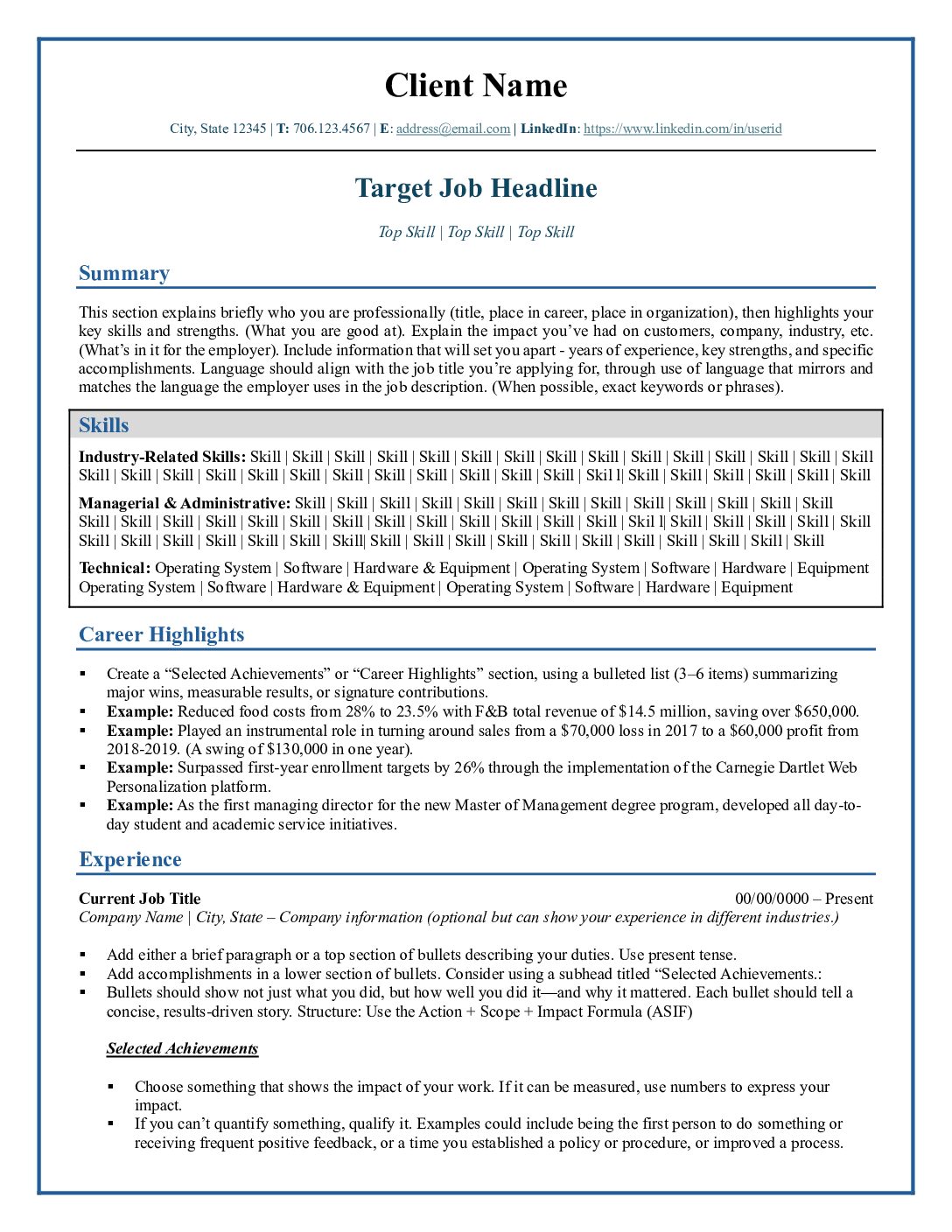
- Make sure your resume is impeccably written, targeted toward the positions you hope to apply for, grammatically correct, well laid-out, and easy to read. Placement centers will give you a candidate number. Make sure it is on your resume and that all pages stay together. Staples are fine at a placement center. Take a stapler and use it. When an interviewer has a huge pile of resumes and interview forms and brochures and giveaways to deal with, the last thing they want to do is spend their time searching a pile of loose papers for one errant page of your resume that got separated from the rest, because your paper clip slipped off.
- Speaking of candidate numbers, many candidates these days make a personalized message to employer forms that give a brief statement of interest and leave room for the candidate to write in the employer number and the posting number on the form. If you do make your own, consider using colored paper. It stands out. As a conference interviewer, I always liked these, as long as messages were brief and concise. They also helped me find a candidate’s packet more easily.
- Make contact ahead of time with potential employers about listings posted before the conference. Ask to pre-arrange an interview for your position of interest. Many employers pre-arrange a significant number of their interviews when possible.
- Make sure all your references have been prepped about your goals for the placement exchange, any positions you are planning to apply for, and your reasons for applying for certain types of positions.
Be on Your Best Behavior. At All Times!
- It won’t matter how you are dressed or how you interview if you make an ass out of yourself in some other way. Some do’s and don’ts:
- Do:
- Come prepared for each interview
- Be friendly to the interviewers and to other candidates
- Stay positive
- Thank your interviewers for their time at the end of the interview
- Network with other candidates and encourage them in their job search
- Use the preparation table areas to organize your thoughts and your materials
- Wait a few minutes if the interviewer is running late. Since most interviews run for about 30 minutes, you should feel free to go after 10 minutes. But these are very busy days and people do get off-course. If you have back-to-back interviews, let the interviewer know.
Don’t:
- Schedule back-to-back interviews (if you can help it). You’ll need time to get from one place to another and you will periodically need a break.
- Badmouth, make fun of, or make rude comments about an interviewer, a university, another candidate, your boss, your current employer, or basically, anyone. This means in the placement center, the hotel, the lobby bar, the McDonald’s across the street…wherever. If you need to vent or talk out frustrations, go to your hotel room and talk with your conference roommates or call a friend or family member on the phone. For everyone else, act like it’s raining daisies and nothing could be finer.
- Stay in the placement center all day (especially if you are not especially busy at some given time with interviews.) This can lead you to think too much, stress out, and get down on yourself. You will need fresh air and walking-around time. Take it.
- Flirt with your interviewer or other candidates, make inappropriate jokes or off-color comments or go on and on and on about how many top scholars you know in the field. It’s boorish behavior and it will count against you in the eyes of many employers.
- Expect to leave the placement center with a job in hand. Most universities just don’t work that way. There are human resource guidelines to follow, and many student-services positions really like to involve students, colleagues in related departments, and upper administrators in their selection processes, and it’s unlikely that all of these parties will be represented on the interview team.
Learn Something!
- If the placement center is part of a longer conference with professional development sessions, go to some! They are great places to network, you might learn something new that leads you to explore additional opportunities, and you will need a break from the placement center.
- If you have the option of talking about your career or some topic of interest with more experienced professionals, do it. Sometimes, these opportunities come up in sessions. Sometimes, they come up on the sidewalk, in a restaurant or at a volunteer post.
Volunteer!
- Volunteering is a great way to get informal opportunities for networking, to learn how the conference is organized, and to be of service to other candidates.
- It’s also fun. Did I mention that you are likely to need a break from interviewing? This is one way to take a break but depending on what you volunteer for, you may end up volunteering in the placement center. Just be sure that you are doing it during an actual opening in your interview schedule!
Best of luck to everyone interviewing this season!
by sean@higheredcareercoach.com | Sep 10, 2009 | Take 5
This week, I’ll wander away a bit from higher ed-specific sites and concentrate on careers. Here are five links to sites and articles with great career advice and perspectives. Enjoy!
My Nine Careers: Lessons Learned Career coach Marty Nemko shares his meandering career path and some simple lessons he took away from them.
Going Above and Beyond: Distinguishing Yourself as a Job Seeker What can you learn about going the extra mile from buying a laptop at Staples.
Screw Your Career Path, Live Your Story by Jason Seiden is a thought-provoking piece that may help shift your thinking about careers.
The Ladders has a great article about how Volunteering can pay off in your job search.
and for some basic interview advice, slanted toward working in student affairs. . . here’s a post I wrote for the Student Affairs Collaborative Blog last April… “They Wouldn’t Listen to the Fact that I was a Genius: 20 Ways to Blow Your On-Campus Interview.”
If you have good articles or resources worth sharing, e-mail me at sean@higheredcareercoach.com and I may share in a future edition of Take 5.
Thanks for dropping by.
by sean@higheredcareercoach.com | Aug 31, 2009 | Take 5
Five more sites worth exploring if you work in higher education. Some you will know; others you will not:
- The Student Affairs Collaborative Blog: this blog accepts submissions from higher education/student affairs professionals on a variety of topics. I am a semi-regular contributor, so this is borderline self-promotion.
- HigherEdLifeCoach. Okay, so this one is shameless self-promotion. This is my other site where I write about college student and parent issues, and serves as a front-end to my life and career-coaching practice. (Life and career coaching for students, transition coaching for their parents.)
- University Parent. A great web site and resource for parents of college students.
- Women in Higher Education provides tips and advice for Women in Higher Education.
- 18 and Life by Debra Sanborn (Iowa State) bills itself as Reflections on the first-year college experience and building a career on “the wisdom of 18-year olds.”

 Yesterday’s #sachat(s) on the student affairs job search and placement were very informative and it was great to see so many people eager to help all the job seekers out there. I was especially excited, because, well…this is one of my “things.” I like helping people with their job searches. It really gives me a sense of satisfaction to talk with people, or to help them with their resumes, cover letters and graduate school apps/statements of purpose. In the same spirit, this edition of Take 5 features 5 great resources on the web to assist job seekers with their searches.