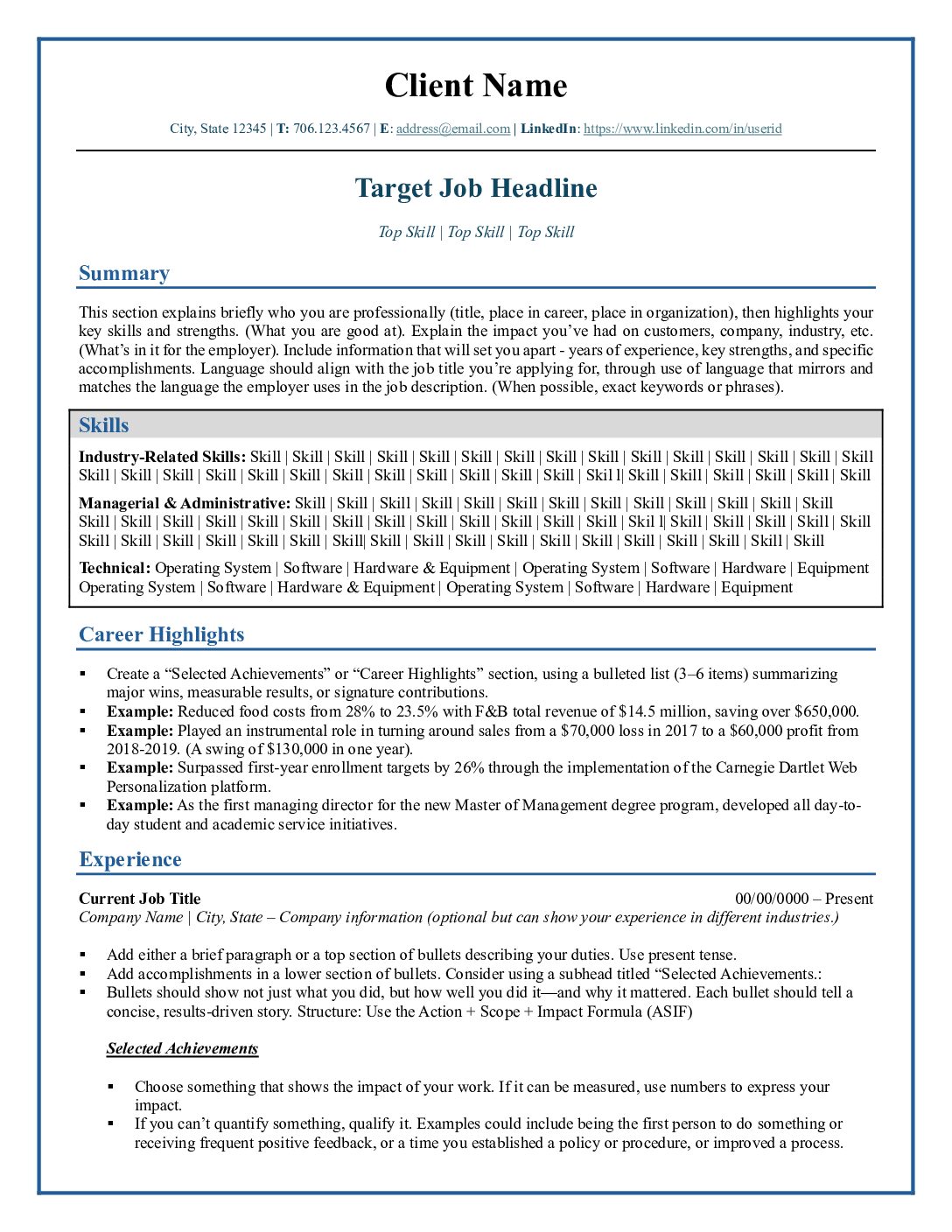
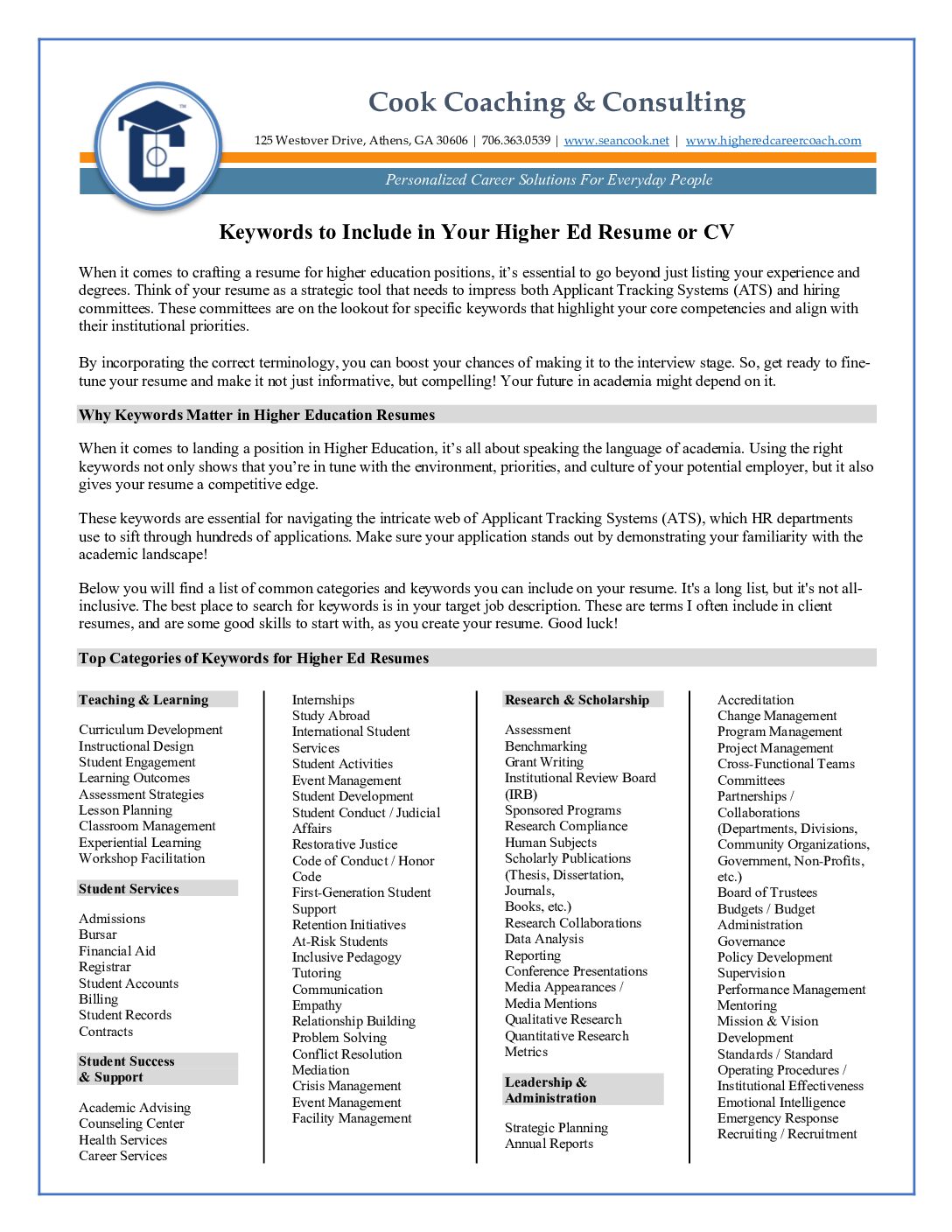
Putting together your résumé can be the most daunting part of a job search. It’s hard to encapsulate your education, skills and experience in just a few pages. There are different formats and styles, and what may be common in one industry may not apply to another.
You’ll get all sorts of advice from well-intentioned people. Some of it will be good, and some of it will stink. At times, it will be hard to filter through that advice and separate the wheat from the chaff.
That’s why I decided to take some of my best advice on putting together a résumé and put it into an e-book format. I know the struggle and I have worked many years to develop an approach that works for me and for my clients.
I used to thought-wrestle whenever I needed to update my résumé. I didn’t know where to start. I didn’t know what information to include, or to highlight. I loved designing the actual layout but at times, went overboard. I changed the format. I changed the font. I changed this, I changed that. And I did most of the changes based on “gut feelings” and personal preferences. I didn’t always have a rhyme or reason for my edits. But that is what happens when you don’t think through the process strategically.
But I was lucky, in that I encountered someone who helped me see the light, and to shift my thinking about the role that a résumé plays in the hiring process. I was working on my résumé and she asked me all sorts of questions about what kind of job I had, what I did in that job and what I accomplished. She asked me about my accomplishments, and about what made me unique, in comparison to other candidates. It was a nice conversation. In fact, that was all thought it was.
Then she said “Okay, let me see your résumé” and I realized what was going really going on. She said “Sean, you did a great job over the last few minutes telling me what you did, how you did it, what you accomplished, and why you are unique. but I don’t really see it on this résumé.“ [Emphasis added.]
She talked to me about conveying transferable skills, accomplishments, unique skills, scope of responsibility and motivation. And she gave me some great simple tips on how to get these things out of my head and onto the paper. This conversation shifted my thinking forever, and was actually the moment my enthusiasm for résumés and career coaching started. I made edits to the résumé, and a short time later, I had five interviews lined up, including the one which resulted in my first job at Penn State. After that, helping students and young professionals became my hobby. I spent a lot of time studying résumés, volunteering for screening committees, interviewing candidates and helping people with their résumés, cover letters and graduate school essays. After 15 years, I decided to try and make it my career.
This guide will not give you all the answers, but it will give you some different ways to think about your résumé, some practical ways to discover what employers are looking for, and some tips on how to make sure they find it in your résumé.
The truth is that you have most of the information you need to put together a great résumé. After all, it’s a representation of who you are as a professional, and you know yourself better than anybody.
But…
You have to get inside the résumé reviewer’s head.
You have to read your materials through the reviewer’s eyes.
And you have to capture and keep the reviewer’s attention.
A Winning Plan
This 7-point plan is geared toward helping you think differently about your résumé: to think like the résumé reviewer, instead of a job-seeker. To understand what knowledge and key skills you need, what experiences to highlight, and what roles to explain. The result, hopefully, will be a shift from guesswork to discovery, and from the loose and theoretical to the concrete and practical. In the end, you will have a résumé that speaks for you, stands out from the competition, and scores you the interviews you need, to get the job that you want.
Look for more information about this e-book next week.
I spent 14 years of my life working at Penn State, 12 for the Office of Residence Life, and 2 for the Smeal College of Business. It was my home and I am still proud of my former colleagues, my old students, and of the many good things that Penn State has contributed to the world. So this week, I am heartsick, angry, shocked, disappointed and like many, I am not sure what to do with all the various thoughts and feelings.
There are no easy answers, but something good must come of this, so this week, I am doing a two-hour podcast on the topic, and hopefully taking calls and comments about the situation.
While sharing your thoughts and feelings are part of this, I am hoping to hear some thoughts on how this case can provide lessons and ways to improve the handling of similar incidents in the future.
Please listen live from 11 am until 1 pm ET this Friday, and call in to (347) 989-0055 to share your thoughts and advice.
“All that is necessary for the triumph of evil is that good men do nothing.”–Edmund Burke, Irish orator, philosopher, and politician.
If there ever was a situation where the 18th century philosopher’s famous quotation applied, it is certainly the sordid tale that came out of Happy Valley at the end of last week. Like many in the nation, I was shocked and heartbroken to hear the sexual abuse accusations against Penn State’s former assistant coach Jerry Sandusky, and the allegations made that the athletic director, Tim Curley, and the vice president for finance and business, Gary Schultz, may have participated in covering for Sandusky, and lying to a grand jury.
For nearly 14 years, I was a member of the administration at Penn State, as an employee of the Office of Residence Life. For part of that time–my first three years–I was the live-in residence life coordinator for Nittany Apartments, the on-campus apartment complex that houses many of the upperclassman on the Nittany Lions football team. In this capacity, I had the opportunity to interact with athletes, members of the athletic staff, university police, and colleagues from across the University. So this week has been somewhat surreal for me, as I read the news about people I’ve met, and familiar places on campus and in the community that I called home for almost a generation.
To say that the men involved in this scenario were well-respected is an understatement. Jerry Sandusky, the man at the center of this firestorm, was once lauded as the heir apparent to legendary coach Joe Paterno, and has been celebrated in the community as a champion for underprivileged boys, as the founder and lead fundraiser for his charity, the Second Mile.
Tim Curley, as athletic director for a Division I sports program, has weathered many storms in the past, and like many athletic directors, he is liked and respected by some, and reviled and ridiculed by others. Gary Schultz was a long-serving and admired member of the community, and has been referred to in the press as a man with strong family values. Penn State even named a new child care center after him. On different occasions, I heard both these men speak about the accomplishments of their programs, and my impressions of both men were that they were likable, good people, with serious levels of commitment toward improving their departments and maintaining the high standards of integrity, pride, and respect that many associate with the Pennsylvania State University. In fact, until I read the news the other day, I had never heard anyone say anything bad about Gary Schultz–ever.
Though I was shocked to hear the allegations against Sandusky, and heartsick over the responses of people within the administration who failed miserably in their attempts to get to the truth and do the right thing, I wasn’t surprised. Unfortunately, I did understand how such things could happen. They are the result of bureaucratic leanings toward policies and procedures over common sense, coupled with poor communication, and an intense need for self-preservation.
As a member of the residence life staff, I was responsible for following up on many situations involving personal conflict, violence, and illegal behavior. When you help run residence halls, you get to know the true nature of student life and the complexities of human behavior and interaction like no one else at the University. There is an underbelly to any campus, and ugly things happen. Sometimes good people do bad things. Sometimes bad people take advantage of the system.
No matter what, each person deserves to be accorded some basic rights to fairness and due process. Processes take time, and procedures have to be followed, because you can’t just act against someone without reason. You would also be a fool, indeed, to act against powerful, well-respected community heroes, without solid evidence and a solid commitment to follow-through. This is where policies and procedures get in the way, and where self-interest and self-preservation often trump common sense and common decency.
Maintaining confidentiality is an important part of the equation, but it must be weighed against a sense of responsibility, and carried through with a serious commitment toward doing what is right, what is just, and what is good for the community. Actions can be taken confidentially while processes play out. The trick is that you have to take the right actions, and to do so, you need the right information in the first place. To get the right information, you have to create a culture where doing the right thing and telling the truth are valued more than perceptions and reputations grown out of pride and a shared mythology.
To truly maintain a commitment to doing the right thing, one must also set aside some other enduring principles: the CYA principle (“cover your ass” at all costs), and not pissing off the “powers that be.” But the cost of doing so in a bureaucracy may be loss of position, loss of influence, and loss of further opportunity. When people are afraid, the tendency is to protect oneself. It takes personal courage and steadfast determination to follow through, because the really ugly situations that occur in bureaucratic organizations usually get plugged into processes that drag on so long that, in the end, even serious sanctions are diminished by the time that has passed between the action and the consequence, no one learns anything, and the witnesses and victims have endured stress, hardship and maybe even further victimization while they wait for a resolution.
What can institutions and administrators do to change things? First and foremost, we need discussion about how power and privilege play out in the University community, and second, we need policies and procedures that clearly protect persons from reprisals when reporting unseemly behavior by persons in positions of authority and influence.Third, we need good training and administrative support to ensure that people know what to do, and that situations are handled properly.
As the situation continues to play out in public, there must be serious and sustained efforts behind the scenes to deconstruct not only the situation and to understand the errors and omissions of persons involved, but to understand the impact of unclear policies, ill-defined roles, and a lack of protections, checks and balances, and common sense in how this particular situation played out, so that things like this can be responded to properly, if and when they happen again.
I wish it could be as easy as installing some universal moral compass in those people we trust, so they do the right things each time, and without question. Lacking that, we need to make it easier for others who witness wrongdoing to know what options they have to respond, and to create environments where people can come forward without fear of reprisal.
Article first published as When Good Men Do Nothing on Technorati.
Transparency is one of the essential elements of career success. Pick up any modern book on career planning, small business development, marketing, or social media, and you’ll probably find a section devoted to the idea of transparency, and how essential it is to establishing the three foundational elements of successful relationships: people know you, like you and trust you.
It Should Be Easy, Right?
But it’s not easy to be “transparent.” Each of us struggles with something, but no one wants to be defined by their problems. Especially if you are looking for a job, looking for customers, or trying to establish yourself as an “authority” within some niche. If you’re truly transparent, people identify with your humanity, because your successes and your struggles are both familiar, and they root for you.
So What’s the Problem?
Herein lies the rub: the more risks you take in your career or with your business, the greater the potential reward…or potential loss. So you stay within your comfort zone, and try to figure your way through, on your own. And sometimes, it’s neither practical (nor healthy) to do so. But, “issues” put aside are eventually recognized for what they are…problems. And when you have a problem, it’s supposed to be okay to ask for help. As educators and supervisors, we know this. We preach this to our students. We evangelize for this to our young professionals. And yet we resist holding ourselves to the same standard, even though we know–genuinely know–that those who ask for help are usually met with kindness, understanding, and support.
So What’s My Problem?
I’ve arrived at a point with this site and with my business where it would be folly to continue without more help. As I expanded the local aspect of my business, I’ve been getting more clients for résumé writing and LinkedIn profiles, and many of these are from outside of academia, and have varied experiences that are hard to tie together into a coherent package.
I’ve always been good at writing résumés, and I enjoy challenges, but it requires a very different type of energy and focus than writing blog posts and sharing perspectives. And I find it hard sometimes to shift gears and keep moving. For the past couple of months, the result has been writer’s block, and I’ve had to devote more time to the writing I am paid for (the résumés) than to my sites.
What Kind of Help Do I Need?
I have some ideas that need to be implemented, and resources that need to be developed, and not enough time and energy to do them all. And I would like to revive my second site, Higher Ed Life Coach, and continue development on a local career resource site, AthensGACareerCoach.Com. So I am looking for an intern to help in content development, and social media, and also for high-quality, relevant guest posts. I will post something later this week about guest posting opportunities. In the meantime, here’s a description of what I am looking for in an intern.
The Internship
The Career Content Development Intern will compile career resources and develop new content for websites (primarily HigherEdCareerCoach.Com and AthensGACareerCoach.Com, but possibly including other sites currently published or under development by Cook Coaching and Consulting); may appear as a guest or co-host on podcasts; schedule guests for podcast, interview educators, job-seekers, coaches and others for site and podcast features; co-host webinars and twitter chats, assist with social media publishing (Twitter, Facebook) and assist with site management, search engine optimization and site design. Other duties will be negotiated, based on current site development needs and the intern’s interests.
Compensation
Anticipated compensation is $8/hour, for a maximum of 5 hours a week, and the duration of the internship will be 20 weeks or 100 hours. This is a part-time contract position, beginning in late November or early December, and ending in May 2012. The finalist will be required to submit appropriate documentation confirming eligibility to work in the United States of America, keep and submit accurate and timely records of hours worked, and your contract income will be reported to the IRS. Additionally, the intern will receive a profile page on HigherEdCareerCoach.Com, a HigherEdCareerCoach.Com e-mail account, and may be featured on podcasts and videos.
Qualifications
Minimum qualifications: Bachelor’s degree and at least one year of relevant experience in student affairs/higher education (undergraduate and graduate experience counts!). Excellent verbal and written communication skills, ability to research and compile information and resources quickly and accurately, experience using social media, blogging, podcasting, and producing internet video. Access to a working computer, internet connection and some form of telephone (landline, cellular or VOIP.)
Preferred qualifications: Current graduate student or recent graduate of a student affairs, higher education, college student personnel administration or related program. Ideally, the candidate will also be someone not employed full-time, who can use the internship to expand his or her career development portfolio. Experience using Mac computers, WordPress, iMovie, and Garageband to produce engaging content is a plus; Efficient and deadline-oriented, but flexible and good-humored, with an ability to deliver consistently accurate information; creative but organized, who will focus on helping our web sites reach their potential.
Application Process
Applications should consist of the following:
A current résumé
A cover letter, no longer than 2 pages, outlining your relevant experience and your most compelling arguments.
Some explanation or evidence of your positive engagement in social media. This can be addressed in your cover letter, or through creative use of social media platforms (Twitter, YouTube, Facebook, LinkedIn, etc.) to demonstrate your experience, comfort level and engagement with these platforms.
3 professional references who can speak not only to your character and work ethic, but toward your ability and/or potential as a writer and content developer.
Deadline
Applications should be sent via e-mail to sean@higheredcareercoach.com with the subject “Career Content Development Intern” no later than 5 p.m. ET Friday November 18. For documents, .pdf format is preferred for all attachments. Interviews will be scheduled during the last two weeks of November, and will be conducted via a webmeeting/video chat interface. Start date will be sometime in late November or early December and will be negotiated with the successful candidate.
Equal Employment Opportunity Statement
Cook Coaching and Consulting, LLC is an Equal Opportunity Employer. All qualified applicants will receive consideration for employment without regard to race, color, religion, sex, gender, ethnicity, sexual orientation, national origin, or genetic condition. The company strives for compliance with all applicable labor laws outlined by the State of Georgia and the U.S. Department of Labor, including the Americans with Disabilities Act.
Motivation is sometimes hard to come by, but it's essential to keeping forward momentum in your career.
If anyone knows this, it's online marketing strategist Tommy Walker, who went from being fired over pair of pants 3 years ago to writing a magnum-opus guest post "106 Excuses That Prevent You From Ever Being Great" on Chris Brogan's web site. Brogan, known for almost never accepting guest posts, took a chance on Walker's piece, and in the process threw any editorial guidelines he might have had out the window, posting all 7,000+ words of it.
The response the post received so far has been phenomenal, with 329 retweets and 1,260 likes on Facebook as this is being written. We'll talk to Walker about his journey from fired cell phone salesman to successful online marketing strategist and guest blogger, and get tips for knocking down excuses and staying motivated.
This segment was pre-recorded, and will air Friday, October 28, 2011 at 11:00 a.m. ET. To listen, follow this link or use the player in the right sidebar.
Work with Sean. I help higher ed professionals take control of their careers with tailored services including resume and CV development, LinkedIn profile optimization and networking strategy, interview coaching, and one-on-one career guidance.