by sean@higheredcareercoach.com | Sep 4, 2009 | Career Skills
Every August, new faculty and staff arrive on campus, to begin their new jobs. The month is packed full of meetings and preparations, and soon enough fades into memory, as freshman orientation passes, classes begin, and at some schools, football and tailgating roll into town. For new staff and faculty, the excitement soon gives way to routines and normalcy, and eventually, a feeling of being at home.
But what should you do if September rolls around, and despite all your best efforts, you still don’t have a job?
First, don’t give up. Even though academia has a built-in job cycle, people do come and go year-round, and vacancies come up at unexpected times. The beginning of the school year will likely signal some slowdown in hiring, as colleges do their best to have new employees in place before residence halls open and classes start. August and September are times when searches are often back-burnered until people get into a groove and things settle down.
So, here you are, wondering how you found yourself without a job. It’s an understandable response, but don’t spend too much time picking over the finer details of your situation. Now is the time to evaluate your strategy, make a new plan, and put it into action. Thinking about what went wrong won’t get you a job. Only a good plan and a personal commitment to action will get you that.
Some practical action steps you can take to re-start your job search:
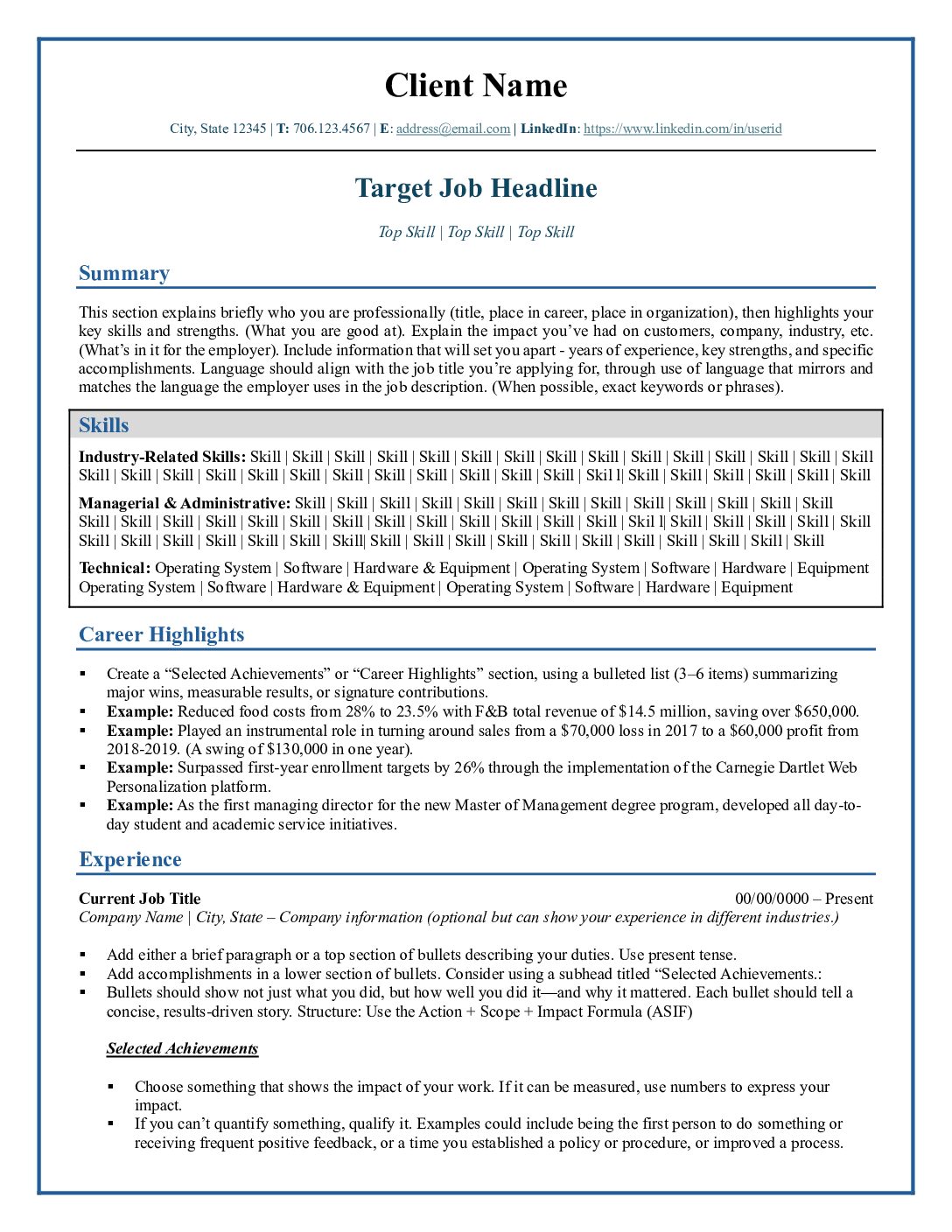
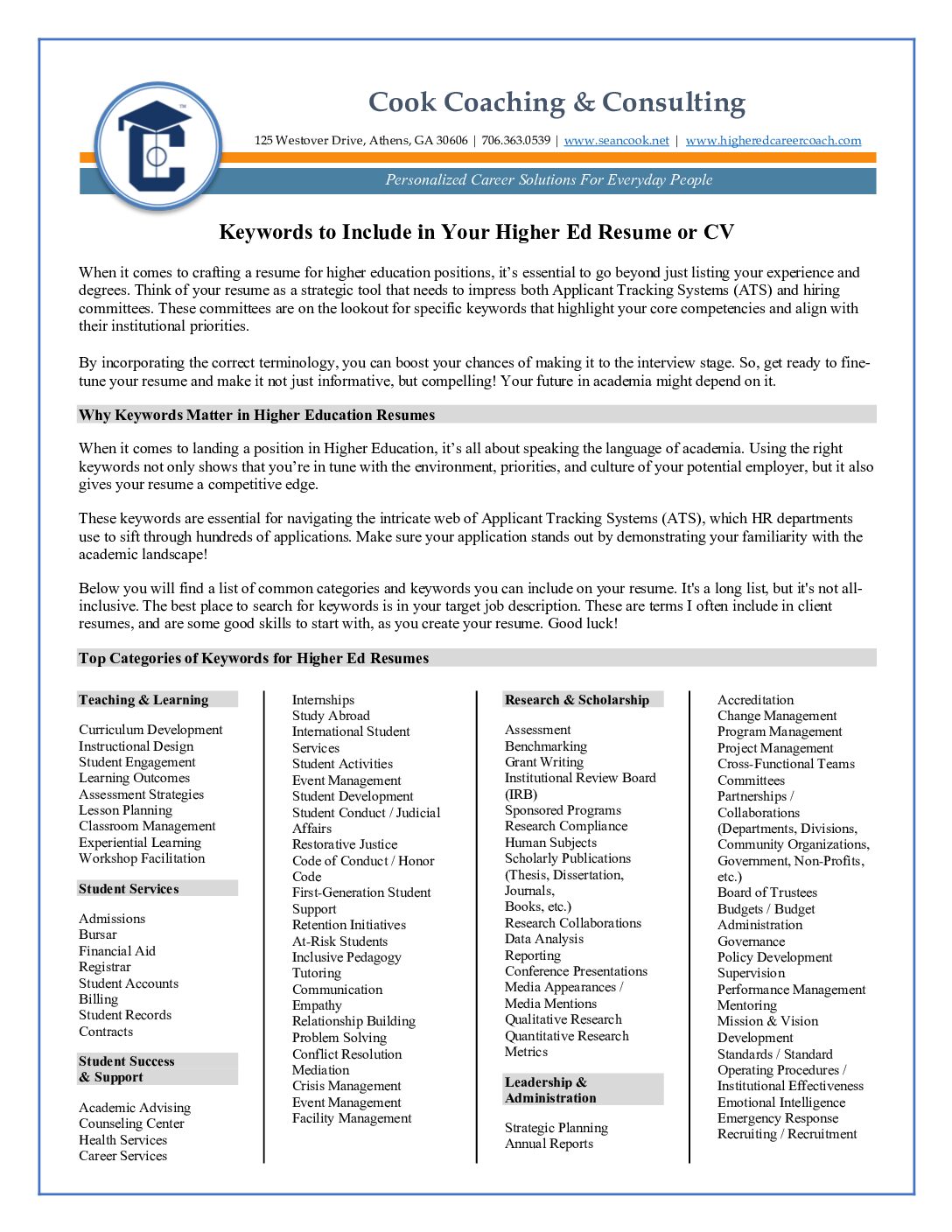
Take a good hard look at your resume, and compare the content on it to the jobs you’ve been seeking. Then ask yourself if the highlights of your resume clearly reflect the skill sets being sought. A good way to do this is to print out a few job postings and highlight key skills and job tasks listed. Then look for at your resume and see if how closely your resume highlights reflect those on the posting.
- If your skills match, but your descriptions don’t, change your descriptions. Maybe you aren’t talking the same language as those on the hiring side of the table. If you have the right skills and experiences, make sure you are describing them in ways that will stand out for the employer. After all, they said what they were looking for in the ad. If your descriptions match, then you may well be a good fit.
- If your skills and experiences don’t match, then it’s time for some introspection, as well as some feedback. Are you barking up the wrong tree? Are your expectations (for salary, level of responsibility, rank in an organization) unrealistic, given your current skills? If the answer is “yes,” then you need to right-size your expectations. You may be smart enough to be a director, vice president, etc., but if you don’t have the skills or experience an employer is seeking, they aren’t going to interview you, much less give you a job. Talking to a mentor or friend who works in the same type of position can be a great opportunity to get good feedback about how you can build your skills and experience to eventually land the jobs you are seeking.
- If you have some skills and experiences, but not at the level sought for certain positions, you have a choice to make. Is it time to take a career detour and get appropriate training? Or are you willing to roll the dice, get a job you may not be exactly qualified for, and hope that you can think on your feet well enough to get by? I strongly recommend the former. Careers are not sprints. Slow and steady wins the race. Everyone knows someone who got a job he or she wasn’t ready for, and rarely are the stories their colleagues and co-workers tell happy ones. It’s not where you are next that matters most; it’s where you eventually end up. Make sure you finish the race.
Get resume advice from at least two other people in your field, and at least one person who is just good at spelling, grammar and/or design. Your colleagues can offer insight on what has worked for them, and what they look for in hiring candidates for positions in the field. A person with good grammar, spelling or design skills can tell you if your resume is readable, whether it flows logically from one idea to another, and most importantly, can help you find and correct the spelling and grammar mistakes that might result in your skills and experience being ignored, because they aren’t well-presented.
Keep visiting job sites for higher education, including individual college and university websites. If the site has a personalized “job agent” that returns results of a customized search, set one up. This will keep you connected to opportunities without as much legwork.
Call your friends and colleagues and let them know you are available. It’s true that networking can get you jobs, and this holds even truer during “down times” in the academic job search cycle. In my experience, once the pool of candidates starts to dwindle, or when unexpected and poorly-timed openings appear, employers are far more open to this. This is also a great time for candidates that might be less experienced to leverage qualities like drive, interest in a specific institution, being a known quantity to someone in an organization, and immediate availability to their advantage. If an employer desperately needs to fill a slot, they are likely to be more open to taking a risk on a candidate who has potential but lacks specific experience.
Seek out part-time or temporary assignments. This may not be the most appealing option, but in many cases it’s better than doing nothing. And if you have bills, you really should try to pay them. With the current economic situation, some schools are having to hold off on full-time hiring but are still able to fill part-time and temporary positions, especially if a position is “essential” to the operation, as many direct-service-to-students positions are. The caveat here is that you cannot reasonably expect that every position will result in an eventual full-time offer. But this type of work can help you build new skills and fill gaps in experience, and to network, and these are the things most likely to help you get a job in the future.
These are only a few ways to consider re-starting your job search and refining your strategy. The most important thing is that you don’t give up. Keep exploring, stay connected to your search and your professional network, and keep looking forward. Your next position is out there, waiting for you. You just have some work to do before you find it. Good luck!
Like this:
Like Loading...
by sean@higheredcareercoach.com | Aug 28, 2009 | Career Skills
“Anger is a gift.”–-Zach de la Rocha, Rage Against the Machine
There will be times in your career when someone is irate about a situation and raging at you, the embodiment of the uncaring machine, so I think it appropriate to explore the possibility presented in the quote from the lead singer of Rage Against the Machine.
It seldom feels good, in the moment, to be the recipient of blunt words or scathing commentary about unfair systems, incompetent people who ought to be fired, etc. But I’ve found over the years that refining this skill leaves you a lot calmer at the end of the day.
Aristotle said: “Anyone can become angry – that is easy, but to be angry with the right person at the right time, and for the right purpose and in the right way – that is not within everyone’s power and that is not easy. “
I did my best to keep this in mind last weekend. It was Welcome Week, and students were arriving on campus in a steady stream all weekend long. For most, Arrival at Penn State is almost a non-event. We have a knack for planning arrival, and wide group of people from Residence Life to Parking and the ID Office meet several times a semester to debrief on the previous arrival, and move on to planning the next.
This attention to detail helps smooth out the arrival experience for most, but at a school this large (approximately 14,000 of our 42,000 students at main campus live in the halls) There are going to be problems. Most are easy to resolve, but this doesn’t always happen.
Some people just aren’t good at being appropriately angry. As such, any bad situation really isn’t about you, it’s about them. And while going over how a problem happened is interesting, it is not always relevant to solving the problems. So I take the abuse, and focus instead on finding a solution and ignoring the anger. This approach keeps me sane and helps move the situation toward resolution.
Some key take-aways I have learned from dealing with angry people are:
- When someone is brutally honest about how they feel, at least it’s honest. Concentrate on that. Acknowledge that. And say to yourself, as much as possible “This is not about me, it’s about the problem in front of me. It will only be about me if I don’t try to find a solution.”
- Once you are aware of a problem, you can brainstorm solutions, rather than dwelling on how the problem happened in the first place.
- Anger creates a sense of urgency to move forward and come up with at least a temporary solution. (Nobody likes it when people are mad at them.)
- Even when a permanent solution can’t be found, having an even keel throughout a situation is essential. Responding to anger in ways that are calm shows you your mettle and helps you save your energy for another day and time.
So, in the end, anger can bring honesty into a conversation, encourage creative thinking, build a sense of urgency around solving a problem, and show you “what you are made of.” So anger is not a problem. Don’t return it to sender. Open it up, take a good look, and see what you can learn from it. Anger is a gift.
Like this:
Like Loading...
by sean@higheredcareercoach.com | Aug 19, 2009 | Career Skills

Andromeda Galaxy
I work in Residence Life. This means that there are several times of year when I spend more time on campus getting ready for students to arrive than I do with my family. Right now, for example, it’s almost 1 a.m., and I just finished getting some projects done in my residence hall commons to hopefully move us toward being ready this Friday for Fall Arrival and Welcome Week.
Every year, I say I am not going to do this to myself, and every year, that promise to myself and my family falls flat on its face, exhausted, sighing, and maybe even snoring. But despite being really, really tired, and somewhat overworked, I find a strange energy in being here and I know in my heart that it is something that I am both good at and meant to do.
In his book Wherever you Go, There You Are, Buddhist author and mindfulness guru Jon Kabat-Zinn tells the story of Buckminster Fuller, who contemplated suicide one night after business failures got him feeling that people would be better off without him.
As Kabat-Zinn recalls the situation, Fuller instead decided to live his life as if he had died, to divorce himself from investing his emotional energy, time and effort in particular outcomes, and instead to do the things he knew how to do because it made sense, and was in service to the universe.
Working in higher education requires a similar mindset. Not so much from shooting for certain outcomes (this is pretty much the point of education in general) but instead by accepting that in the process of learning, the teacher isn’t the product. It’s not really even the information. It’s the process.
In my department, I am often involved in the interview and hiring processes, and so I’m regularly asked by candidates the usual sorts of questions that candidates ask to see if they will be a good match for the position, or to gauge if they will fit in well with our organizational culture. In answering these questions I spend less time talking about skill sets. . . they are on the resume, or they aren’t. . . and by the time the interview happens, whether a candidate has at least the basic aptitude for the job has pretty much been settled.The resume gets you the interview, the interview gets you the job, and your approach to the job very much determines whether you will do the job, or the job will end up doing you.
It shouldn’t surprise candidates, then, that hiring committees are more interested in determining “fit,” than looking at a portfolio of your previous work, or hearing that you are a superstar of some sort when it comes to one aspect or another of the job.
When interviewees ask “what are you looking for in a candidate?” some seem surprised when I reply that I am not looking for a particular skill set, or something obvious, like being a team player, but instead for someone who understands that working in higher education is a lifestyle, not just a job, and that the people who are most successful are those that can see beyond what they want from a situation and instead can clearly see where they fit into the big picture. In short, those who understand that it’s about the process, it’s not about them.
So, returning to the idea of “fit,” it’s perhaps not as nebulous as one might assume. If you spend your time asking questions like “What should I be doing right now?,” “How will my actions affect others?,” and “What makes the most sense in this situation?,” you are beginning to understand your “fit” at the university, in the career field, and maybe, as well, in the universe.
Like this:
Like Loading...
by sean@higheredcareercoach.com | Aug 16, 2009 | Career Skills
A good question to ask yourself before you jump in to a career in higher education. . .
Are you assertive?
You really better be. Whether you are a professor or an administrator, you will likely be faced on a pretty regular basis with situations where a student, a student’s parents, or even the majority of a class takes issue with something you have said or done, and drags you into discussions about policies, prioritites and plans. It’s important when these things come up that you hold your own in your interactions with co-workers, students and their parents.
If you need a refresher on assertiveness, take a look at a presentation I did for Residence Life Coordinator staff this summer.
http://prezi.com/142448/
I hope that you will find it useful.
Like this:
Like Loading...
by sean@higheredcareercoach.com | Aug 8, 2009 | Career Skills, Job Search, life purpose
 I’d put safe money down on the possibility that most of us working in higher education didn’t have that dream as kids. As for me, I wanted to be Evil Kneivel , then I wanted to be Elvis.
Growing up in the ’80s, my attention soon turned to the yuppie lifestyles of the day, and I started college with dollar signs in my eyes, and dreams of a BMW. My first two years, I was a management major, but I really studied partying more than anything else. Calculus wasn’t my friend, and first semester my sophomore year, I earned the first “F” I made in anything. (But it was a high “F,” almost a “D,” and one of the hardest grades I ever earned. I was in hall council, because I liked pizza at meetings and cookouts with the women’s halls. By the end of sophomore year, I made two big decisions…changing my major from Management to Political Science, and applying to be a resident assistant.
The change of major was first a nod to the reality that calculus was a pre-req for several other classes later in the curriculum, and I just wasn’t that good at it. I chose Political Science because a.) politics always interested me, and b.) I thought is was a good background for law, and if I couldn’t be part of the big yuppie revolution through the glories of corporate management, I had heard that Political Science was a good background for law, and everyone knows that lawyers make SCADS of money. The RA thing grew out of two interests…doing cool programs and having fun, and the hope that being an RA would keep me out of trouble.
My junior year, I defined myself as an excellent programmer and jumped deeper into the whole student life realm, by becoming a peer health educator. It wasn’t where I saw myself coming in, but it was pretty good. Senior year, I kept enjoying life and the RA job, but somewhere along the way, I lost sight of the fact that I was going to need a job after college. I drank way too much, and one particularly bad evening, I overdid it and ended up getting arrested. Aimless is as aimless does, I guess.
The aftermath of this one event would stay with me, not because it destroyed my future, or caused me to be dismissed from my RA job; neither of those things happened. Instead, I learned that people were there for me, even when I made mistakes, and that some saw potential in me that I didn’t see myself. It wasn’t until this time that I started to understand that these people in Residence Life and other parts of Student Affairs weren’t just holding down jobs, they were answering a call, living out a higher purpose. In giving their time and energy to students like me, even when we faltered and arguably didn’t deserve the compassion, they were perhaps even performing a sacred duty.
Somewhere along the way, this message started to stick with me, and I started to think about going into Student Affairs. I was lucky enough to get an assistantship with Health Education, and I packed those 2 years of my M.Ed. program with activities in Housing, Health Ed, and Student Development; I came to know some great professionals and some great students, many of which I have kept track of in one way or another, as my generation passed into adulthood and another came to college.
There are days I ask myself why I wanted this, when an endless stream of issues waits at my door, or comes barging in, unannounced. It’s then I remember an aimless wanderer, and the people that pushed him back onto a path; I see myself in both, and it’s then I know I was meant to do this work.
So much for being Elvis.
Like this:
Like Loading...