by sean@higheredcareercoach.com | Dec 22, 2011 | Job Search, Resumes and CVs, Site News
 I’ll make this post short
and sweet.
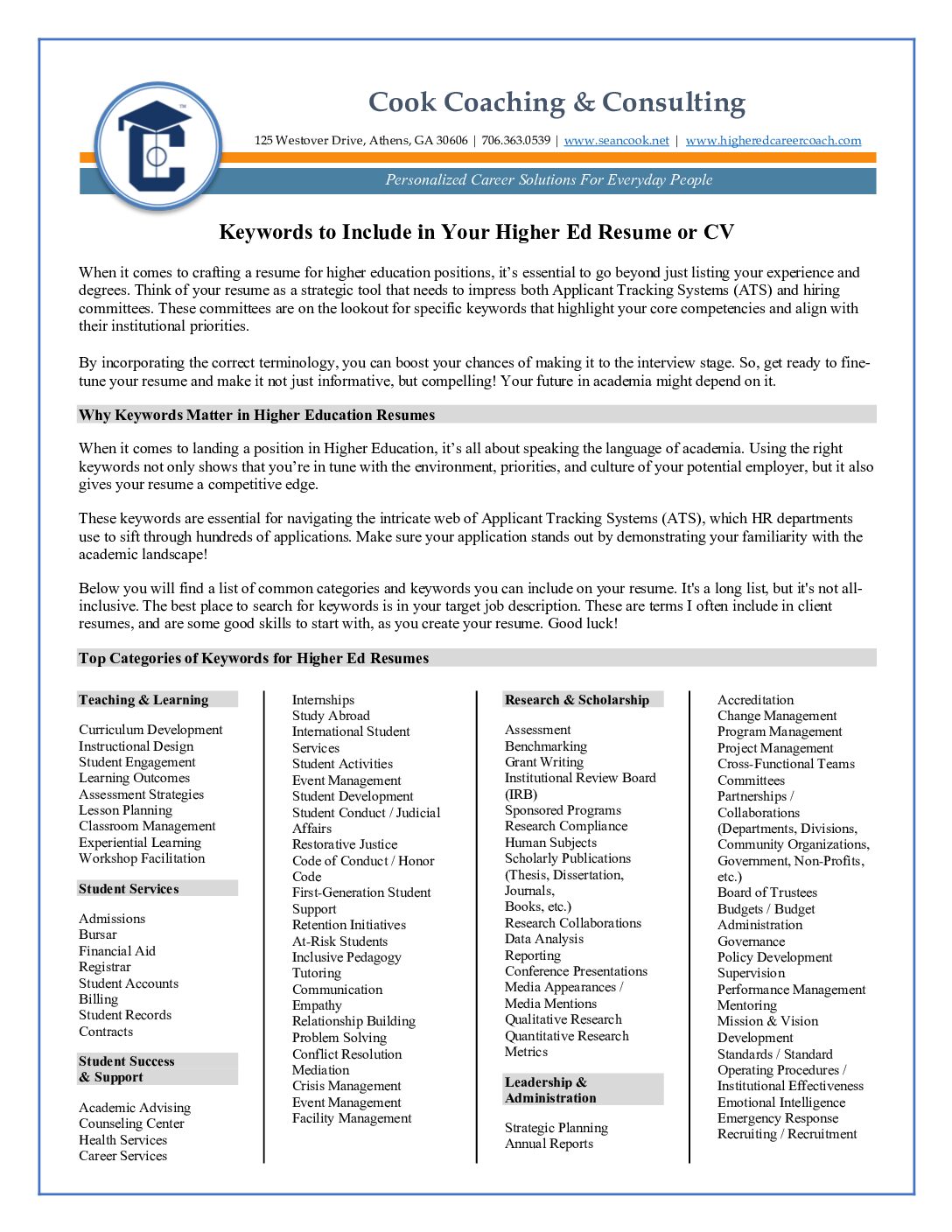
I finally finished my first e-book, which I am calling
“7 Points to a Winning Résumé.”
It’s $5 until December 30, and $10 after that. It comes with some special offers.
I have a great salespage you should check out if you are interested, with an overview of the e-book and what else you get. Please feel free to tell your friends and colleagues!
If you are not interested, come back later for more of the regular articles and advice you find here.
And if you have a break from work this month, enjoy it. I hope this month brings you happiness and good times with friends and family.
Thanks for reading.
Like this:
Like Loading...
by sean@higheredcareercoach.com | Dec 2, 2011 | Job Search, Resumes and CVs, Site News
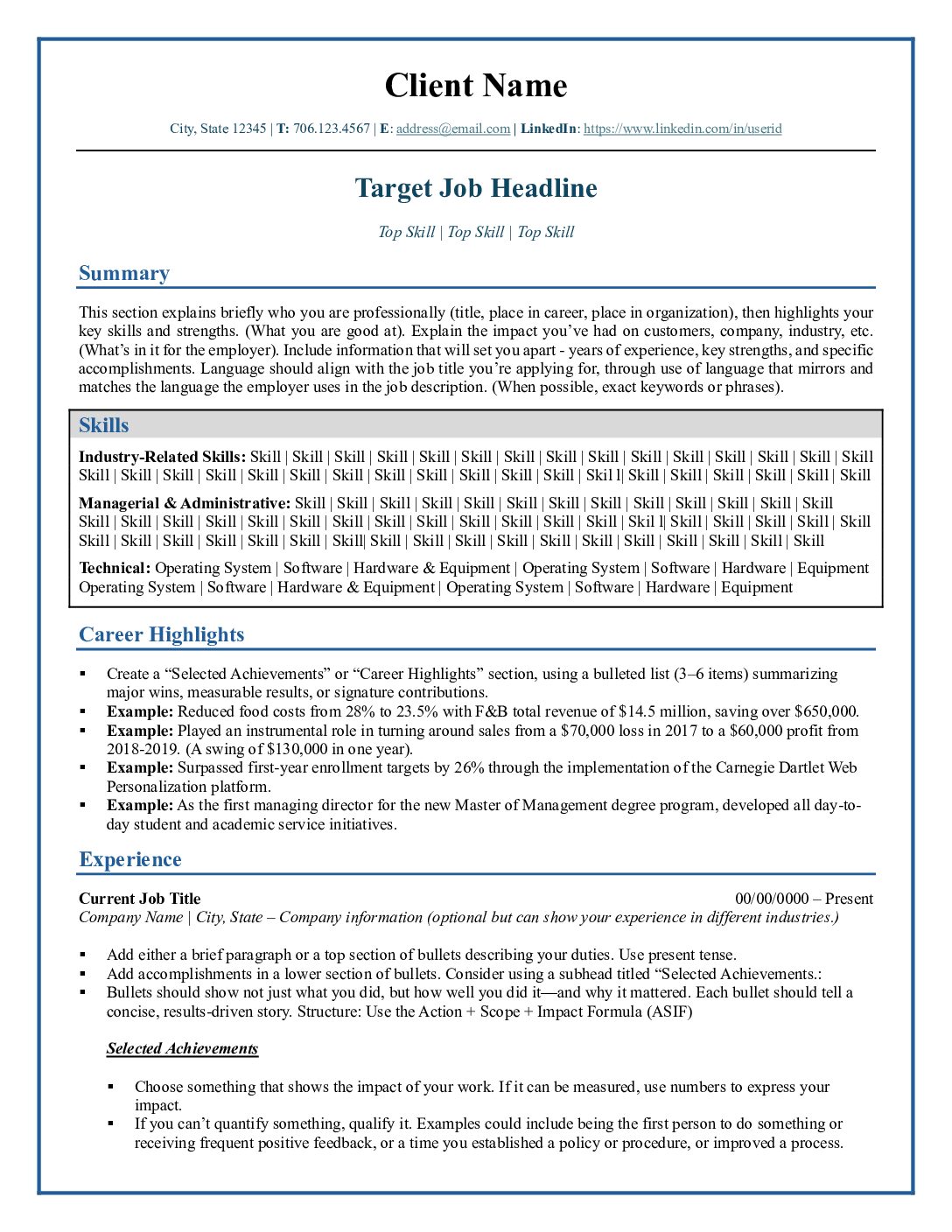
Putting together your résumé can be the most daunting part of a job search. It’s hard to encapsulate your education, skills and experience in just a few pages. There are different formats and styles, and what may be common in one industry may not apply to another.
You’ll get all sorts of advice from well-intentioned people. Some of it will be good, and some of it will stink. At times, it will be hard to filter through that advice and separate the wheat from the chaff.
That’s why I decided to take some of my best advice on putting together a résumé and put it into an e-book format. I know the struggle and I have worked many years to develop an approach that works for me and for my clients.
I used to thought-wrestle whenever I needed to update my résumé. I didn’t know where to start. I didn’t know what information to include, or to highlight. I loved designing the actual layout but at times, went overboard. I changed the format. I changed the font. I changed this, I changed that. And I did most of the changes based on “gut feelings” and personal preferences. I didn’t always have a rhyme or reason for my edits. But that is what happens when you don’t think through the process strategically.
But I was lucky, in that I encountered someone who helped me see the light, and to shift my thinking about the role that a résumé plays in the hiring process. I was working on my résumé and she asked me all sorts of questions about what kind of job I had, what I did in that job and what I accomplished. She asked me about my accomplishments, and about what made me unique, in comparison to other candidates. It was a nice conversation. In fact, that was all thought it was.
Then she said “Okay, let me see your résumé” and I realized what was going really going on. She said “Sean, you did a great job over the last few minutes telling me what you did, how you did it, what you accomplished, and why you are unique. but I don’t really see it on this résumé.“ [Emphasis added.]
She talked to me about conveying transferable skills, accomplishments, unique skills, scope of responsibility and motivation. And she gave me some great simple tips on how to get these things out of my head and onto the paper. This conversation shifted my thinking forever, and was actually the moment my enthusiasm for résumés and career coaching started. I made edits to the résumé, and a short time later, I had five interviews lined up, including the one which resulted in my first job at Penn State. After that, helping students and young professionals became my hobby. I spent a lot of time studying résumés, volunteering for screening committees, interviewing candidates and helping people with their résumés, cover letters and graduate school essays. After 15 years, I decided to try and make it my career.
This guide will not give you all the answers, but it will give you some different ways to think about your résumé, some practical ways to discover what employers are looking for, and some tips on how to make sure they find it in your résumé.
The truth is that you have most of the information you need to put together a great résumé. After all, it’s a representation of who you are as a professional, and you know yourself better than anybody.
But…
You have to get inside the résumé reviewer’s head.
You have to read your materials through the reviewer’s eyes.
And you have to capture and keep the reviewer’s attention.
A Winning Plan
This 7-point plan is geared toward helping you think differently about your résumé: to think like the résumé reviewer, instead of a job-seeker. To understand what knowledge and key skills you need, what experiences to highlight, and what roles to explain. The result, hopefully, will be a shift from guesswork to discovery, and from the loose and theoretical to the concrete and practical. In the end, you will have a résumé that speaks for you, stands out from the competition, and scores you the interviews you need, to get the job that you want.
Look for more information about this e-book next week.
Like this:
Like Loading...

by sean@higheredcareercoach.com | Sep 20, 2011 | Job Search, Resumes and CVs
A good résumé can make all the difference in your job search. It either gets you in the door for an interview, or it fails to capture the screener’s attention and falls through the cracks.
I know firsthand that experience alone won’t carry you through the job search process. You have to place your qualifications in context and illustrate your unique skills if you are going to outline a successful argument.[
In a free webinar this Thursday at 6 p.m. ET on BigMarker.Com, I’ll outline some strategies for creating a résumé which flows well, is visually appealing, and has great content, to help you get the job you want.
BigMarker.Com is a new webinar service, and this will be the first event I am hosting there. My DimDim account recently expired, and that service was being phased out after DimDim was acquired by SalesForce.Com. I’ve been looking at other possibilities for hosting my webinars and for using for client coaching meetings held online. I would love it if you could attend and give feedback about the user experience. Some features that you would expect from a regular paid webinar service aren’t yet available on BigMarker. I have also looked at GoToWebinar, WebEx, FuzeMeeting and FreeScreenSharing (a service by the same people as FreeConferenceCall.Com.)
I will be recording the webinar and if all goes well, will make it available afterward as part of an upcoming members area of my site. At the end of the webinar, I will be giving a sign-up link to attendees who would like to get more résumé resources via e-mail, and announcing a special on résumé coaching services for those who sign up through the special link.
Sign up now for the webinar, and tell your friends, too. It’s free, so you really have nothing to lose. I hope you’ll attend and that we’ll connect on the webinar!
Like this:
Like Loading...

by sean@higheredcareercoach.com | Jul 20, 2011 | cover letters, Job Search, job search tools, Resumes and CVs
 Cover letters come in all different styles, and it’s not always easy to figure out the best way to outline your arguments for a job and keep the reader interested.
 So it’s not surprising to know that many job-seekers obsess over their cover letters. Others spend more time on the résumé, and barely any time at all on the cover letter. Others skip writing cover letters altogether.
The advice you’ll get on cover letters is likely to be mixed, too. You’re likely to hear any or all of the following:
- Write a new letter for each position and try to show your potential match for a company’s current needs;
- Write a generic letter for each type of position, but worry more about the résumé; and
- Forget about the cover letter–nobody reads them anyway, so you’ll be wasting your time.
Given the different approaches candidates take, and the dubious assertion that you always need to write a cover letter, should you bother to write one? And if you do, what approach should you take?
It’s true that some recruiters are avid cover letter readers, others barely skim them, and some skip them until reviewing the resume. But none of these truths justify leaving a cover letter out of your application materials.
Here are 6 reasons why you should write one anyway:
- You are not a mind reader.* As such, you can’t be sure about the preferences of the person(s) screening the applications. (*apologies if you are indeed, a mind reader!)
- If a committee is handling the screening, people on the committee might have different thoughts on the value of a cover letter. Better to cover your bases.
- The recruiter(s) are not mind readers, either. Cover letters provide context about your education, experience, motivation, and possible fit. Your résumé should include plenty of information about education and experience, but the cover letter lets you tie all the pieces together into a coherent whole. Essentially, the job of the cover letter is to make the screener’s job easier, by helping the reader see how your motivation rounds out your education and experience, and molds you into someone who will fit their needs.
- Not sending in a cover letter will make you look lazy. Basically, it sends the message that the recruiter needs to do the work to figure out why you are interested in a job, and then to sell you on the value of working for their organization. And the recruiter probably has enough work to deal with already.
- The recruiter may interpret the lack of a cover letter as an indication that you are desperately applying for anything and everything, and that you haven’t really taken the time to determine why you are interested in the specific position.
- Some recruiters will consider your application incomplete and remove you from further consideration.
What do you think about cover letters? Do you write them for any of the jobs you apply for? Why or why not? Please share your thoughts in the comments.
Like this:
Like Loading...

by sean@higheredcareercoach.com | Jun 10, 2011 | Job Search, job search tools, Resumes and CVs
This week, I’ve been putting out articles on Interview Ecology, and exploring the risks and benefits of introducing the “new and shiny” into the process. We’ve considered whether bringing a iPad into an interview is akin to bringing an invasive species into an eco-system.
This ecosystem approach relies heavily on the idea that anything that distracts or disrupts may destroy the delicate balance of a search process, and bring up dissonance in respect to person-environment fit, resulting in a candidate not getting a particular position.
Which forces me to bring up a particular pet peeve of mine: the all-the-sudden popular and ugly-as-sin QR code. I hate them, because like many fads, most people rushing to use them don’t understand how to make sure they add value to the experience. In general, I feel that most people might as well take a poop on their résumé as put one of these on it, because adding a QR code without adding something of value to the “interview ecosystem” is well…just a load of crap.
I’m already anticipating the response from candidates and tech geeks who think these things are cutting edge and allow a new layer of interactivity that wasn’t possible before. Well, I call bullshit. Scanning these blotches into a smartphone just allows lazy people to avoid typing a URL into their browser, as if the 20 seconds of time spent doing so will add up, like all the partial pennies Richard Pryor dumped into his bank account in Superman III, and will result in the résumé screener having a richer, more exciting , and complete view of the candidate.
Bullshit. Bullshit. BULLSHIT.
The same can be achieved by pointing someone toward a regular URL or hyperlink. QR codes only add new functionality to a paper résumé, which you probably aren’t viewing anyway. And anyone with half a salt lick of sense in their head can run a long URL into an URL shortener. So if space on the résumé is your major concern, that’s no argument, either.
Now, I will admit upfront to being a résumé geek and a purist. I don’t believe all the hogwash people throw around about résumés going away. Advances in technology and social media are just changing how they are delivered. And nothing takes away from the basic truths at play:
- Your résumé needs to be targeted toward your industry, level of experience, and the level of position you are seeking.
- It needs to be scannable (visually scannable)
- There has to be a sense of logical and visual flow that draws a reader in, and keeps them reading and scanning. And…here’s the big one…
- It needs to be attractive and not full of distracting bullshit.
I had a client recently work with me on his CV and he had a QR code on it, at top right. I asked him why it was there. He replied that he wanted to show himself as cutting edge and tech savvy. So I asked him where the QR Code goes, and what value was added by putting it on there. And…wait for it…it went to an online pdf copy of his CV!
We talked a bit and I told him I didn’t see the point of having it there, if it only went to his CV. He was really tied to keeping it there, so we came to a compromise position. He had also been updating his LinkedIn profile, which had some great recommendations on it, and some other links to relevant information. So we decided to point it there, because doing so added some value to the equation. The result: the QR code went from being poop on his résumé to being rich compost instead.
My criticism of his strategy should not be equated with a critique his level of technical savvy or his readiness for the type of job he was applying for, and I’ve told him as much. In fact, I think he’s a great candidate, or I wouldn’t be working with him. I don’t work with clients I don’t believe in, because that’s not fair to people on either side.
Ultimately, I’m grateful for the perspectives his situation has given me, and what it allows me to share with you.
Here are the big take-aways:
- New technology is great, and showing comfort with it is just fine. But using tech badly could actually hurt your candidacy. Make sure that your use of technology is appropriate and that there is a clear point to using it (like adding interactivity or pointing to recommendations or portfolio work.)
- If using a new way of doing things distracts from your design, content or flow, you really need to weigh the risks of using it against the value added. And if you can’t do this on your own…
- It pays to talk this sort of stuff out with a trusted friend, advisor, or career coach.
What do you think? Tell me in the comments.
Did You Enjoy This Post?
- Please take my reader survey and tell me what you think about Higher Ed Career Coach. It’s 11 questions and shouldn’t take long. Also, SurveyMonkey will be selecting one recipient at the end of June to receive a $25 Amazon gift card. So give your feedback and get a chance to win!
- Please like the Cook Coaching Facebook page and join the career discussion boards there!
- Follow Higher Ed Career Coach on Twitter
- Connect with me on LinkedIn
- Sign Up for our mailing list and get early announcements about upcoming site features, workshops and coaching specials.
- If you are interested in one of the upcoming summer groups or workshops, follow the links below.
Like this:
Like Loading...