It’s easy these days to get overwhelmed by the continuous stream of information that comes at you through social media, and e-mail. A while back, I discovered a great tool to help cut through some of the noise. It’s called Gist, and it brings your contacts into one place to give you a full view of your network, making it easy to find anyone, anytime. You see email addresses, phone numbers, work details and more, all assembled and updated automatically. You can also directly ask your contacts to provide their latest information by requesting a profile update.
I’ve been using it to help kind of take the pulse of my inbox and social network each morning, so I can prioritize my follow-up. It’s also great for getting some background on people you are meeting with each day. And it can be used in GMail (including hosted Google Apps Mail), Outlook and Lotus Notes, and works on your iPhone or Android phone.
Check it out and you’ll probably agree that Gist helps you stay organized while monitoring your mail, your calendar, and your network.
DJ Coffman, the comic artist who sketched this logo, just released his first e-book.
I guess if you’re reading this far, you must have some interest in finding out why I decided to take a break from our usual topic and what on earth I could be writing about. So thanks for checking out the post anyway. Please read along.
If you read this site regularly, you’ve seen some of the awesome spot art by D.J. Coffman. He’s the guy who did the “Monday Morning Quarterback” and “Tuesday TimeOut” logos, and hopefully we’ll have some more of his stuff featured here soon. D.J. is a talented and friendly guy I met through the Third Tribe membership site (aff. link) and a respected comic artist.
His work has been published in newspapers and publications around the globe and seen on HBO, MTV, Vh1, Late Night With Conan O’ Brien and The Tonight Show with Jay Leno. In 2006, he won the first annual Comic Book Challenge with his project Hero By Night which is now in development as a live action TV show.
On Third Tribe, he’s one of those people who I enjoy connecting with the most, because he’s just a real guy, doing what he loves and has always loved, trying to balance his passions with time for his family. And he’s clearly the kind of person who likes connecting with people, helping them out and learning from them. I joined Third Tribe for an opportunity to learn from people like Chris Brogan. I stay because of people like D.J. Coffman. (No offense to Chris, though, he’s the real deal, too. But then again, everyone who knows social media and marketing already kinda knows that already.)
So this break from the usual topic comes to you with the simple goal of telling you about someone who pursuing a purposeful life, and some of the amazing things he’s doing. And indirectly, to give you a glimpse of who I am and the things I care about, like doing, etc. To let the cat out of the bag, I have always loved comic books, and I have a nice collection. I spent more time in high school with comic books than with girls. I used to incessantly draw superheroes everywhere, all the time. And I would give my left arm (hey, I draw with my right) to have the chops this guy has.
Yes, I am a certified geek. And I have always done my best to support others who are, especially if they are putting themselves out there in ways that help others. D.J.’s new e-book does just that. It’s called “Cash for Cartoonists” and it’s a guide to making money as a comic artist. I know that is kind of off the beaten path, and that you probably didn’t expect to read a post on this blog about something like this.
But look at it this way… in higher ed, we talk a lot about trying to “challenge and support” our students. The biggest challenge people face in life is to be their true selves. And support (whether it be from friends, colleagues, mentors, faculty or staff) is hugely important.
I like D.J., and I want to support his art and his business. So when he announced the launch of this product, I signed up to be an affiliate right away. I don’t know how many of my higher ed colleagues out there aspire to illustrate web comics for a living, but I bet a lot of you know people who might. And if you don’t, at least you know something interesting about the spot art on this site, and the guy who does it.
We now return to our regular topic. Thanks for reading!
The last few weeks have been interesting to me. With the exception of August 1999, when I was in-between jobs, I worked on college campuses during the busy back-to-school rush for all of my adult life. So it was weird to not be getting ready for new staff, RA training, and welcome week.
I expected this August to be different, in terms of how busy I would be, but that hasn’t been true. I’ve had a lot of client appointments lately, as some finally found themselves full-swing back into searches that had stalled for a while, and realizations that the grad school applications they’d been thinking about in theory need to find their way to paper (or electronic) form sooner than later. All the sudden, following up on a site redesign, some emerging partnerships, the development of some e-books, seminars and workshops moved from my “get to that soon” list to “Oh, crap, I really have to get in gear with that” list. And I realize that I wasn’t paying attention.
It reminded me a lot of my time on campus, and all that goes into getting ready for a successful year. I wonder now why I expected it to be different. There are so many things that pull at our attention and all too often, we drop the ball, and miss the important details of what is going on around us. Today, I was catching up on Twitter (something that often distracts me, but that oddly, during this time, I have been able to tune out) and I saw this tweet from my friend and coaching buddy Monica Moody.
The link she mentions in her tweet goes to a YouTube video of an interesting psychology experiment about attention. And a reminder that, as Linda Loman pleads in her famous monologue to son Biff in Death of a Salesman, “attention must be paid.” (Video embedded below.)
As you get into full swing of the back-to-college season, and all the stresses that come with it, how are you paying attention? What will you be missing? And how can you keep yourself from missing the “invisible gorilla?”
Please share your thoughts in the comment section.
Mike Davenport (a/k/a LeadershipGeek) regularly contributes his “custom thought illustrations” to the discussions over at Third Tribe Marketing (aff. link), where the sketches for this guest post originally appeared. He is also slugging away at his own website, Not the Slightest Idea. You can see more of his stuff on SmugMug.
As the academic year begins this August, approximately 2 million new students will flood campuses in the United States (according to the National Center for Education Statistics), representing about 68% of the nation’s recent high school graduates.
When you work in higher ed, you spend the summer getting ready for this great mass of humanity, their parents, and all their stuff. Each year, the next most-connected generation in history descends upon campus, ready for the mythical wonderland called college…full of challenging classes, enlightened professors, new friends, great parties, and steeped in fine traditions, pomp, circumstance, and loads of fun. The newest, most exciting “best days of their lives.” And they come with almost romanticized visions of college, so we spend our time and efforts on being ready, smoothing out the edges, and making that move-in and arrival period as painless as possible. We concentrate next on getting our student staff trained (whether they’re resident assistants and orientation leaders in brightly colored move-in shirts, or dining hall crew members, desk staff, or teaching assistants, etc.)
It’s easy during busy times like this to forget how important it is to make sure our new professional staff members make the adjustment to campus successfully, as well. We hope for it, and plan for it, but sometimes drop the ball in our planning, because of all the other priorities we’re juggling. According to the Bureau of Labor Statistics, there were 124,600 postsecondary administrators in the country in 2008.Of course, most of these are not new staff. As experienced professionals, they know the drill, have the routine down pat, and motor along the path of same-old, same-old. Sometimes, right over the new staff, who are still looking for the bathrooms in the building, don’t know the code to the copier, and haven’t received a computer password, not to mention a paycheck yet. It can be a rough adjustment for these new staff, and retention of good staff is always an issue. Sometimes, we burn them out with training and teambuilding before the first student moves in, or the first class bell rings.
This month, we’ll spend some time on the topic of transitions, and to invite some guest bloggers to contribute their thoughts on how we prepare our new staff.
Some possible formats include:
Philosophical pieces (like “how to think about your job,” “what you need to think about,” and “what you need to understand about our organization, field, specialty, etc.”)
Practical Pieces: (give an example of a favorite training activity, a checklist for getting started in a new position, or steps toward creating a positive routine, etc.
Creative pieces (art, video, publications, poetry, readings, etc. What do you share and why do you share it?)
Some combination of the above
If you are interested, please contact me at sean@higheredcareercoach.com and let me know which of the following opportunities interests you, and join the conversation.Guest posters will also be invited to appear on the Higher Ed Life and Careers podcast on BlogTalkRadio.
Monday Morning Quarterback: Guest posts in this category will be “thought” pieces, leaning toward the idea of having a “gameplan” for your training and transition efforts. So I would love to have some philosophical or creative pieces here, but don’t be afraid to be practical.
Tuesday Time-Out: Like the title says, I’d like these to be brief, welcome breaks from the action. This would be a good place to share your ideas on how to welcome staff to the team, build rapport, inspire, and support them through the busy transitional period. This could also be a great place to share your favorite training activities, including icebreakers, teambuilders, or even outlines for your expectation-setting activities and first meetings with new employees.
So, whether you are a higher ed professional, or from some other category entirely, you’re invited to share your thoughts as a guest blogger. Please e-mail me at sean@higheredcareercoach.com this week if you are interested, and check back next week for our first guest column.
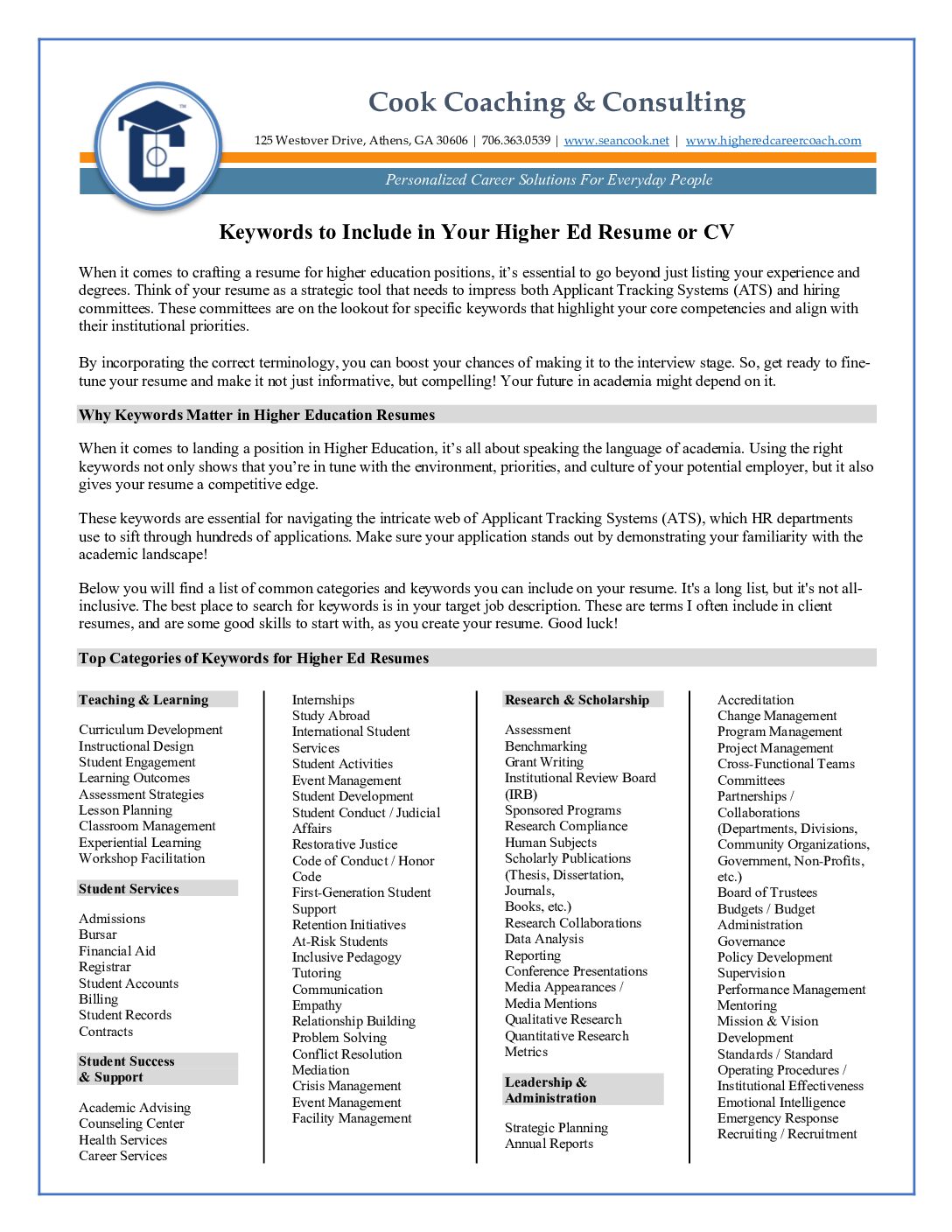
Work with Sean. I help higher ed professionals take control of their careers with tailored services including resume and CV development, LinkedIn profile optimization and networking strategy, interview coaching, and one-on-one career guidance.