The New Year is a time when many of us re-evaluate our goals and set new ones. The top resolution people make, according to an article at About.Com, is to spend more time with family and friends. (50% of us place that as our top priority.) Other common ones are to lose weight, get organized and get out of debt. And many of us, whether we say so or not on surveys, l0ok forward to moving on in our careers.
Spring is typically the “high season” for academic job searches, since many institutions begin the hiring season for the next fiscal year in July, and the next academic year in August. Associations sponsor placement conferences, and job boards start to fill with ads.
If you are searching in academia, it’s a great time to get your act together. Here are 5 tips for kick-starting your job search.
Write up all the major elements you will be looking for in a job, including type of institution, roles you would enjoy, salary range, geographic location, size of department, place within the organization, daily tasks, office environment. Don’t leave anything out that you consider important. Write toward the ideal job and let yourself imagine yourself in that ideal situation. Don’t filter yourself. This is about reflecting on your priorities. Later, you will gauge your opportunities against this ideal (and yes, non-existent) position.
Make a list of your top 5 “must haves” (things that a position must include) and top 5 “deal-breakers” (those aspects of a position that you are unwilling to perform). Gauge every position you consider against them. Do not apply for any job that doesn’t have your “must haves” or includes your “deal-breakers.” Trust yourself enough to know what you have to do, and will not do. If you do not find any jobs to apply for, then it’s time to sit with a coach, a mentor, a trusted colleague, or a counselor to figure out it you have realistic expectations for your job search.
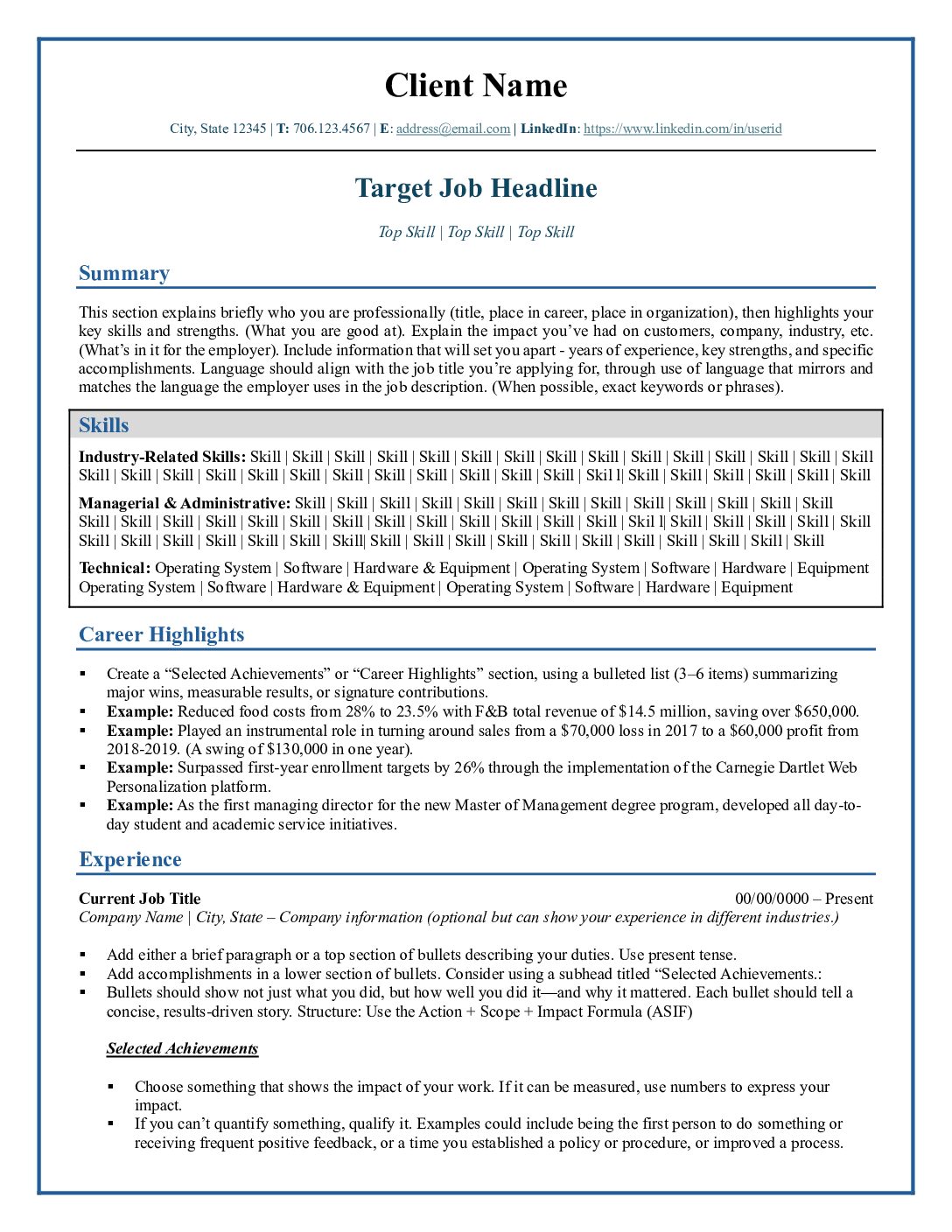
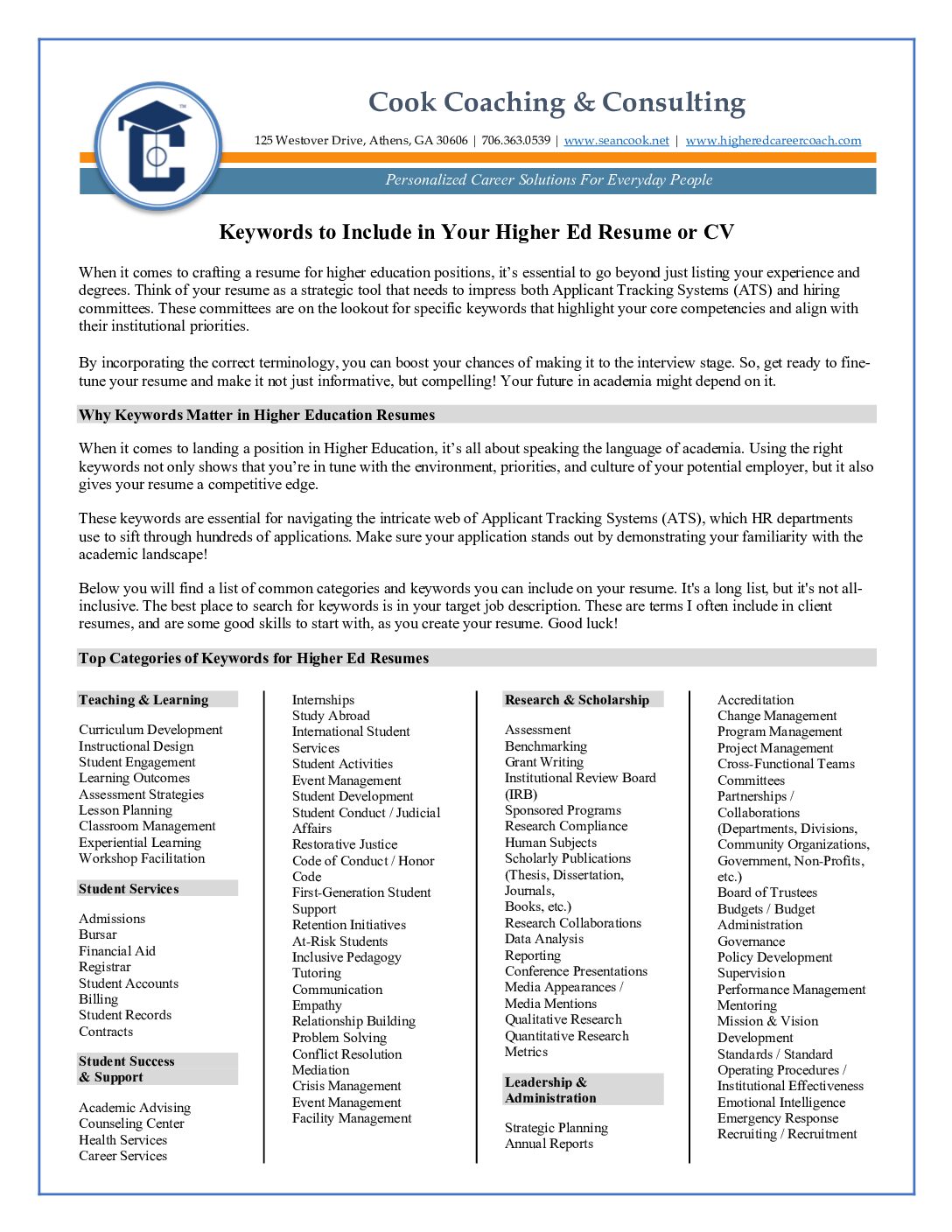
Update your résumé or CV. If you are self-directed, and have generally been getting good results, you may need to only do a minor brush-up. Check out my guide 7 Points to a Winning Résumé for ideas about how to write a targeted résume that gets you more interviews. It’s $10 and you get some great extras, including a $25 discount on my coaching or résumé writing packages if you decide you’d rather have professional help. Go to the sales page for more information.
Get social. Networking has always been a great way to get job leads and to understand job roles, formal and informal rules of particular organizations, and the work environment you might be joining. Social networking can extend your reach. The role of social media in the job search has changed drastically over the past few years. It’s no longer a luxury but a basic skill. If you don’t “get” social, you will differentiate yourself in a bad way.
One more thing you can do, if you need some help: talk to a coach. Contact me to set up a free coaching consultation.
I finally finished my first e-book, which I am calling
“7 Points to a Winning Résumé.”
It’s $5 until December 30, and $10 after that. It comes with some special offers.
I have a great salespage you should check out if you are interested, with an overview of the e-book and what else you get. Please feel free to tell your friends and colleagues!
If you are not interested, come back later for more of the regular articles and advice you find here.
And if you have a break from work this month, enjoy it. I hope this month brings you happiness and good times with friends and family.
Putting together your résumé can be the most daunting part of a job search. It’s hard to encapsulate your education, skills and experience in just a few pages. There are different formats and styles, and what may be common in one industry may not apply to another.
You’ll get all sorts of advice from well-intentioned people. Some of it will be good, and some of it will stink. At times, it will be hard to filter through that advice and separate the wheat from the chaff.
That’s why I decided to take some of my best advice on putting together a résumé and put it into an e-book format. I know the struggle and I have worked many years to develop an approach that works for me and for my clients.
I used to thought-wrestle whenever I needed to update my résumé. I didn’t know where to start. I didn’t know what information to include, or to highlight. I loved designing the actual layout but at times, went overboard. I changed the format. I changed the font. I changed this, I changed that. And I did most of the changes based on “gut feelings” and personal preferences. I didn’t always have a rhyme or reason for my edits. But that is what happens when you don’t think through the process strategically.
But I was lucky, in that I encountered someone who helped me see the light, and to shift my thinking about the role that a résumé plays in the hiring process. I was working on my résumé and she asked me all sorts of questions about what kind of job I had, what I did in that job and what I accomplished. She asked me about my accomplishments, and about what made me unique, in comparison to other candidates. It was a nice conversation. In fact, that was all thought it was.
Then she said “Okay, let me see your résumé” and I realized what was going really going on. She said “Sean, you did a great job over the last few minutes telling me what you did, how you did it, what you accomplished, and why you are unique. but I don’t really see it on this résumé.“ [Emphasis added.]
She talked to me about conveying transferable skills, accomplishments, unique skills, scope of responsibility and motivation. And she gave me some great simple tips on how to get these things out of my head and onto the paper. This conversation shifted my thinking forever, and was actually the moment my enthusiasm for résumés and career coaching started. I made edits to the résumé, and a short time later, I had five interviews lined up, including the one which resulted in my first job at Penn State. After that, helping students and young professionals became my hobby. I spent a lot of time studying résumés, volunteering for screening committees, interviewing candidates and helping people with their résumés, cover letters and graduate school essays. After 15 years, I decided to try and make it my career.
This guide will not give you all the answers, but it will give you some different ways to think about your résumé, some practical ways to discover what employers are looking for, and some tips on how to make sure they find it in your résumé.
The truth is that you have most of the information you need to put together a great résumé. After all, it’s a representation of who you are as a professional, and you know yourself better than anybody.
But…
You have to get inside the résumé reviewer’s head.
You have to read your materials through the reviewer’s eyes.
And you have to capture and keep the reviewer’s attention.
A Winning Plan
This 7-point plan is geared toward helping you think differently about your résumé: to think like the résumé reviewer, instead of a job-seeker. To understand what knowledge and key skills you need, what experiences to highlight, and what roles to explain. The result, hopefully, will be a shift from guesswork to discovery, and from the loose and theoretical to the concrete and practical. In the end, you will have a résumé that speaks for you, stands out from the competition, and scores you the interviews you need, to get the job that you want.
Look for more information about this e-book next week.
I spent 14 years of my life working at Penn State, 12 for the Office of Residence Life, and 2 for the Smeal College of Business. It was my home and I am still proud of my former colleagues, my old students, and of the many good things that Penn State has contributed to the world. So this week, I am heartsick, angry, shocked, disappointed and like many, I am not sure what to do with all the various thoughts and feelings.
There are no easy answers, but something good must come of this, so this week, I am doing a two-hour podcast on the topic, and hopefully taking calls and comments about the situation.
While sharing your thoughts and feelings are part of this, I am hoping to hear some thoughts on how this case can provide lessons and ways to improve the handling of similar incidents in the future.
Please listen live from 11 am until 1 pm ET this Friday, and call in to (347) 989-0055 to share your thoughts and advice.
“All that is necessary for the triumph of evil is that good men do nothing.”–Edmund Burke, Irish orator, philosopher, and politician.
If there ever was a situation where the 18th century philosopher’s famous quotation applied, it is certainly the sordid tale that came out of Happy Valley at the end of last week. Like many in the nation, I was shocked and heartbroken to hear the sexual abuse accusations against Penn State’s former assistant coach Jerry Sandusky, and the allegations made that the athletic director, Tim Curley, and the vice president for finance and business, Gary Schultz, may have participated in covering for Sandusky, and lying to a grand jury.
For nearly 14 years, I was a member of the administration at Penn State, as an employee of the Office of Residence Life. For part of that time–my first three years–I was the live-in residence life coordinator for Nittany Apartments, the on-campus apartment complex that houses many of the upperclassman on the Nittany Lions football team. In this capacity, I had the opportunity to interact with athletes, members of the athletic staff, university police, and colleagues from across the University. So this week has been somewhat surreal for me, as I read the news about people I’ve met, and familiar places on campus and in the community that I called home for almost a generation.
To say that the men involved in this scenario were well-respected is an understatement. Jerry Sandusky, the man at the center of this firestorm, was once lauded as the heir apparent to legendary coach Joe Paterno, and has been celebrated in the community as a champion for underprivileged boys, as the founder and lead fundraiser for his charity, the Second Mile.
Tim Curley, as athletic director for a Division I sports program, has weathered many storms in the past, and like many athletic directors, he is liked and respected by some, and reviled and ridiculed by others. Gary Schultz was a long-serving and admired member of the community, and has been referred to in the press as a man with strong family values. Penn State even named a new child care center after him. On different occasions, I heard both these men speak about the accomplishments of their programs, and my impressions of both men were that they were likable, good people, with serious levels of commitment toward improving their departments and maintaining the high standards of integrity, pride, and respect that many associate with the Pennsylvania State University. In fact, until I read the news the other day, I had never heard anyone say anything bad about Gary Schultz–ever.
Though I was shocked to hear the allegations against Sandusky, and heartsick over the responses of people within the administration who failed miserably in their attempts to get to the truth and do the right thing, I wasn’t surprised. Unfortunately, I did understand how such things could happen. They are the result of bureaucratic leanings toward policies and procedures over common sense, coupled with poor communication, and an intense need for self-preservation.
As a member of the residence life staff, I was responsible for following up on many situations involving personal conflict, violence, and illegal behavior. When you help run residence halls, you get to know the true nature of student life and the complexities of human behavior and interaction like no one else at the University. There is an underbelly to any campus, and ugly things happen. Sometimes good people do bad things. Sometimes bad people take advantage of the system.
No matter what, each person deserves to be accorded some basic rights to fairness and due process. Processes take time, and procedures have to be followed, because you can’t just act against someone without reason. You would also be a fool, indeed, to act against powerful, well-respected community heroes, without solid evidence and a solid commitment to follow-through. This is where policies and procedures get in the way, and where self-interest and self-preservation often trump common sense and common decency.
Maintaining confidentiality is an important part of the equation, but it must be weighed against a sense of responsibility, and carried through with a serious commitment toward doing what is right, what is just, and what is good for the community. Actions can be taken confidentially while processes play out. The trick is that you have to take the right actions, and to do so, you need the right information in the first place. To get the right information, you have to create a culture where doing the right thing and telling the truth are valued more than perceptions and reputations grown out of pride and a shared mythology.
To truly maintain a commitment to doing the right thing, one must also set aside some other enduring principles: the CYA principle (“cover your ass” at all costs), and not pissing off the “powers that be.” But the cost of doing so in a bureaucracy may be loss of position, loss of influence, and loss of further opportunity. When people are afraid, the tendency is to protect oneself. It takes personal courage and steadfast determination to follow through, because the really ugly situations that occur in bureaucratic organizations usually get plugged into processes that drag on so long that, in the end, even serious sanctions are diminished by the time that has passed between the action and the consequence, no one learns anything, and the witnesses and victims have endured stress, hardship and maybe even further victimization while they wait for a resolution.
What can institutions and administrators do to change things? First and foremost, we need discussion about how power and privilege play out in the University community, and second, we need policies and procedures that clearly protect persons from reprisals when reporting unseemly behavior by persons in positions of authority and influence.Third, we need good training and administrative support to ensure that people know what to do, and that situations are handled properly.
As the situation continues to play out in public, there must be serious and sustained efforts behind the scenes to deconstruct not only the situation and to understand the errors and omissions of persons involved, but to understand the impact of unclear policies, ill-defined roles, and a lack of protections, checks and balances, and common sense in how this particular situation played out, so that things like this can be responded to properly, if and when they happen again.
I wish it could be as easy as installing some universal moral compass in those people we trust, so they do the right things each time, and without question. Lacking that, we need to make it easier for others who witness wrongdoing to know what options they have to respond, and to create environments where people can come forward without fear of reprisal.
Article first published as When Good Men Do Nothing on Technorati.
Work with Sean. I help higher ed professionals take control of their careers with tailored services including resume and CV development, LinkedIn profile optimization and networking strategy, interview coaching, and one-on-one career guidance.



 I’ll make this post short