Yesterday, we talked about ways that candidates can prepare for interviews by anticipating questions and preparing their answers. As mentioned in that article, questions and answers can be seen as the “currency” of interview. This may have left some of you asking “Where’s the Bank?”
Good news! We’re opening a “question bank” at HigherEdCareerCoach.Com and the Cook Coaching Facebook page. We’ll post links to past episodes of “the Grill” and their associated blog posts, and open up discussions on Facebook on questions and how to approach them.
To get started with the question bank, I’m soliciting submissions from other student affairs professionals, career coaches and human resource professionals. On today’s BlogTalkRadio show, I’ll be talking to our first contributor, Meghan Harr, who shared her list of questions to ask the interviewers. So many candidates overlook the value of asking good questions, but doing so can differentiate you from others in the process. This segment was pre-recorded, due to some professional travel I have scheduled for today. It will air at 11 am Eastern Time and be available for download to iTunes and for streaming afterward.
In my discussion with Meghan, we had a great, free-ranging talk about how she assembled the questions, how she used certain questions to understand not only the position, but the institutional culture, work environment, and her possible “fit” in different positions. You’ll gain some valuable insight that should help you in upcoming interviews.
Meghan also shared a little with me about her involvement in the #saGrow mentor program and how being a mentor has helped her grow as a professional. Please listen to the show by clicking the BlogTalkRadio icon below, and download a .pdf of her questions here. If you’d like to receive other resources like this, directly to your inbox, sign up for my e-mail list by using the Hello Bar link at top, or the pop-up form. You’ll get this information, regular blog updates, newsletters, special list-member-only offers, and my promise that your information will never be sold or shared without your permission.
A while back, I sent in an article to David and Michelle Riklan, the operators of SelfGrowth.Com for possible inclusion in their cooperative book project, titled “101 Great Ways to Enhance Your Career”. This is a compilation of 101 articles with practical, solid advice on how you can take action and improve your career.
I am extremely excited to be a part of this, and am equally excited to be a contributing author along with Tory Johnson, Laura DeCarlo, Brian Tracy, Charlotte Weeks and many more of the world’s leading career experts.
This book was created by David and Michelle Riklan, the founders of the #1 Self Improvement website in the world, SelfGrowth.com. They tapped into the minds of today’s greatest career experts and pulled together a nice collection of 101 insider secrets that shows you how to instantly and positively enhance your career!
In these days of decreased professional development budgets, many higher education professionals are having to scale back their funding for conferences and events. This book offers a practical alternative. All the articles are short, thought-provoking and easily digested–perfect for a professional development reading group, or to share with your staff during team development meetings.
David and Michelle have also bundled the book with some “bonus gifts,” and have created a package of $1,500 worth of absolutely free gifts that you get by purchasing just one copy of our book. I’ve contributed one of the bonuses (my “Mastering the Job Interview” presentation), and have been impressed by the range of topics covered in the other bonuses.
SelfGrowth.Com is so confident you will love it, that they are backing it up with a completely solid guarantee.
Go there and take a look for yourself – and make sure you check out the bonuses.
(Please note that all links above are affiliate links. Sales of books made through these links will support the growth of this site, and help bring career coaching and resources to those who need it. In this vein, I plan to apply all profits made from affiliate sales of this book toward providing free coaching sessions to unemployed or financially disadvantaged higher ed job seekers.)
One of the hardest things to do in any job search process is to be yourself while also being polished, on point, and focused on delivering a targeted message to your potential employer about how you will are the perfect “fit” for an open position.
Clients sometimes ask me how they can convey their sense of purpose and desire for a position without coming across as phony. My answer: quit trying to prove yourself and spend your time being yourself.
The logic behind this is simple enough. If you conveyed your qualifications well enough on your resume, cover letter, and other application materials, then the interview is less about that and more about two things:
1. Whether you presented your qualifications accurately, and
2. Whether you will fit into their organizational culture.
If you have presented your qualifications accurately, you do yourself a disservice by presenting yourself as someone you’re not. So try as much as you can to go into each interview “comfortable in your own skin,” and let the details settle themselves.
The truth you must be most comfortable with is that the most qualified candidate on paper often is not the successful candidate in the process. By the time an interview happens, you have been given a so-called “equal opportunity” to state your case, and the assumption you should take into each interview is that all candidates meet the basic qualifications for the job. This will allow you to meet your potential employer on a more equal footing. A good job match will be dictated as much by your potential fit into an organizational culture, or your ability to navigate the nuances of such a culture, in an emotionally intelligent and productive way, as it will be about your actual skills, experiences, and qualifications.
Understanding organizational culture is tricky. You must be ready to separate your interest in a particular job from your possible fit, and accept that a rejection doesn’t label you as “unqualified” for that type of position, or even for another position at that institution. It just means that wasn’t your day, and that wasn’t the job.
This will allow you to move on toward exploring other opportunities, and clear the path to a position and an organizational culture that will hopefully be a better fit for not only your qualifications but for you.
My five-year-old son Brendan is a real fan of a new show on Disney Junior called Jake and the Neverland Pirates. Set in the magical world of Neverland, home to Tinkerbell and Peter Pan, the show follows three young pirates (Jake, Izzy, and Cubbie), as they regularly foil the evil plots of Capt. Hook and his sidekick, the bumbling Mr. Smee.
I’m not usually one to like the retelling of classic stories from my youth, but I have to admit that I have a great deal of affinity for Jake and his cohorts, mostly because my son enjoys the show so much.
The other day a friend asked me if I ever thought about when children lose their sense of imagination. He remarked that he could keep himself occupied and happy with the simplest of things when he was a child. And I know this to be true, because it was true for me, and because I see it daily with my two children.
It may seem cranky for me to say this, but I think the world beats it out of us and makes us too serious for our own good. I spend quite a bit of time trying to explain things to my son, that seem so intrinsic to functioning as an adult, that I regularly find myself questioning the logic of adult behavior, and the ways in which we cling to procedures, policies, rules, and the ever-present “just the way things are.” And I realize then that I am spouting nonsense. And the saddest thing about it is that this nonsense is very much the accepted status quo.
As a coach, one of the most important things I do is to help each client imagine what aspects would be included in their perfect career. And often what this means is that we return, together, to childhood, and spend some times exploring what they enjoyed doing most, what they were most interested in, and what kind of people and places they were most comfortable being around. In many of these explorations, I have found that clients have abandoned doing what they most enjoy in pursuit of material gain, increased influence in their field, titles, positional authority, control over their organizations, and when possible, their personal destinies.
The “Ah-ha” moment usually comes when they realize that their goals are complete bullshit, and that they have nothing to do with who they’re meant to be, and everything to do with a fiction and fantasy that society calls success. We work together to face each client’s fears, anxieties, and the practical, emotional, and circumstantial blocks in their path. You can only do this by picking them apart, holding them up to the light, and seeing them for what they are. Only then can a client move forward and meet himself or herself truly and deeply and genuinely, as who they are meant to be.
My friend Tommy Walker, a social media strategist I’m working with to develop a more engaging Facebook strategy, has a favorite saying: “I don’t do bullshit.”
Okay, so maybe that’s not all that original. But it is authentic. And if you’ve ever had the opportunity to speak with Tommy, to read his thoughts on his blog, or to chat with him on the Internet, you just understand the Tommy has developed and cultivated a true sense for who he is as a person, and matched that, as best he could, to a career which brings out his best.
So what are you doing to align your career with who you were meant to be?
Close your eyes. Remember the joys you had in your life. Not just the joys of accomplishment in your career, or those adult milestones that many of us strive to achieve (like getting a first job, having a first apartment, buying a house, buying a new car, getting married, having children, etc., etc.) Go back, go deep, and go long.
Then say to yourself, loudly “Yo Ho, let’s go!” And get back to where you once belonged.
There’s a simple truth that many job-seekers ignore when it comes to the job search: You can only be so ready.
If you are currently searching for a new job, you’ve likely spent quite a bit of time writing your resume, getting feedback about your interview style, researching jobs, planning your interview wardrobe, and honing your networking skills. These are all practical steps, and should lead to a greater sense of confidence in your career skills, and in the likelihood of being hired for a new position. But for some people, the job search seems extremely nerve-racking, gut-wrenching, depressing, and soul-less.
Putting yourself out there into the job market can certainly produce a great deal of anxiety. Preparing, practicing, and getting feedback can somewhat reduce your anxiety. But let’s get real: many of your job search anxieties may be self-made and self-reinforcing. If you are applying for jobs that you are qualified for, and you have spent an appropriate amount of time researching different positions, and exploring what factors are most important to you in a position or employer, then you are ready.
In some circumstances, it is indeed very much possible to be over-prepared, overconfident and basically “overdone.” So do yourself a favor: get ready, get comfortable, and go with the flow.
One of the best ways to reduce anxiety during a job search is simple, in theory, but difficult and complex in practice, and it’s this: quit wanting a particular outcome, and let yourself enjoy the search. In higher education, we are often called upon to plan our programs and services around anticipated outcomes. In a job search, the obvious outcome seems clear enough: getting a job at the end of the process.
While this is certainly an understandable and completely logical concept, it ignores a simple truth: wanting the wrong things will only cause you pain and suffering. If you approach your job search with an open mind, and an open heart, you are more likely to find satisfaction and a new sense of direction, which are worthy outcomes, in and of themselves.
Some tips:
Start from where you are. Before you go looking for a new position, ask yourself what you want from the search, and how you will define success.
List for yourself all the parts of your current job and your current life that bring you joy, challenge you, and give you peace.
List for yourself those things in your current job and your current life that bringing misery, anxiety indifference, and pain.
Take a few moments to imagine the possibility that there is a position out there that would be an incredible match for your skills and your experiences, while also giving you joy, challenge, and peace.
Take another few moments to decide what your “deal-breakers” are. These are the things that you know you cannot do, for risk of destroying your sense of joy, your need to be challenged, and your peace of mind.
When presented with any opportunity, match it first to those things which bring you joy.
Hold all the major aspects of the position “up into the light” and look for the deal-breakers.
When you see a deal-breaker, walk away. Go with a glad heart, and the optimism and that the right thing will come along, and that by passing by an opportunity that would bring you misery, create anxiety and destroy your peace of mind, you have left yourself open to the great possibility that there is something out there in the universe that you are not only capable of doing, but indeed meant to do.
As you close the door on any opportunity (or have it closed on you), accept for yourself that the opportunity was not meant to be (either now, or possibly ever)
Lather, rinse, repeat.
This approach reinforces one simple thing: it is always okay to just be yourself, and see what follows. In fact, it is all you can do in your life and career, if you are to find happiness, challenge, and genuine peace of mind.
Fill out the form below to join my mailing list and get free job-seeker resources, starting with an “Are You Ready?” worksheet.
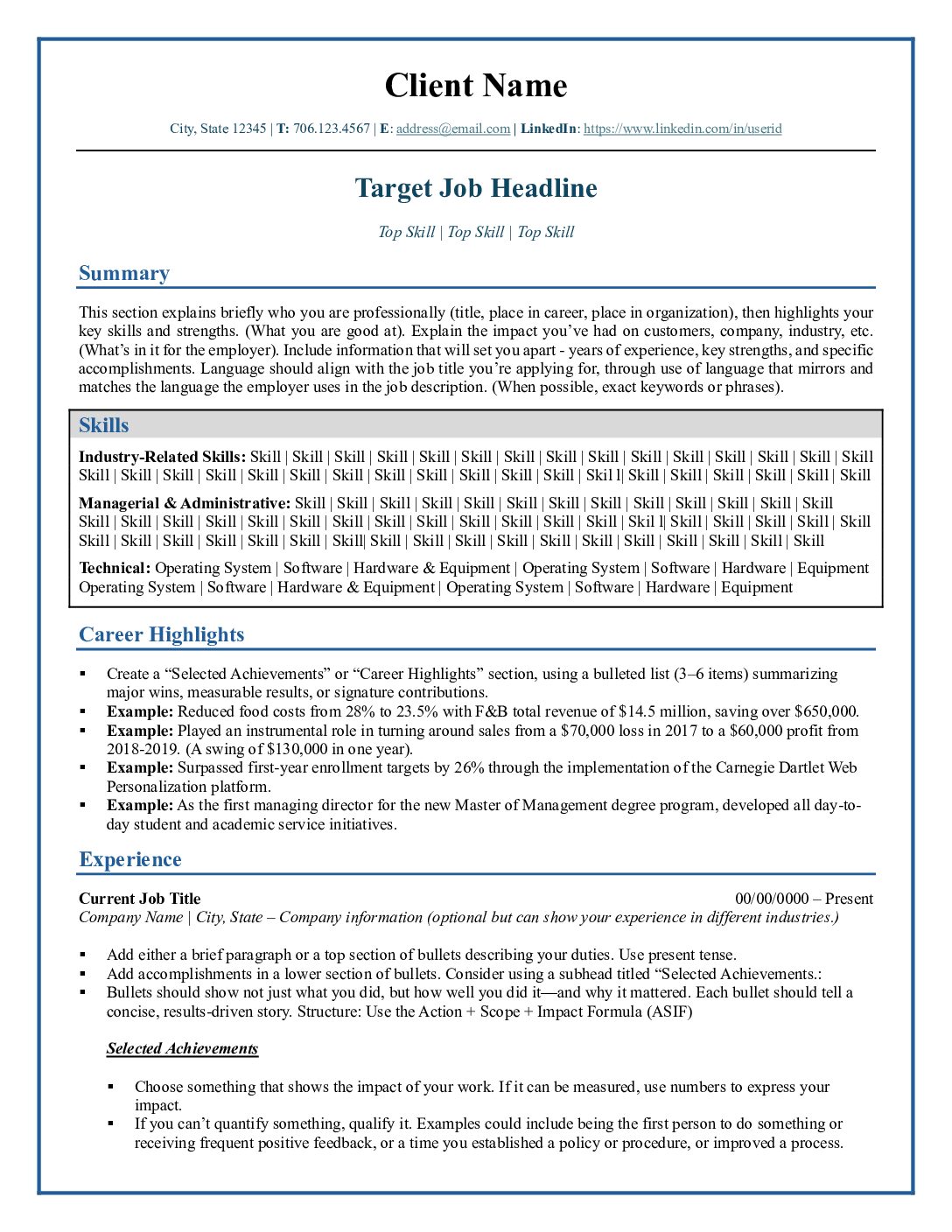
This is part 3 of my recent “Creating a Killer Résumé” webinar, where I did a sample coaching session for a second-step job seeker in Student Affairs. If you find it informative, please share, like and re-tweet the link, and “like” it on YouTube.
More segments are coming next week.
Also, please consider joining my mailing list, where you will get periodic “insider only” content, and special offers. Subscribers also get, for a limited time, access to my auto-responder e-course “Planning Your Career in Higher Ed” for free.
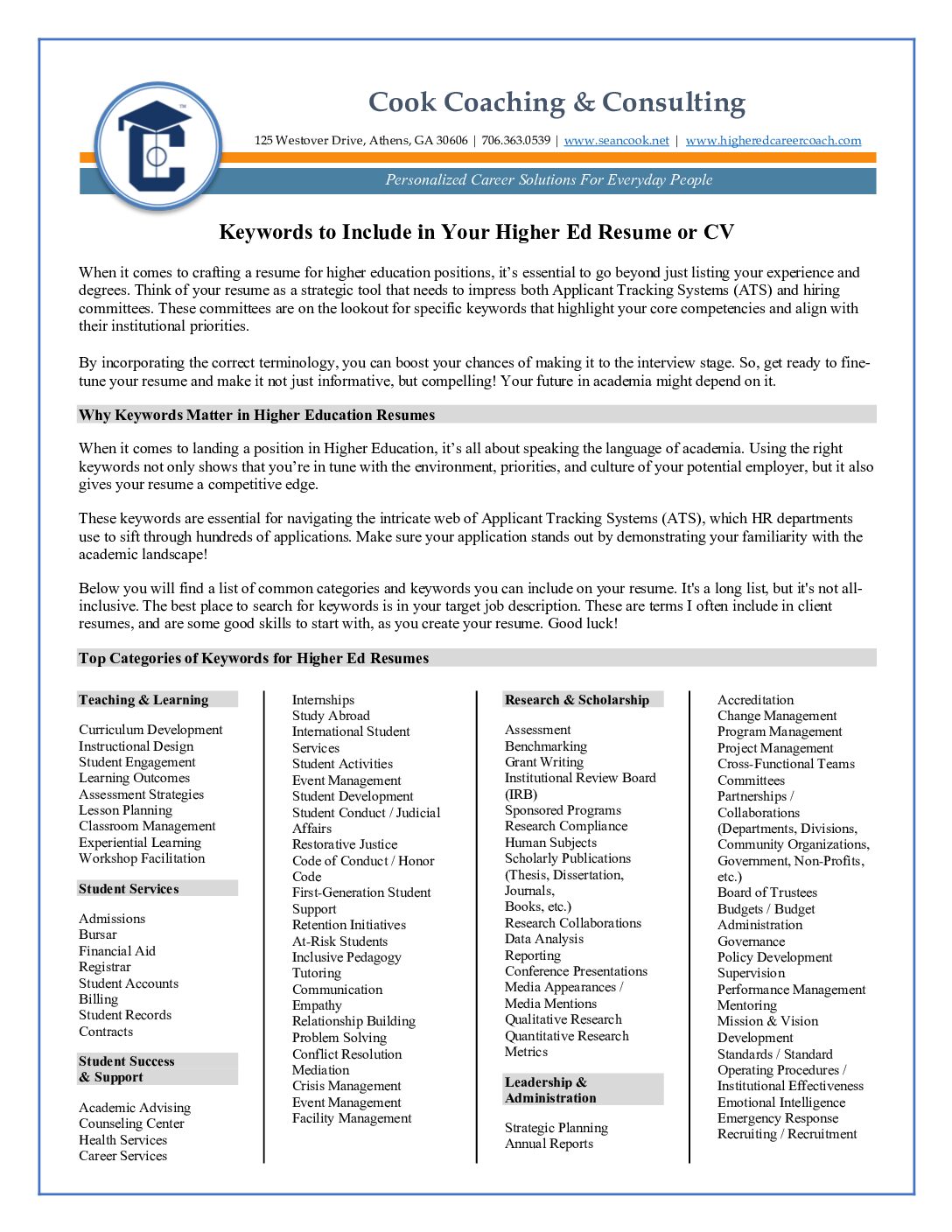
Work with Sean. I help higher ed professionals take control of their careers with tailored services including resume and CV development, LinkedIn profile optimization and networking strategy, interview coaching, and one-on-one career guidance.


 Yesterday, we talked about ways that candidates can prepare for interviews by anticipating questions and preparing their answers. As mentioned in that article, questions and answers can be seen as the “currency” of interview. This may have left some of you asking “Where’s the Bank?”