In my last post, I talked about game theory and how it informs my view of careers and business, and concluded that I need to do a better job explaining what game I am playing.
Let’s get to it!
If I have a game, it’s called Putting Your Purpose to Work. The point of the game is lifting people up to live according to their purpose, and creating conversations that help organizations change in ways that allow them to do so. Specifically, I am doing this because I know it is needed, and that people like me need it.
I work primarily with educators because we (and society) routinely undervalue what we do, and we normalize it by accepting conventional wisdom and ways of doing things that are just plain wrong. The rules, as we are taught to accept them, limit the potential of those participating in the system, by strictly defining who can or cannot play, who is allowed on certain turf, and what rules apply, whether they make sense or not. Kind of reminds you of the times in elementary school when no one picked you for kickball, right? Well, that happened to me a lot, so I stopped playing kickball.
I played by the accepted rules for a long time, and it was killing me. So I changed the game, I bought my own turf, and I’ve been giving away tickets to the game for the last two years. Attendance has been low (only about 20,000 visits over the last two years), but for most of that time, I was playing it safe (or being overly cautious and driven by fear of bankrupting my family.) I have not been jumping the gate into anyone else’s stadium, I’m not playing their game nor accepting their rules. I’m not borrowing their field, and I’ve brought my own ball. This is a different game, I’m playing to a different audience, and I intend to win. I hope you win, too.
Who has an unfair advantage in this kind of scenario? Some might argue that it’s the established system, the old guard, and those people they accept and embrace as the next era of visionaries. Me, I say “meet the new boss, same as the old boss.” That’s business. That’s institutions. That’s closed-system thinking, which assumes that the only people who can get into the game are those with a ticket, or those who jump the gate.
I don’t need to jump the gate.I have my own stadium. It’s got great loudspeakers, a few loyal fans who get me (you know who you are, and thanks!), some others who seem at least mildly intrigued by what I am doing (even those who are annoyed by it or don’t completely understand it), and the beer’s pretty good over here. (No point in owning a stadium if you aren’t going to serve good beer, I say.)
What’s your game?
Whose rules are you playing by?
Do you intend to win?
If you do intend to win, will it be at someone else’s expense?
Did You Enjoy This Post?
Please take my reader survey and tell me what you think about Higher Ed Career Coach. It’s 11 questions and shouldn’t take long. Also, SurveyMonkey will be selecting one recipient at the end of June to receive a $25 Amazon gift card. So give your feedback and get a chance to win!
A while back, I sent in an article to David and Michelle Riklan, the operators of SelfGrowth.Com for possible inclusion in their cooperative book project, titled “101 Great Ways to Enhance Your Career”. This is a compilation of 101 articles with practical, solid advice on how you can take action and improve your career.
I am extremely excited to be a part of this, and am equally excited to be a contributing author along with Tory Johnson, Laura DeCarlo, Brian Tracy, Charlotte Weeks and many more of the world’s leading career experts.
This book was created by David and Michelle Riklan, the founders of the #1 Self Improvement website in the world, SelfGrowth.com. They tapped into the minds of today’s greatest career experts and pulled together a nice collection of 101 insider secrets that shows you how to instantly and positively enhance your career!
In these days of decreased professional development budgets, many higher education professionals are having to scale back their funding for conferences and events. This book offers a practical alternative. All the articles are short, thought-provoking and easily digested–perfect for a professional development reading group, or to share with your staff during team development meetings.
David and Michelle have also bundled the book with some “bonus gifts,” and have created a package of $1,500 worth of absolutely free gifts that you get by purchasing just one copy of our book. I’ve contributed one of the bonuses (my “Mastering the Job Interview” presentation), and have been impressed by the range of topics covered in the other bonuses.
SelfGrowth.Com is so confident you will love it, that they are backing it up with a completely solid guarantee.
Go there and take a look for yourself – and make sure you check out the bonuses.
(Please note that all links above are affiliate links. Sales of books made through these links will support the growth of this site, and help bring career coaching and resources to those who need it. In this vein, I plan to apply all profits made from affiliate sales of this book toward providing free coaching sessions to unemployed or financially disadvantaged higher ed job seekers.)
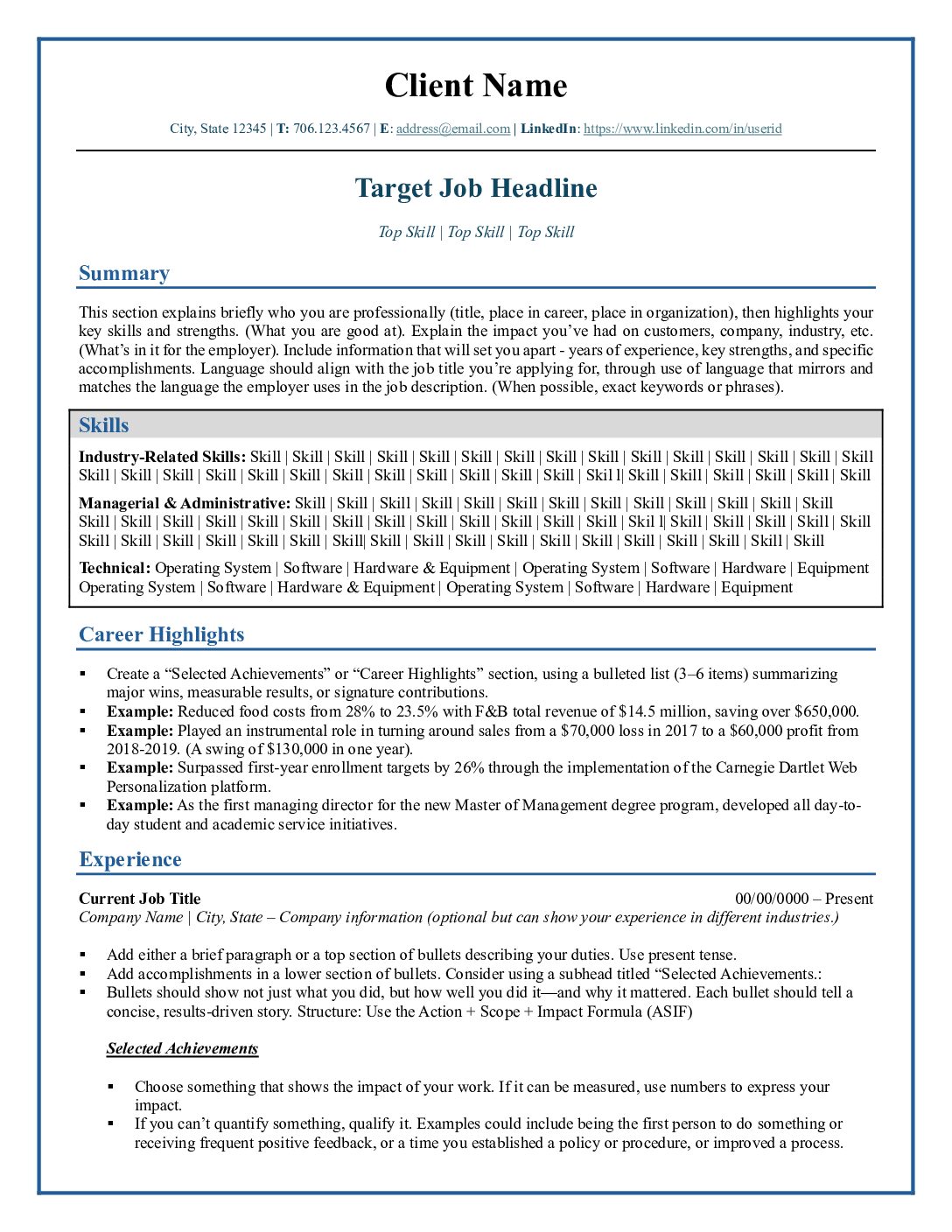
One of the hardest things to do in any job search process is to be yourself while also being polished, on point, and focused on delivering a targeted message to your potential employer about how you will are the perfect “fit” for an open position.
Clients sometimes ask me how they can convey their sense of purpose and desire for a position without coming across as phony. My answer: quit trying to prove yourself and spend your time being yourself.
The logic behind this is simple enough. If you conveyed your qualifications well enough on your resume, cover letter, and other application materials, then the interview is less about that and more about two things:
1. Whether you presented your qualifications accurately, and
2. Whether you will fit into their organizational culture.
If you have presented your qualifications accurately, you do yourself a disservice by presenting yourself as someone you’re not. So try as much as you can to go into each interview “comfortable in your own skin,” and let the details settle themselves.
The truth you must be most comfortable with is that the most qualified candidate on paper often is not the successful candidate in the process. By the time an interview happens, you have been given a so-called “equal opportunity” to state your case, and the assumption you should take into each interview is that all candidates meet the basic qualifications for the job. This will allow you to meet your potential employer on a more equal footing. A good job match will be dictated as much by your potential fit into an organizational culture, or your ability to navigate the nuances of such a culture, in an emotionally intelligent and productive way, as it will be about your actual skills, experiences, and qualifications.
Understanding organizational culture is tricky. You must be ready to separate your interest in a particular job from your possible fit, and accept that a rejection doesn’t label you as “unqualified” for that type of position, or even for another position at that institution. It just means that wasn’t your day, and that wasn’t the job.
This will allow you to move on toward exploring other opportunities, and clear the path to a position and an organizational culture that will hopefully be a better fit for not only your qualifications but for you.
1950s style journalist working in his office at night, he is typing with a vintage typewriter, flat lay desktop
I’ve been posting chunks of the “Creating a Killer Resume” webinar and resume coaching session for the past couple of weeks, but have found a good way to share it with you in its entirety through Amazon S3.
It is just over an hour long, and will show you what a resume coaching session is like, as well as give you tips on how to ensure the content, style, design and flow of your resume bring out the best aspects of your professional history and your potential match for a position.
I will be posting some additional resume resources soon, and announcing some specials on resume and interview coaching to my list. So if you need personalized help creating your resume, stay tuned!
So check back soon, and if you are interested in getting some coaching, sign up for my list so you don’t miss the special offers! (There is a sign-up form in the sidebar, and you may also see a pop-over form as well.)
This is part 3 of my recent “Creating a Killer Résumé” webinar, where I did a sample coaching session for a second-step job seeker in Student Affairs. If you find it informative, please share, like and re-tweet the link, and “like” it on YouTube.
More segments are coming next week.
Also, please consider joining my mailing list, where you will get periodic “insider only” content, and special offers. Subscribers also get, for a limited time, access to my auto-responder e-course “Planning Your Career in Higher Ed” for free.
This brief video (just under 4 minutes) is about commitment, resolution and change. Inspired by words of wisdom from Chris Brogan on the Third Tribe Marketing membership site (affiliate link), Higher Ed Career Coach Sean Cook talks about “levelling up” and resonating with the market.
What advice or input could you offer about ways to improve the site and offer programs and services that would better meet your needs as a higher ed job seeker?
And what are you doing this year to “level up” and step up your game?
Work with Sean. I help higher ed professionals take control of their careers with tailored services including resume and CV development, LinkedIn profile optimization and networking strategy, interview coaching, and one-on-one career guidance.