by sean@higheredcareercoach.com | Jan 29, 2026 | Doctoral Study, Higher Education, Job Boards, Job Search, Job Search, optimization
Faculty job postings can feel overwhelming—long, technical, and packed with academic jargon. But they’re not random. Every section is intentional, and together they tell a clear story about what the institution needs, values, and prioritizes. Learning how to decode these signals is one of the most important skills in an academic job search.
Start With the Position Context
The title and rank (e.g., Assistant Professor, Associate Professor, Lecturer, Clinical Faculty) immediately signal expectations around teaching load, research productivity, and service. Tenure-track roles typically emphasize scholarship and long-term institutional contribution, while non-tenure-track roles often prioritize teaching, advising, or professional practice. Understanding this context helps you calibrate how heavily to emphasize research, pedagogy, or applied experience in your materials.
Required vs. Preferred Qualifications Matter More Than You Think
Search committees often use required qualifications as an initial screening tool. If you do not clearly meet—and explicitly address—each required item, your application may never move forward. Preferred qualifications indicate areas where candidates can differentiate themselves. Treat these as strategic opportunities to show added value rather than optional extras. The Chronicle of Higher Education notes that many strong candidates are eliminated simply because they fail to clearly demonstrate how they meet the stated requirements (Chronicle of Higher Education – Career Advice).
Decode the Teaching Expectations
Pay close attention to how teaching is described. Mentions of course load, undergraduate versus graduate instruction, online or hybrid delivery, or specific pedagogical approaches signal instructional priorities. Language around student populations—such as first-generation students or adult learners—points to institutional mission and should shape how you frame your teaching philosophy. Resources from Inside Higher Ed emphasize that teaching statements are most effective when they clearly align with the institution’s instructional context (Inside Higher Ed – Career Advice).
Read Between the Lines on Research and Scholarship
Research expectations are often embedded in subtle language. References to grant activity, collaborative research, or specific subfields suggest what kinds of scholarship are most valued. Some institutions prioritize steady publication; others emphasize externally funded research or interdisciplinary work. Tailor your research statement to mirror this emphasis rather than using a one-size-fits-all approach.
Service Is Not an Afterthought
Terms like “committee work,” “program development,” or “student advising” signal expectations for institutional citizenship. Especially at teaching-focused institutions, service can carry significant weight. Demonstrating a realistic understanding of service expectations shows maturity and fit—qualities search committees consistently value.
Pay Attention to Mission and Values Language
Statements about diversity, equity, community engagement, or access are not filler. They indicate priorities you should directly address in your cover letter and statements. HigherEdJobs recommends explicitly connecting your experience to an institution’s mission to strengthen perceived fit (HigherEdJobs – Career Resources).
Final Takeaway
A faculty posting isn’t just a checklist—it’s a narrative about what the institution values most. The strongest candidates don’t just meet the qualifications; they respond to the underlying story the posting tells. By mirroring the language, emphasizing key points, and aligning your materials with institutional values, you position yourself as a thoughtful, prepared, and mission-aligned candidate.
Like this:
Like Loading...

by sean@higheredcareercoach.com | Sep 16, 2025 | Career Skills, Higher Education, Job Search, Job Search, optimization, Resumes and CVs, transferable skills
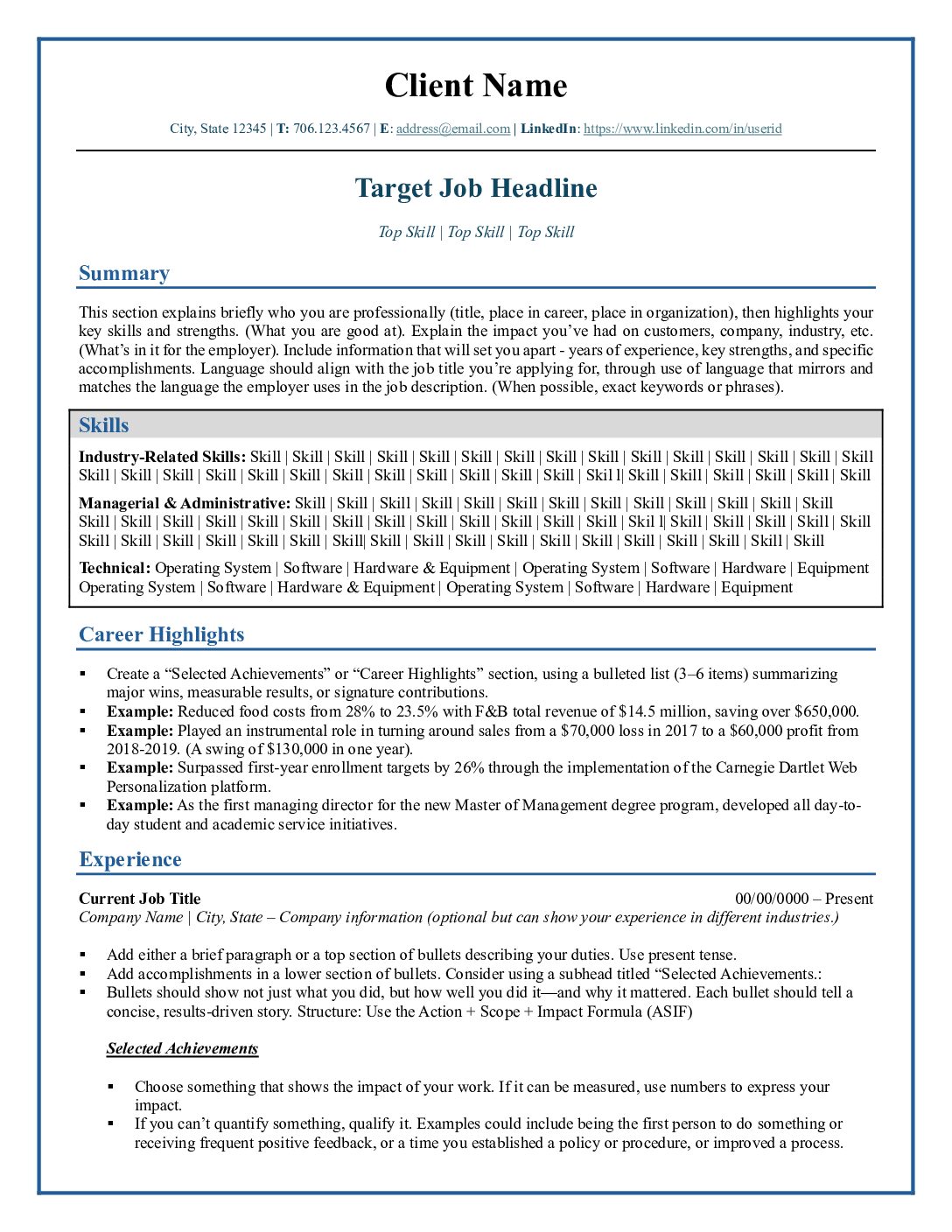
When it comes to crafting a resume for higher education positions, it’s essential to go beyond just listing your experience and degrees. Think of your resume as a strategic tool that needs to impress both Applicant Tracking Systems (ATS) and hiring committees. These committees are on the lookout for specific keywords that highlight your core competencies and align with their institutional priorities.
By incorporating the correct terminology, you can boost your chances of making it to the interview stage. So, get ready to fine-tune your resume and make it not just informative, but compelling! Your future in academia might depend on it.
Why Keywords Matter in Higher Education Resumes
When it comes to landing a position in Higher Education, it’s all about speaking the language of academia. Using the right keywords not only shows that you’re in tune with the environment, priorities, and culture of your potential employer, but it also gives your resume a competitive edge.
These keywords are essential for navigating the intricate web of Applicant Tracking Systems (ATS), which HR departments use to sift through hundreds of applications. Make sure your application stands out by demonstrating your familiarity with the academic landscape!
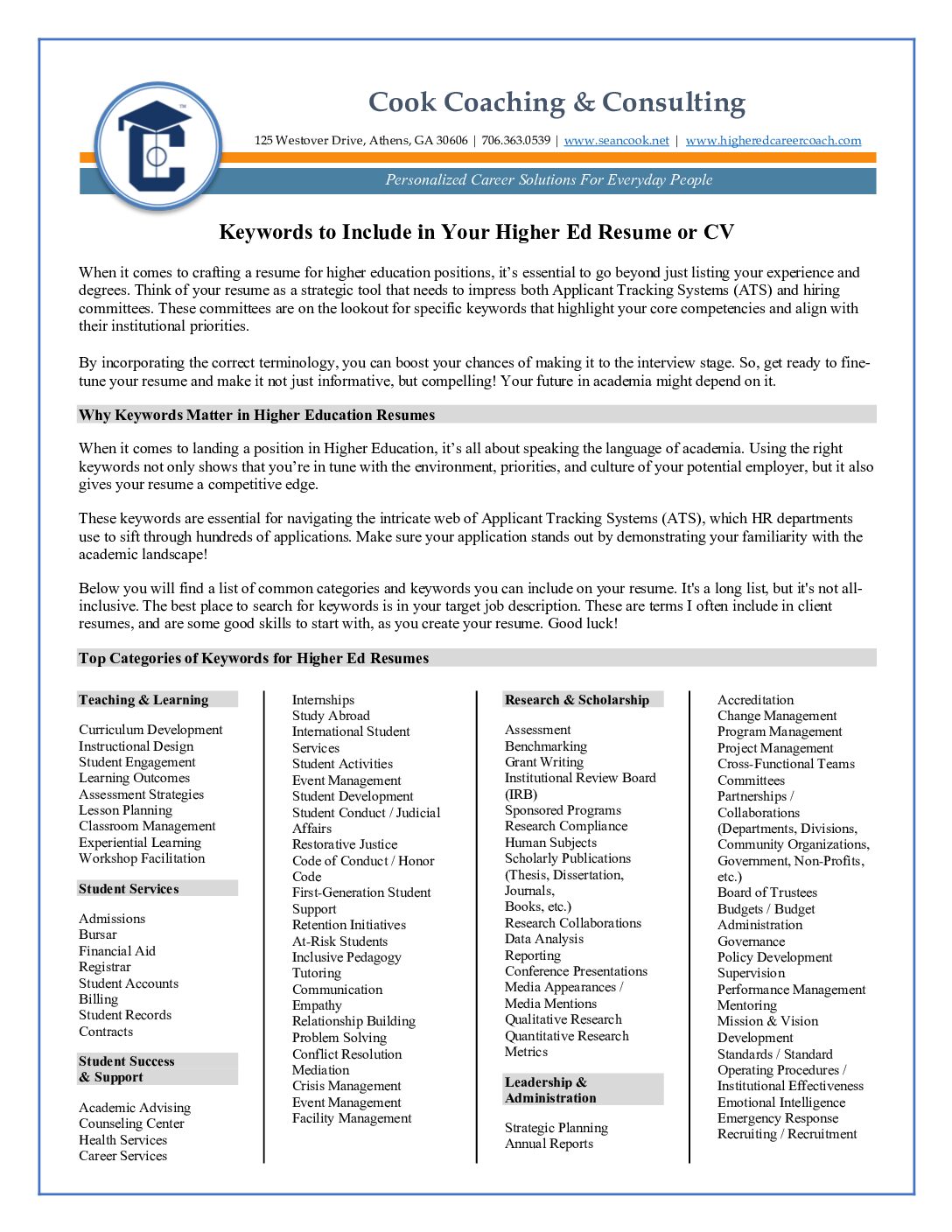
Below you will find a list of common categories and keywords you can include on your resume. It’s a long list, but it’s not all-inclusive. The best place to search for keywords is in your target job description. These are terms I often include in client resumes, and they are some good skills to start with, as you create your resume. Good luck!
Top Categories of Keywords for Higher Ed Resumes
Teaching & Learning
- Curriculum Development
- Instructional Design
- Student Engagement
- Learning Outcomes
- Assessment Strategies
- Lesson Planning
- Classroom Management
- Experiential Learning
- Workshop Facilitation
Student Success & Support
- Academic Advising
- Counseling Center
- Health Services
- Career Services
- Internships
- Study Abroad
- International Student Services
- Student Activities
- Event Management
- Student Development
- Student Conduct / Judicial Affairs
- Restorative Justice
- Code of Conduct / Honor Code
- First-Generation Student Support
- Retention Initiatives
- At-Risk Students
- Inclusive Pedagogy
- Tutoring
- Communication
- Empathy
- Relationship Building
- Problem Solving
- Conflict Resolution
- Mediation
- Crisis Management
- Event Management
- Facility Management
Student Services
- Admissions
- Bursar
- Financial Aid
- Registrar
- Student Accounts
- Billing
- Student Records
- Contracts
Research & Scholarship
- Assessment
- Benchmarking
- Grant Writing
- Institutional Review Board (IRB)
- Sponsored Programs
- Research Compliance
- Human Subjects
- Scholarly Publications (Thesis, Dissertation, Journals, Books, etc.)
- Research Collaborations
- Data Analysis
- Reporting
- Conference Presentations
- Media Appearances / Media Mentions
- Qualitative Research
- Quantitative Research
- Metrics
Leadership & Administration
- Strategic Planning
- Annual Reports
- Accreditation
- Change Management
- Program Management
- Project Management
- Cross-Functional Teams
- Committees
- Partnerships / Collaborations (Departments, Divisions, Community Organizations, Government, Non-Profits, etc.)
- Board of Trustees
- Budgets / Budget Administration
- Governance
- Policy Development
- Supervision
- Performance Management
- Mentoring
- Mission & Vision Development
- Standards / Standard Operating Procedures / SOPs
- Institutional Effectiveness
- Emotional Intelligence (EQ)
- Emergency Response
- Recruiting / Recruitment
Advancement & External Relations
- Alumni Relations / Alumni Affairs
- Community Outreach
- Corporate Relations
- Development
- Donor Relations
- Fundraising
- Government Relations
- Legal Affairs
- Public Relations
- Regulatory Compliance (ADA, FERPA, Title IX, EEO, etc.)
Diversity, Equity, & Inclusion (DEI)
- Inclusive Excellence
- Multicultural Programming
- Equity Initiatives
- Accessibility
- Community Engagement
- Cultural Sensitivity
- Intercultural Communication
- Culturally Responsive
- Bias Mitigation
- Employee Resource Groups
- Campus Climate
- Learning Environment
- Work Environment
- Stakeholder Engagement / Stakeholder Relations
Auxiliary & Business Services
- Athletics
- Bookstore
- Campus Dining / Food Services
- Catering
- Housing / Residence Life / On-Campus Living
- Marketing
- Public Safety
- Parking
- Recreation / Intramurals
- Document Services / Printing Services
- Purchasing
- Human Resources
- Training / Training & Development
- Facility Management
Technology & Innovation
- Learning Management Systems (LMS) – Blackboard, Canvas, Moodle, Etc.
- Online Course Design
- Educational Technology
- Data-Informed Decision Making
- Virtual Learning Environments
- Database Management
- User Experience (UX)
- Dashboard Development
- Social Media Management
- Google Analytics
Common Software and Web Platforms
- Microsoft Office – Microsoft Word, Excel, PowerPoint, SharePoint, Teams, Microsoft 365
- Google Apps (Google Workspace) – Google Docs, Sheets, Slides, Google Drive, Google Classroom
- Design – Canva, Figma, Affinity Designer, Adobe Creative Suite – InDesign, Adobe Illustrator, Photoshop, Acrobat, Acrobat Reader, etc.
- Meeting Platforms – Zoom, Google Meet, WebEx, Skype, GoToMeeting
- Website Development: HTML, WordPress, Squarespace, Wix
- Data Visualization – Tableau, PowerBI, Qlik, Google Looker
- Data Collection and Management – Qualtrics, Access, SurveyMonkey, TypeForm
- CRM: Slate, Salesforce Education Cloud, Ellucian CRM, Element 451, TargetX
- Student Information Systems – Ellucian (Banner, Student), Workday Student, Jenzabar One, Salesforce Education Cloud, PeopleSoft Campus Solutions
- Housing & Residence Life Platforms: StarRez, Entrata, eRezLife, Roompact, Creatrix Campus, SpaceBasic
Other Common Keywords
- Adaptability
- Analytical Mindset
- Growth Mindset
- Attention to Detail
- Collaboration
- Coordination
- Critical Thinking
- Time Management
- Customer Service
- Teamwork
- Leadership
- Team Leadership
- Operations
- Planning
- Organizing / Organizational Skills
- Continuous Improvement / Process Improvement / Process Optimization
- Alignment
- Negotiation
- Assess(ed)
- Manage(d)
- Create(d)
- Implement(ed)
- Execute(d)
- Develop(ed), Development
- Critical Thinking
- Increased
- Decreased
- Drove / Drive
- Facilitate
- Create(d) / Creative / Creativity
- Networking
- Present(ed) / Presentation(s)
- Flexible
- Work Independently / Minimal Supervision / Self-Directed/ Self-Motivated
How to Use These Keywords Effectively
- Mirror the job posting: Adapt your resume by weaving in the exact terminology used in the description.
- Be authentic: Only use keywords that accurately reflect your skills and experience.
- Show impact: Combine keywords with measurable achievements (e.g., “Led curriculum development initiative that improved retention rates by 12%”).
- Balance ATS and human readers: Don’t overstuff your resume; ensure it reads naturally and flows smoothly.
Final Thoughts:
Unlocking the next step in your higher education career begins with the right keywords—your ticket to capturing attention and making your resume shine. By crafting your document with intention and authenticity, you not only meet the expectations of today’s institutions but also showcase the unique value you bring. Approach your job search with confidence, knowing that each strategically chosen word brings you closer to new opportunities and professional growth. You’ve got this!
Great Resources for Higher Education Career Advice
If you would like this article as a handout, please support Higher Ed Career Coach by purchasing a PDF version below for $1.
Keywords to Include in Your Higher Ed Resume or CV
When it comes to crafting a resume for higher education positions, it’s essential to go beyond just listing your experience and degrees. Think of your resume as a strategic tool that needs to impress both Applicant Tracking Systems (ATS) and hiring committees. This document includes common categories and keywords you can include on your resume. If you would like to support this site, buy this document for $1.
Work with Sean Cook – Intelligent Career Strategies for Higher Education Professionals
. I help higher ed professionals take control of their careers with tailored services including resume and CV development, LinkedIn profile optimization and networking strategy, interview coaching, and one-on-one career guidance. Whether you’re pursuing advancement in academia or exploring opportunities beyond the campus, I provide the tools and strategies you need to thrive in today’s competitive job market. For more information, visit https://www.seancook.net/. You can read recommendations from previous clients on my LinkedIn profile at https://www.linkedin.com/in/seanccook/. To schedule your complimentary 30-minute consultation, please use the Calendly widget below.
Like this:
Like Loading...