This Friday on the Higher Ed Life and Careers Show, Life and Career Coach Sean Cook will be joined by special guest Andrew Henck who is tweeting ideas & thoughts on leadership, nonprofits, higher ed, politics, social media from a Gen Y perspective as @MillennialTweet and blogs about them on http://themillennialjourney.wordpress.com We’ll be talking about a variety of college transition issues, his blog, and the importance of the “bookends” of the college experience…transitioning to college from high school, and out to the wider world upon graduation.
I’ll also be talking a little about mind-mapping and revisiting last week’s episode with Mark Dykeman of the ThoughtWrestling blog. Earlier this week, I announced a mind-map-your-job-search contest to get your ideas on how you could use mind-mapping to plan your job search or your long-term career plan. I’ve decided to extend the contest due to low participation so far. You can sketch out your plan on a napkin and scan it in, do a Prezi, do a document, or something else. Do it your way, and send me the document or a link to wherever you have it posted on the web. I’m looking forward to seeing what ideas people have out there, and giving away a copy of Mark’s excellent e-book: Unstuck, Focused and Organized (affiliate link.)
I also plan to do a little catch up. I had chosen people to honor in September and October for my “Who-Do” awards, to recognize them for doing great things for higher ed and student affairs. But I never got around to announcing the names of the people I had selected or tell you why. So I am going to do so on the show. I am sure you are all on the edge of your seats!
Lastly, I am going to discuss a little about where the blogs and coaching programs are heading in the next few months, and how I am hoping to tweak my business model so that I can offer better content, more services, and keep costs for paid services in line with demand. I have a few ideas that I think are pretty interesting, and I’d love to get your thoughts.
Please listen in from the episode page or click on the episode badge below. You can call in to ask questions or make comments to (347) 989-0055 or via Skype click-to-talk by pressing the Blue Skype “S” logo once the show is on the air.
There are some important periods of the academic year to pay attention to when you work in higher ed. Everyone acknowledges that the busiest times…welcome week, exam week, and closing for the summer… can eat up your time and energy. But it’s equally important to pay attention to the times which are slower-moving, because they sometimes represent “the calm before the storm”
When I worked in Residence Life, I always had a mid-semester slog starting around October. People were settling into routines, events were happening here and there, and my calendar would feel pretty set, with regular committee meetings, 1-on-1 meetings with supervisees, and loads and loads of busy work. It was always around this time, too, when we’d start to see roommate and neighbor conflicts pick up, alcohol poisonings increase, and psychological issues rear their ugly head.
This period between early October and Thanksgiving always felt to me like wading through molasses. When this feeling hits you (and it will, sometime between now and Thanksgiving, I guarantee it!), you may do one of two things…bury yourself in work so that you feel busy and productive, or avoid work like the plague, put off unpleasant tasks as long as you can, and just hope to ride it out until break. Neither of these methods should be mistaken for work/life balance.
Times like these call on you to stop ad pay attention to how you are balancing your priorities. If you don’t, it can be like a slow, smoldering burn, ready to flash into a fireball at any moment, and leave you ashen, grey, or even burnt to a cinder.
So do yourself a favor: Pay attention to how you are spending your time, and find some time for yourself. If you don’t insist on work/life balance, you won’t have any!
What do you do to make it through your mid-semester slog? Share your ideas, questions and thoughts in the comments below.
Sean Cook, Certified Life Purpose & Career Coach
Sean Cook is a certified Life Purpose and Career Coach based in Athens, GA. Before completing his certification from the Life Purpose Institute, he earned his M.Ed. in Counseling and Guidance Services from Clemson University, and spent over 15 years various student affairs roles in higher education. He specializes in working with college students, recent graduates, and higher ed professionals, and acts as publisher for HigherEdCareerCoach.Com and HigherEdLifeCoach.Com. You can listen to his periodic podcast, the Higher Ed Life and Careers Show, at 11 a.m. Eastern on Fridays on BlogTalkRadio.com. Look for his upcoming contribution to SelfGrowth.Com’s new book “101 Great Ways to Enhance Your Career” later this Fall.
This week, the Student Affairs Twitter Chat (#sachat) passed a milestone. Now one year into its existence, it has changed how many student affairs professionals engage in conversations and professional development. I’ve been a member of the community surrounding this chat and the Student Affairs Collaborative Blog during this formative year, so I’d like to share my thoughts on how being involved in this community changed my life.
What communities are you engaged in online?
Are you using social media to engage other professionals and to network? Is it making you a better professional?
This week’s incident at the University of Texas at Austin probably hit a nerve for many of us who work in student affairs, because we are often called to assist in responding to the practical and emotional impacts of violence on campus.
Every time something like this happens, I respond in two ways:
Go into an autopilot sort of mode while responding to what everyone else needs.
Push aside thinking about it as much as possible, until I crash.
The first way is clearly healthier than the second, but for me at least, both are entirely necessary for maintaining focus. And generally, I have done this well.
During my career in Residence Life, I was called on to respond to a few high-profile emergencies:
Incidents in the halls in response to the first so-called ArtsFest Riot
A completed suicide and the follow-up around it
The aftermath of an on-campus shooting
Dissecting this event is inevitable, and the supposed warning signs that people will parse over and second guess have already begun. I’m not sure what all the answers are, but I’d like to create an opportunity to talk about this, share experiences and process.
So I want to open up the conversation a bit to our readers and listeners. This Friday’s edition of my BlogTalkRadio podcast will be dedicated to discussing Violence on Campus, how to be prepared, how to respond, and how to work through it when you have to push your needs aside and take care of others.
Last Monday, I posted over on higheredlifecoach.com about how successful students seek help. I suggested that students familiarize themselves with resources available to them on campus early so that they know where the appropriate offices are if they need them in the future. When I was working out some of the details about my post with Sean, he suggested that I might also give some ideas to higher ed staff and administrators about how we can help encourage help-seeking behaviors in our students.
I don’t claim to be an expert on this subject, and I really would just like to start the discussion about setting the tone to encourage students (and perhaps even other faculty or staff) to ask for assistance when needed.
I started my job as an academic advisor at a new institution two years ago. When I was interviewed, I remember being asked how comfortable I was asking questions of others. As with most jobs or new institutions, there was a huge learning curve to overcome before I really felt confident meeting and talking about academic-related issues with students. I didn’t know where buildings are (I still have to refer to the campus map pretty frequently), I didn’t know the specifics of the curriculum, and I didn’t know what additional resources were available to our students. My office trained me on the curriculum throughout my first few months on the job, but much of the training about additional resources was left to me. I looked at every web site on our university’s “For Students” page. I attended brown-bag lunch presentations by a variety of people from across campus. Some of my colleagues and I set up appointments with various offices to get more information about the services they provided. It was a long (and ongoing) process to gather information that I knew my students needed, but that I didn’t necessarily have.
I am a full-time employee and I don’t have all of the information. I spend 40+ hours per week helping students, and yet I don’t have anywhere near all the answers. So how or why do we expect our students to know where they should be finding appropriate resources? At this point in my life, I have at least become comfortable with asking for help or for the answer to a question if I don’t know, but some of our students haven’t gotten there yet. For some, this is the first time that they may have encountered difficulty, either with their academics, personal life, or emotions. If they haven’t had to ask for help before, it can be a challenging thing to do, especially because first it means that they have to admit they don’t have it quite all together.
Our campuses need to set the tone that it is okay, and actually encouraged, to ask for help. Perhaps that means launching a campus-wide “Just Ask!” campaign, with posters highlighting campus resources, YouTube videos with plugs from the university president or high-profile student athletes, and a Twitter account to accept and respond to questions. A campaign of that size likely would take a lot of coordinating, but it could be really effective in the long-run. If you are looking for ways of encouraging help-seeking behaviors in the shorter term, here are some of my ideas:
Encourage students to find at least one person (faculty, staff, administration) on campus who they feel comfortable talking to, even about difficult issues. That one person might not be able to answer all of the student’s questions or solve all of his/her problems, but would at least be likely to be able to provide referrals to others who can continue to help.
Find out what resources are available to students on your campus. If possible, know the office hours and location, and perhaps even the name of someone in that office.
Keep pamphlets or fliers of available resources easily accessible to students. If there isn’t space in the office or on your desk, at least have them handy so that you could give one to a student if necessary.
If you don’t know the answer or the appropriate office to refer to, ask someone else. If students see that even faculty and staff are willing to ask others, they may gain some courage to do the same in the future.
What have others done to encourage help-seeking on your campus? Please share your ideas or programs!
As Stacy Oliver pointed out in her blog post last week on the Student Affairs Collaborative Blog, we are often afraid of asking for help because there might not be someone there to help. We all know that we work in higher education to support students and that if a student asks for help, we will be there. Now we just need to figure out how to make sure that the students all know that!
Sarah Howard is in her third year of academic advising at the University of North Carolina at Chapel Hill. She advises students with majors in natural sciences, mathematics, and pre-health fields. Sarah completed her bachelor’s degree at Ashland University in Ohio with a double major in English and mathematics and a religious studies minor; she also holds a Master of Arts degree from Bowling Green State University in college student personnel. Her favorite colors are blue and orange. She can be found online at @howardsj or her blog at http://undecidedlyadvising.blogspot.com
The last few weeks have been interesting to me. With the exception of August 1999, when I was in-between jobs, I worked on college campuses during the busy back-to-school rush for all of my adult life. So it was weird to not be getting ready for new staff, RA training, and welcome week.
I expected this August to be different, in terms of how busy I would be, but that hasn’t been true. I’ve had a lot of client appointments lately, as some finally found themselves full-swing back into searches that had stalled for a while, and realizations that the grad school applications they’d been thinking about in theory need to find their way to paper (or electronic) form sooner than later. All the sudden, following up on a site redesign, some emerging partnerships, the development of some e-books, seminars and workshops moved from my “get to that soon” list to “Oh, crap, I really have to get in gear with that” list. And I realize that I wasn’t paying attention.
It reminded me a lot of my time on campus, and all that goes into getting ready for a successful year. I wonder now why I expected it to be different. There are so many things that pull at our attention and all too often, we drop the ball, and miss the important details of what is going on around us. Today, I was catching up on Twitter (something that often distracts me, but that oddly, during this time, I have been able to tune out) and I saw this tweet from my friend and coaching buddy Monica Moody.
The link she mentions in her tweet goes to a YouTube video of an interesting psychology experiment about attention. And a reminder that, as Linda Loman pleads in her famous monologue to son Biff in Death of a Salesman, “attention must be paid.” (Video embedded below.)
As you get into full swing of the back-to-college season, and all the stresses that come with it, how are you paying attention? What will you be missing? And how can you keep yourself from missing the “invisible gorilla?”
Please share your thoughts in the comment section.
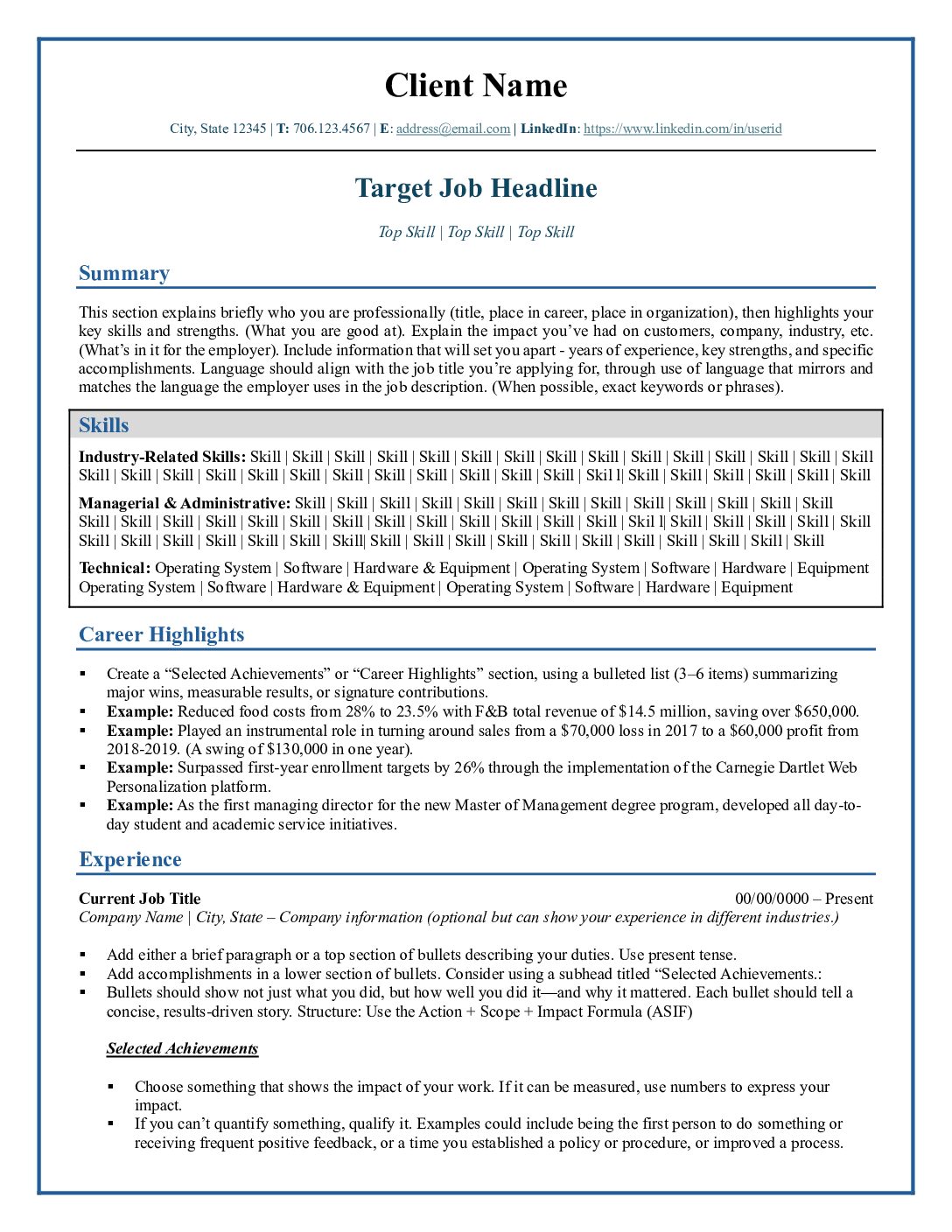
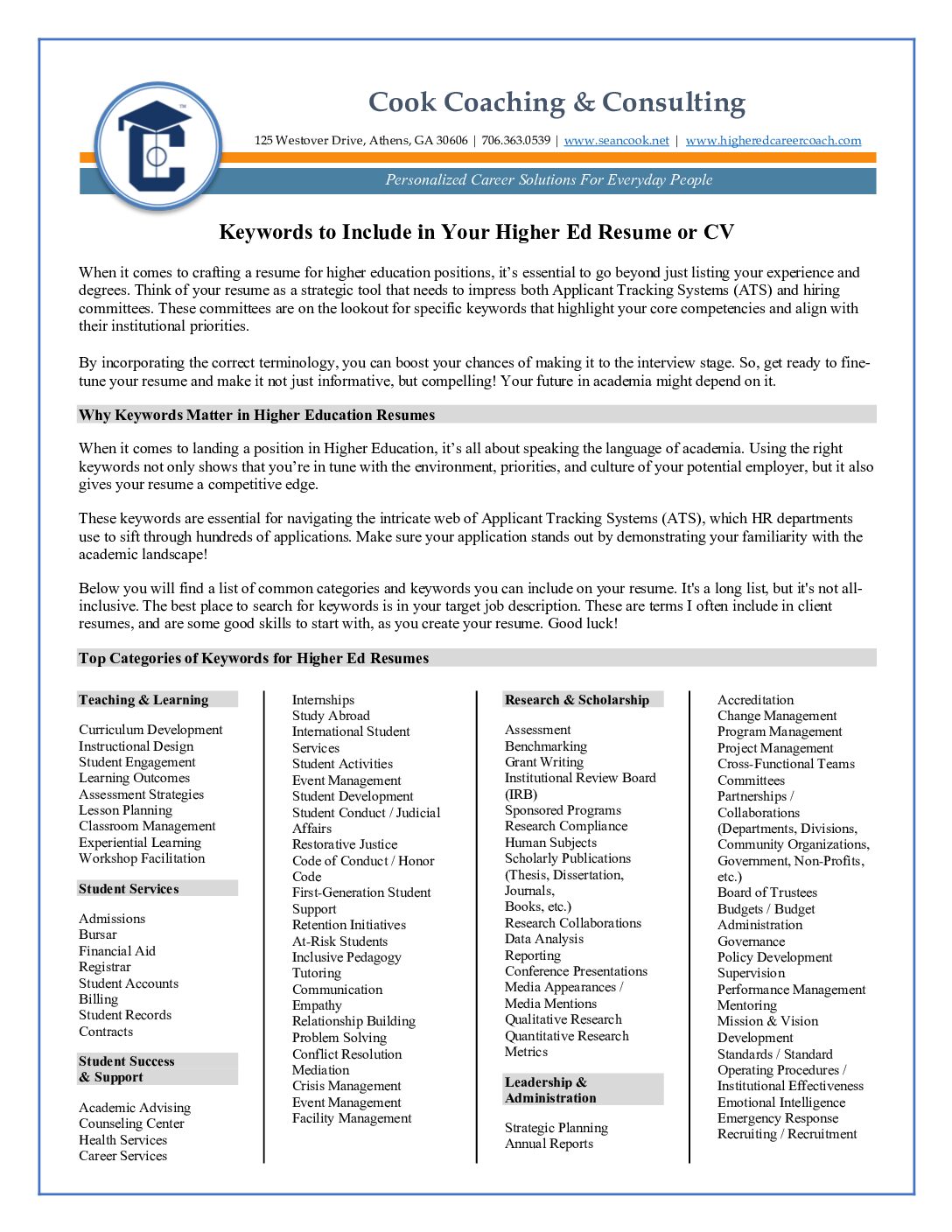
Work with Sean. I help higher ed professionals take control of their careers with tailored services including resume and CV development, LinkedIn profile optimization and networking strategy, interview coaching, and one-on-one career guidance.


 This Friday on the Higher Ed Life and Careers Show, Life and Career Coach Sean Cook will be joined by special guest Andrew Henck who is tweeting ideas & thoughts on leadership, nonprofits, higher ed, politics, social media from a Gen Y perspective as @MillennialTweet and blogs about them on http://themillennialjourney.wordpress.com We’ll be talking about a variety of college transition issues, his blog, and the importance of the “bookends” of the college experience…transitioning to college from high school, and out to the wider world upon graduation.