So the school year has wound down, graduation has passed, and the halls are empty (well, except for those being used for Summer School.) For some of us, it’s time to rest on our laurels for a bit, before planning ramps up for the school year.
But for others, summer might be anything but relaxing. If you have the “graduation-and-no-job blues,” the “I’ve-gotta-get-out-of-this-place-it’s-killing-me itch,” or the “been-here-done-here-now-what?” mid-career crisis, then it’s high time you get moving with your job search, or grad school planning…or you’ll be looking in the mirror this August, seeing the reflection of your discontent staring back at you, and wondering…
“How did this happen? I’m supposed to be doing something great!
…And it’s not this.”
If you find yourself with the blues, the itch, or the mid-career crisis, maybe it’s time to get clear on your interests, evaluate your skills, and start planning for a fresh start this August. Summer represents a second wave of opportunities for job seekers in academia, because many who got a job in the first wave also left a job.
To help those who have found themselves in this position, I’m launching a new coaching program to help them get unstuck.
8 Weeks to August Coaching Program
The “8 weeks to August” program is geared toward job seekers who are determined to start something new this academic year.
The program will be a “hybrid” program…part individual coaching, and part on-line activities and support. It will also be significantly cheaper than a regular 1-on-1 coaching program, because I’m sensitive to the financial aspects of job-seeking in higher education.
Features
2 individual coaching sessions in early June, to outline your goals for coaching, and to review your resume and cover letters, to make sure they are selling your unique skills and experience in ways that match the positions you are targeting. ($200 Value)
2 practice interviews-one via phone, the other via Skype, with feedback about areas for possible improvement. ($200 value)
2 additional individual coaching sessions during the program, which can be used for exploration, goal-setting, additional mock interviews, strategy sessions for specific applications, etc….Really, whatever you might need. ($200 value)
E-mail coaching during the entire program- send short questions or requests to me on topics of your choosing.
Online access to readings and activities that will help you focus your efforts on finding a position that will be a natural match for your interests, skills and abilities.
Group discussion opportunities for all group members, for support and encouragement from other job seekers.
The ability to have private online chats and discussions with me and with other group members about your search.
Benefits
Increased clarity about your career goals, as a result of personalized feedback about your resume, cover letters, and job search strategy.
A more focused plan for your job search, from opportunities to explore options, weed out ones that aren’t a good match, and concentrate on those more suited to your skills, experiences, and interests.
A better understanding of potential obstacles to your success, including practical ones (like lack of training, or poor interviewing skills) and emotional ones, like anxiety, confusion, or poor self-esteem; with some personalized recommendations for skill-building, improved personal presentation, and building self-confidence.
What else do you need to know about the
“8 Weeks to August” Career Coaching Program?
I’ll give you some quick ideas, but you’ll need to go to the event page to get more specifics.
The price point is incredibly good…a significant discount over my normal rates (since it is a hybrid program, with individual and group components, the number of registrants will allow me to do this.)
The number of registrants for this program will be extremely limited, because I want to be able to deliver all I promise, and more, to participants, and turn them into raving fans and the best kind of advertising money can’t buy…satisfied clients.
I will be closing the program to new enrollments next Friday at 12 noon EST.
Every participant will receive a copy of a great book on personal branding.
If I reach my intended target size for this program, one of the participants is going to end up getting all the features and benefits mentioned above, and a significant prize, which will basically be like giving them all their money back.(That’s right–all of it!)
Do I have your interest now?
If you or a friend are “stuck,” and really need to move forward and make significant progress in your job search, wouldn’t it be great to get personal attention, customized resume/cover letter/interview assistance, the support of a certified coach and other job seekers in your field, and the opportunity to get all your money back?
I know that if I was looking for a position, it would interest me.
So don’t wait…visit the program’s registration page (link below) to learn more about this program, what the costs and benefits are, and about my money-back guarantee.
As schools around the country start to close out the academic year, honor their student leaders and organizations with awards, check out students from the residence halls, and prepare for graduation, I can’t help but reflect on the ways my life and career path have changed in a few short months. Last Fall, as I was finishing up summer projects, and preparing for RA training, I was also contemplating some major life changes.
I’d planned to start a doctoral program here at the University of Georgia, but I wasn’t accepted. I’d applied to the program for several reasons: first, it’s a great program; second, it is close to my family (in South Carolina) and Sarah’s family (in Florida) and third, after 14 years in State College, I’d finally reached a point in my career at Penn State at which I’d accomplished what I set out to do. More importantly, I had to admit that I wasn’t motivated by my daily routine, and I found myself more than a little bit discouraged as I faced the prospect of another year of doing the same things.
I’d imagined (and worked quite diligently toward) a return to the classroom. From preparing for the GRE, to writing, fretting over, and re-writing my statement of purpose, I’d been single-minded about getting in to the University of Georgia, so it was kind of a blow to get rejected. Despite what some might expect, though, I won’t say a bad word about U. Ga. or their graduate admissions process, or about Residence Life at Penn State. I have deep respect for, and can honestly say that I learned a lot about myself, from both.
At Penn State, I had many opportunities to learn and grow as a professional, and my work was rewarded by several promotions and many great learning and leadership opportunities. The people there are not just my colleagues or my friends; many of them are family to me, and I will always value the time I spent there and the relationships I forged. And though it would be easy to be bitter about getting rejected from a grad program when you have a generation of experience behind you, good GRE scores and recommendations, etc., I’m not upset with anyone at U.Ga., because I learned something very valuable from the process. It was a simple but powerful realization, and it was this: I don’t love Student Development theory.I think it’s interesting, but my real love is for two things: the people and the process. While I am capable of doctoral-level work, and a Ph.D. would help me get to a logical next step, as a faculty member or senior administrator, I hadn’t really explored my other options enough, and I’d set some aside that were actually important to me (and that I have always wanted to do) because they didn’t fit with what many would consider conventional next steps along a “career path” in Student Affairs.
I’ve known several things about myself for most of my life, but wasn’t giving them a proper place in my personal “scheme of things.” First, I have always been a writer and a story-teller. Some of my earliest memories are of me telling my grandmother fabulous stories. When I was young, people didn’t read me bedtime stories: they asked me to tell them. Second, I’ve always been a “helper” and a “sounding board” for other people, and I like to challenge others to think about what they want to do with their lives. This was apparent in many ways as I grew up, became an RA and eventually moved into full-time work in higher ed. Third, I’ve always been creative and free-spirited, and Fourth, I hate bureaucratic nonsense and as much as possible, I do my own thing, and I seldom apologize for it. My track record on this count is pretty good. I am an original thinker who drives conversations in new directions, experiments, and takes risks. Usually, the results are good. When they aren’t, I explain my rationale, apologize for bad results if necessary, and move on.
Finally, late last summer, as training loomed in the near future, I took a pretty big leap of faith, and registered for a Coach Certification program with the Life Purpose Institute, and began to plan my departure from Penn State. The program was in October and after it, Sarah came down to meet me in Atlanta, and we went to Athens to look at houses for two days. We made an offer on our new house on the second day.
I’d planned to end the semester at Penn State, but finding the house kind of tipped things in a different direction, because it created a new sense of urgency toward unloading our old one and moving on. Pennsylvania winters are notoriously bad for selling houses, so we had to jump right on it. Things started to happen quickly, and before I knew it, the die was cast. After 14 1/2 years in Happy Valley,we were packing up our life, unloading our junk and starting something new.
The strangest part of this, for me, has been how easy it has been to not look back. I don’t have any “might-have-beens” to dwell on. I did what I went there to do, and I know that I made a difference while I was there. These days, I spend my time writing, and discussing life and career issues with people from all over. Through Twitter, Facebook, LinkedIn, BrazenCareerist, and the wonderful #sachat community, I’m more connected that I ever have been to others working in Higher Ed.
Since I’m new in business, I spend a lot of time working on ways to bring in clients, do presentations and offer workshops. It’s challenging and very different from working for a large university. I set my schedule, pay for all my benefits, and I generally work alone. I don’t supervise anyone, and I don’t have a boss, but in some ways, I answer to everybody…either I get feedback that my work is helpful, or I work through the silence and keep trying until I find something that is both validating and (hopefully) potentially profitable. I’m not swimming in money by any means. I’ve earned less this year than I earned in a week at my old job, and most of what I’ve earned has gone to pay some of my fabulous guest writers. And let’s not get into what it costs to get certified as a professional coach through a reputable program, or to start a business.
Last August, I only imagined what it would be like to take this leap, and to forge out on my own. I had greater expectations for what the year would bring me, but, like many new graduates heading out into the world, or professionals moving on to their first (or next step), I choose to look back on the year with fondness, to reflect on everything I’ve learned…about business, about careers, about higher ed, and about myself, and to keep moving toward opportunities and experiences around each bend.
I know that I will get where I am meant to go in my career and in my life. I’ve found a purpose that drives me forward, and the realization that I’m doing the driving, so I’m the one who gets to decide where to go next.
It may be the end of the world as I knew it, but I feel fine.
How about you?
Have you set aside aspects of yourself as you pursue the “next steps” in your career?
Are there ways to incorporate these aspirations and skills into your current job?
What risks are you willing to take to create more fulfillment in your life and career?
This weekend, I’m in Florida, for a visit with Sarah’s parents at the Villages. We go down a couple of times per year, take in the sun, and give Nana and Pop-Pop some quality time with our kids, Brendan and Susannah (Susie). We hang out, cook out, go out to eat, swim and generally enjoy the good weather and all that “America’s Favorite Hometown” has to offer.
But this time, it’s going to be a little different. Not just because it’s Easter. Not because we live closer since we moved to Georgia. This trip figures to be a once-in-a-lifetime experience.
No, we are not going to Disneyworld, Universal Studios or SeaWorld. (Been there done that. Going to do it again, but since I’ve been to all of those several times (9 or 10 times so far to Disneyworld), those don’t qualify as “once in a lifetime.”
We’re going to see the Space Shuttle take off. And they are only slated to have 4 more missions after this one, because they are slated to retire the whole fleet.
Sarah and I share a love for space exploration. At different times, we both dreamed of being astronauts. Not enough to actually go into the military and train for NASA, but it’s definitely a dream worth having. I actually think that Sarah would have been a great astronaut.
What greater metaphor exists for reaching your human potential than leaving the planet to see what else is out there in the universe? Space exploration represents the drive of humankind to conquer the unknown, to search for new knowledge and experiences, and to connect with the mysteries and wonders of all creation.
I’ve always had an affinity for the space program. Part of this actually comes from a family connection to NASA. One of my cousins, (1st cousin once removed) Edward Galen Givens, was an accomplished test pilot and instructor, and was tapped for NASA’s original group of 19 astronauts in 1966. He was a member of the Apollo 7 support crew before his untimely death in a car accident in 1967. He was 37 years old.
I never did meet Galen, since I was born two years later. But when I was young, I did hear stories about him from my Dad, and we did have visits from his parents: my great Uncle Bill, and great Aunt Helen. They were gentle, funny, good-natured people, and clearly enjoyed life, despite having lost both their sons (their other son, Don, was also a military pilot and was killed on a routine training mission when his plane crashed.)
Galen’s story is just one from the many people related to NASA, and to some, his life and career will seem one footnote on one page of one chapter of one book about mankind’s quest to explore the stars and the mysteries of the universe.
But to me and to members of my family, and to those who knew him, Galen’s life and career represent something far greater:the archetypal quest to discover your life purpose, reach your potential and perhaps to push beyond into uncharted territory, where the greatest learning can begin.
It’s a quest I hope to assist others with in my coaching practice.
Where are you going in your life?
Do you know your life purpose?
Are you striving to reach your maximum potential?
If not, would you like a partner to assist you on your personal journey?
Like Fox Mulder used to say on The X Files, “The Truth is Out There.”
Are you ready for the search?
For a great article on the life, career and Death of Galen Givens visit the following excerpt of the book Fallen Astronauts: Heroes Who Died Reaching for the Moon. or visit the Amazon Reading List in the sidebar. (Affiliate Links)
This guy doesn't need a career coach. But he may need an attitude adjustment. Who are you pointing at, fool?
If you work in higher education, you are probably already a pretty successful person, and have some pretty good ideas about where you want to go in life. Teaching positions require graduate education, and many administrative posts also require at least a master’s degree.
You’re also surrounded by many great resources, including experienced colleagues, supervisors, and even students who help inspire and motivate you. Teaching and advising are activities that stir your soul, as well as your mind. You are periodically, if not frequently, reminded of your purpose, and you probably have more opportunities than some to pursue your academic and professional interests.
So why would you need a career coach? Aren’t you already smart enough to help yourself? Can’t you connect with plenty of people who can help you, who won’t charge you a fee?
Honestly, on some levels, the answers lean toward an argument against spending your time and money for a professional coach. But these answers are also mostly likely arrived at upon a surface-level examination of your life and career, and a certain level of buy-in to some stereotypes and expectations that society applies to being a member of the faculty.
Look a little deeper, and you may discover some very compelling reasons to consider coaching.
First and foremost, getting a coach doesn’t say anything about your intellectual ability. Plenty of really smart people work with coaches to keep them accountable, help them achieve work/life balance, and set and meet personal and professional goals. Prominent CEOs hire coaches. Corporations do, too. In fact, many corporations are hiring in-house coaches to help their employees be more satisfied with their careers and more balanced in their lives.
Second, it’s true that you have friends, colleagues, your supervisor, and your students to help and support you.But can these people dedicate the time and personal attention to you that you need? Will they commit to your personal success over their own needs or the needs of the department or institution? Will they support your personal and professional development, even if it means taking you away from your job, your staff and students, or the institution? Will they keep your concerns, aspirations and goals confidential? Will they hold you accountable for meeting your goals, or do they have their own things to worry about?
Getting a coach is a great way to put your dreams, goals, and even your barriers out there, and to explore them. It’s an investment in your success. It’s also a great way to hold yourself accountable in meeting your goals, so that you can achieve them.
So maybe the question isn’t “Why do I need a career coach?,” but instead “Don’t I deserve one?”
My 4-year-old son Brendan is obsessed of late with Star Wars. We have a Wii and Lego Star Wars is his favorite game. If you are a parent and have passed through this age, you know that kids can really get obsessive about their favorite things. He loves that silly game, and talks about it all the time. Non-sequiturs abound. We’ll be reading books at bedtime, and he’ll tell me about wanting to be a red-hat guy who goes up the side of a building using the hooks, or how he likes Yoda, but doesn’t like being Yoda in the game, because he’s too slow, unless he’s using the force. He likes light sabers. And I can’t get that damn Mos Eisley Cantina music out of my head, no matter how hard I try.
So lately, I have had science fiction invade my mind, my dreams, and my thoughts. It’s starting to bleed into my workday, and so I thought I’d share some lessons from popular science fiction that you can apply to your job search and your career.
“The answer is out there, Neo. It’s looking for you. And, it will find you. If you want it to.”–Morpheus to Neo in The Matrix.
Morpheus is really outlining Neo’s epic quest with this line, and it may strike some as high-and-mighty to think of their job search in such terms. But is this really a bad thing? You are the hero in your life story, and if you aren’t going to be the champion in your job search, maybe it’s time to look within. Are you looking for answers, or are they right out there, looking for you?
“When you can’t do something smart, do something right.” Jayne Cobb in Serenity.
Jayne is a crusty, cynical and rough guy, driven by base desires…usually money. So it makes sense that he would dwell on the practical and dismiss the need for intellectually driven solutions. Adjusting to the reality that this results-driven approach is favored by many managers can be frustrating to job-seekers coming right out of school, especially when they work in a field like student affairs, a touchy-feel-ey, theory-driven sector of the workforce. We don’t like metrics, and we are often terrible at quantifying our accomplishments and proving our points. And the reality is that many student situations need quick responses that may not be compatible with extended periods of brainstorming, processing and building consensus. Sometimes you just have to do what you have to do. The thinking and processing can come later, and may be seen by some constituent parties (supervisors, parents, and students) as beside the point. So at times, it’s best to dwell on getting things done, rather than obsessing over whether the solution was the best in all worlds, or just the best solution, given the circumstances.
“I find your lack of faith disturbing.” Darth Vader in Star Wars.
Nobody wants to be around someone who is a negative Nelly all the time. It gets old quickly. So believe in yourself, or no one else will. Have faith that there will be positive outcomes for your search and in your long-term career development, and if you don’t feel this way now, try to act like you do until things settle out. If you just can’t find that faith in your abilities, maybe it’s time to get some career coaching or talk to a trusted colleague, mentor, member of the clergy, or professional counselor. Depression and other psychological issues can really set you back in your career, if you don’t take steps to address them.
“The 9000 series is the most reliable computer ever made. No 9000 computer has ever made a mistake or distorted information. We are all, by any practical definition of the words, foolproof and incapable of error.” HAL 9000 in 2001: A Space Odyssey
HAL was a really impressive machine, and capable of many things, but the incapacity to admit errors was, in the end, an error in and of itself. Like HAL, some co-workers, supervisors, or supervisees you come across will insist on their infallibility, and at times, they will lock you and others out. You’ll find it terribly annoying and even possibly dangerous to your well-being.
There are actually a few lessons here. First, be aware of who these people are, and be wary of them.
Second, in your job search, pay attention to signs of inflexibility in your potential co-workers and supervisors. It will help you steer clear of potentially bad situations, or at least go into them knowing some of what to expect.
Third, and this is possibly the most important…don’t be a HAL. Nobody wants to work with a HAL. They can picture being locked out of the pod bay door, screaming. And in space, no one can hear you scream. Show any sign of arrogance or inflexibility in your interviews, and the hiring committee will likely pull your plug.
“Admiral, if we go by the book, like Lieutenant Saavik, hours could seem like days.” Spock, to Kirk in Star Trek: The Wrath of Khan.
If institutions are known for anything, it’s love of policies and protocols. My uncle used to work for the government (Department of Energy) and we never really understood what he did, but to sum it up the best I understood it, he made rules about how to make rules.
When you come out of graduate school and into your first job, you’ll likely have a lot of enthusiasm for student development theory and spend a lot of time talking about how we “challenge and support” our students, and you’ll suggest responses to situations that are “developmentally appropriate” and holistic.
Then, soon enough, someone will shut you down with “that’s not how we do it around here” or “this is our protocol, and you need to follow it.”
In the movie, though, Spock’s comment to Kirk was actually his way of telling Kirk that the logical thing to do would be to interpret the rules in their own way, to get things done. This ability will come to you once you understand not just the written policies and protocols, but the institutional culture, and the “code-speak” that goes along with it. Then you will know how to play by the rules, and when to creatively interpret them with an eye toward obeying the spirit, if not the letter, of your institution’s protocols.
“If money is all that you love, then that’s what you’ll receive.” Princess Leia to Han Solo in Star Wars.
Let’s not kid ourselves. We all need money, and most of us love having it. But if that is all you come to work for, then that is all you’ll get. Make sure that you have other reasons to come to work, that light you up. Times are tough and many people are out of work, so it’s understandable if you find yourself in the position of taking a less-than-ideal job, out of the necessity to survive. But don’t stop looking for sources of fulfillment other than money. It’ll empty you out, and leave you spent.
“Ooh. Ah. That’s how it starts. Then comes the running and the screaming.” Dr. Ian Malcolm in The Lost World: Jurassic Park.
On some level, the kid inside you probably thinks that it would be cool to walk around a park full of dinosaurs. We spend time thinking about working for big-name schools, working with people who are recognized authorities, studying with the leading scholars of this-or-that. But this is an awfully rosy view and it will not sustain itself over time. Sooner or later, the dinosaurs get hungry, the experts show their sharp teeth when people disagree with them, and the scholars come at people with their claws out, roaring this or that about their latest research and how it should change how you do something or another. It can be confusing, and kind of scary. So before you go into the dinosaur park, see it for what it is. In the workplace, you need to see things as the really are, not only as you wish them to be. (Or you’ll be somebody’s lunch someday.)
“A man is defined by his actions, not his memories.” Kuato to Quaid, in Total Recall
It’s best to live in the present and work toward the life and career you want, rather than dwell on how things once were. The good old days weren’t all good, but they are definitely old. Try to cultivate a sense of mindfulness, and understand how things are, in the present moment. Then work from there, to connect the dots, and act accordingly. The best way to get to the future you want is to work through the present moment, rather than living in the past.
“Okay, princess. That’s it. The fairy tale is over. Welcome to real life!”–Lone Star in Space Balls
Your life and your career exist here, in reality, and dwelling on the ideal can leave you stuck in a fantasy world. Hard work can make some of your dreams come true, so keep plugging away at the things that matter most to you, cultivate the skills you will need, and stay connected to the people and the opportunities that will get you where you are going.
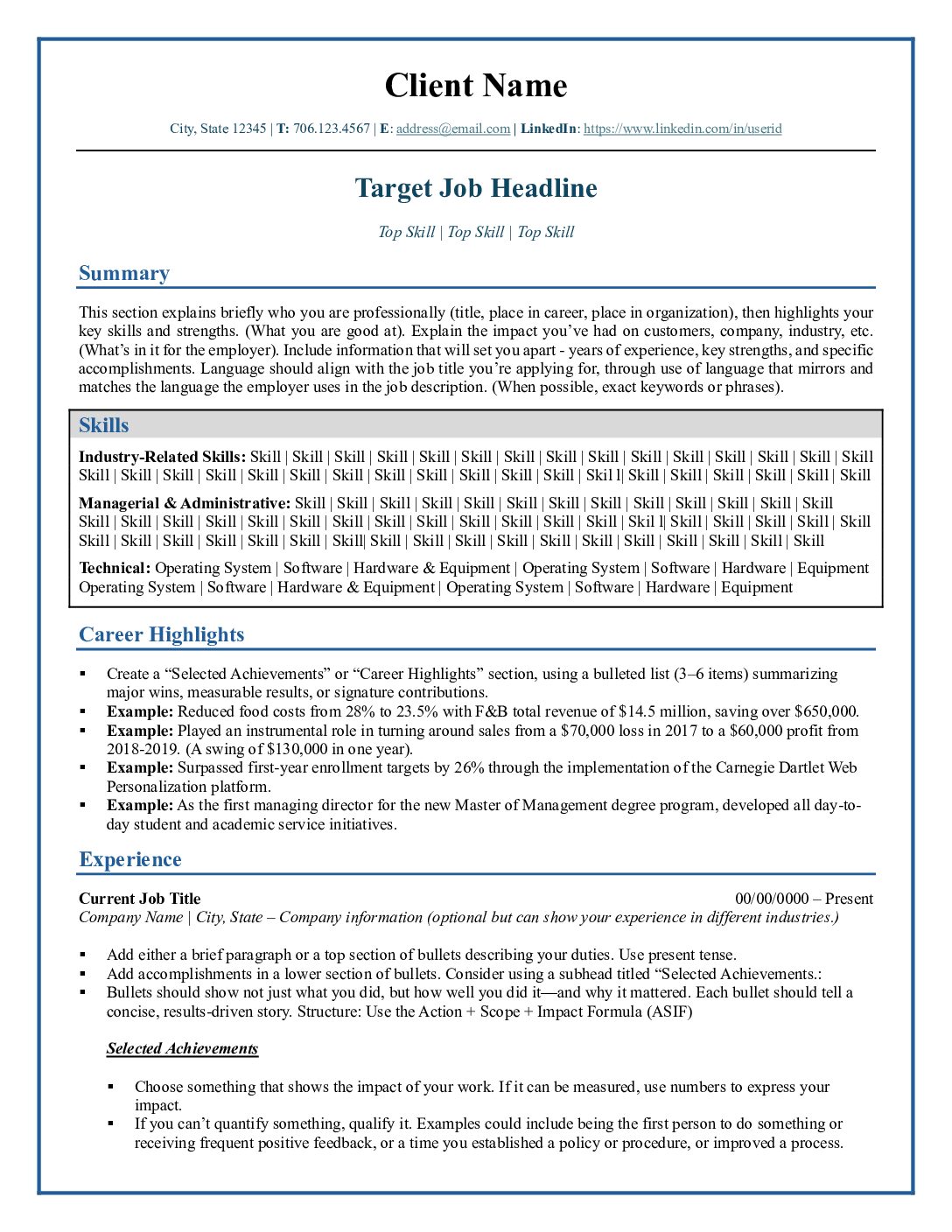
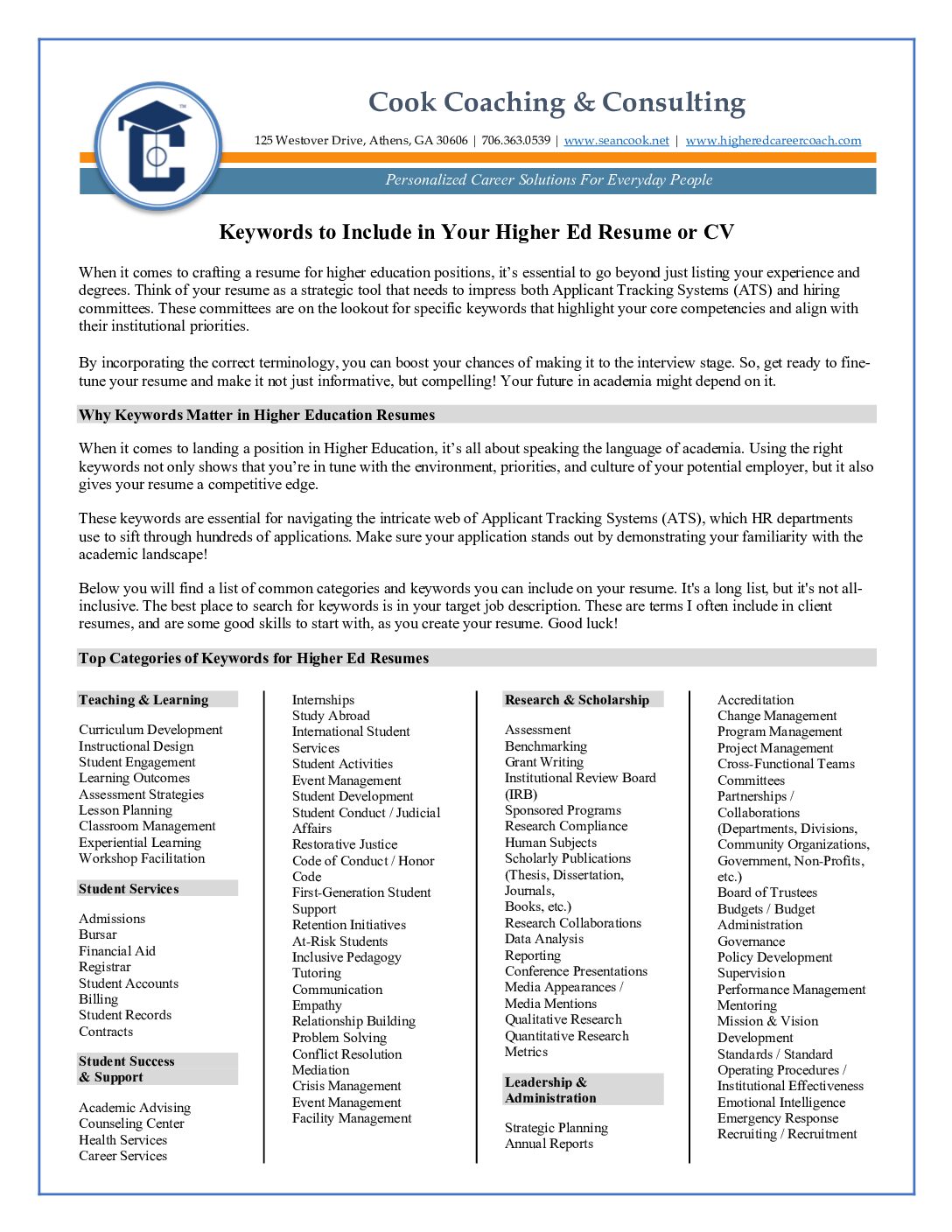
Work with Sean. I help higher ed professionals take control of their careers with tailored services including resume and CV development, LinkedIn profile optimization and networking strategy, interview coaching, and one-on-one career guidance.