Have a Question? Call Now.

(706) 363-0539

Some Great Resources On Pursuing a Data Science Career

Some Great Resources On Pursuing a Data Science Career

Photo by Pixabay on Pexels.com

Data Science is one of the fastest-growing career fields.

The Bureau of Labor Statistics projects 35.8% employment growth for data scientists between 2021 and 2031. In that period, an estimated 40,500 jobs should open up. The median salary for a data scientist in the US is $100,910.

My friend Adam Ross Nelson, 📊 Data Science Career Services has a coaching program for established professionals wanting to pursue careers in data science. And he has written a book.

 Check out what he has to offer: 

How to Become a Data Scientist: A Guide for Established Professionals
by Adam Ross Nelson (Author)
Amazon Link: https://a.co/d/egxA1p
Adam Ross Nelson on LinkedIn: https://lnkd.in/gfYDTSjt
His Website: https://lnkd.in/gAcBDn4c

#career #careers #coaching #datascientist #datascience


Job Seeker Resources: Habits and Tactics

Job Seeker Resources: Habits and Tactics

Job Seekers: Read the resources or download the PDF below.

In my work, I have found that clients often ask very similar questions about how to approach certain parts of their job search.

 Sometimes, I write long email replies that I should turn into posts here or on my website. And then I customize an answer to the same question later. It takes a lot of time and isn’t very efficient.

I also find myself too bogged down to blog anymore. So I have taken some time to accept that I need not reinvent the wheel every time I’m asked a question. Also, there are so many good articles on the web that answer the questions effectively.

My new strategy is simple. I started making resource handouts with URLs for articles that answer common questions.

Sometimes people have a hard time keeping their job searches moving. Here is a new resource I made with articles about maintaining progress, dealing with emotions during a job search, and different approaches a jobseeker can take when searching.

#jobsearch #jobseeker #habits #tactics #careercoach #careeradvice #email #jobsearch #writing #coverletters #inquiryletters #followup

The text of the PDF and links are also included below.

Job Search Habits and Tactics

Tips to Keep Making Progress

5 Ways to Keep Your Job Search Progressing Despite A Shifting Market by Jessica Hernandez
https://www.linkedin.com/pulse/5-ways-keep-your-job-search-progressing-despite-jessica/?trk=pulse-articl

Five Steps You Can Take To Keep The Job Search Moving Forward Today by Scott Singer
https://www.insidercareerstrategies.com/blog/five-steps-you-can-take-to-keep-the-job-search-moving-forward-today

#OfficeHours: How to Get a Stalled Job Search Back on Track by Amanda Augustine
https://www.topresume.com/career-advice/how-to-get-a-stalled-job-search-unstuck

3 Great Activities To Keep Your Job Search Moving by Jessica Holbrook Hernandez and Aaron Sanborn
https://www.workitdaily.com/job-search-activities

Job Searching? 4 Steps To Take Before Diving In by TandyMGroup
https://blog.tandymgroup.com/career-job-search/job-searching-4-steps-to-take-before-diving-in/

14 Proven Job Search Tips for Finding a New Job [FAST!] by Yuri Khlystov
https://jobsandcareer.tips/job-search-tips-for-finding-new-job/

Dealing with Your Emotions

9 Tips to Help Reduce Job Search Anxiety by Jennifer Parris
https://www.flexjobs.com/blog/post/conquer-job-search-anxiety/

9 Tips for Finding Motivation for Your Job Search by Indeed Editorial Team
https://www.indeed.com/career-advice/finding-a-job/motivation-for-job-search

How To Stay Positive During A Long And Exhausting Job Search by Jack Kelly
https://www.forbes.com/sites/jackkelly/2020/08/17/how-to-stay-positive-during-a-long-and-exhausting-job-search/?sh=2faf8cb77991

5 Ways to Stay Motivated in Your Job Search by Rachel Parnes
https://www.linkedin.com/business/learning/blog/job-seeking-tips/5-ways-to-stay-motivated-in-your-job-search

Job search depression is real: Here’s how to overcome it by Maggie Wooll
https://www.betterup.com/blog/job-search-depression

Different Ways to Approach Your Search

9 Ways to Find a New Job by Janet Fowler
https://www.investopedia.com/financial-edge/0711/9-different-ways-to-find-a-new-job.aspx

The Job Search Process: 10 Tips on How to Land Your Dream Job (+3 Resume Examples) by Jenny Romanchuk
https://blog.hubspot.com/marketing/job-search-process

This Is How You Get on a Headhunter’s Radar (and Find Awesome Jobs) by Christopher Taylor
https://www.themuse.com/advice/this-is-how-you-get-on-a-headhunters-radar-and-find-awesome-jobs

Job Search: How To Find a Headhunter in 6 Steps (With Tips)
https://www.indeed.com/career-advice/finding-a-job/how-to-find-a-headhunter-to-get-you-a-job

This resource sheet was up to date as of January 11, 2023. If you find that any links are incorrect or no longer available, please email sean@seancook.net so I can correct the document or find new resources.
© 2023 Cook Coaching & Consulting, Athens, GA


Download a PDF of This Resource

Filtering: The Enemy of Career Progress

Filtering: The Enemy of Career Progress

In my practice, I find myself working most often with people who have great passion, talent and commitment, but have stalled in their career tracks because of self-limiting beliefs, and because of what I describe as faulty approaches to “filtering.” People can have a few kinds of faulty career filters that get them stuck in their tracks. The first faulty kind is the filter that screens too many thing out, and the second is the one that lets too many things in. Both can leave you dead in the water. The key, I think, is to fine-tune your filtering process, so you can let enough options pass through, without having too many random options that lead you down blind alleys, toward disappointment and eventually, despair.

The first kind of filter is caused by self-limiting beliefs. If you find yourself thinking or saying any of the following, you may be over-filtering.

  • I think I’d like the job, but I probably can’t do that.
  • There’s going to be so much competition for that job. They won’t consider me.
  • I’m sure there’s an inside candidate, so why bother applying?

The second kind of filtering really isn’t filtering at all. It’s what I call “shotgunning.” Basically, any option is seen as a good option. Instead of aiming for a particular target, you choose a general direction and apply for everything you see. This may result in interviews, but is less likely to result in jobs that are a good match.

The point of filtering something is to get to its purest possible state, leaving only the best parts in the final product. When it comes to career planning, the point is to filter out options that “muddy” the picture, and leave both you and your potential employer with a crystal clear view of your best qualities.

How, then, can you keep the right things in and the wrong things out of your career plan? By applying the right kinds of filters. The five I suggest you concentrate on are the same ones most recruiters will apply in considering a candidate: Education, Experience, Achievements, Motivation and Fit. In this series, we will explore the best ways to apply these filters toward your career planning and job search efforts.

How are you “filtering” opportunities into or out of your career plan? Share your thoughts in the comments.

The Applicant’s Role in the Screening Process

The Applicant’s Role in the Screening Process

What can a candidate do to affect the outcome of the screening process? Not much. You can’t set the search criteria for an employer. You can’t make screeners meticulously follow the criteria they have. And you can’t eliminate bias.

You can only present a coherent argument and make sure that it highlights what you have to offer in relation to the position and the needs of an employer.

How can you describe, explain, or imply a high degree of fit between you/your skills and the needs of your potential employer?
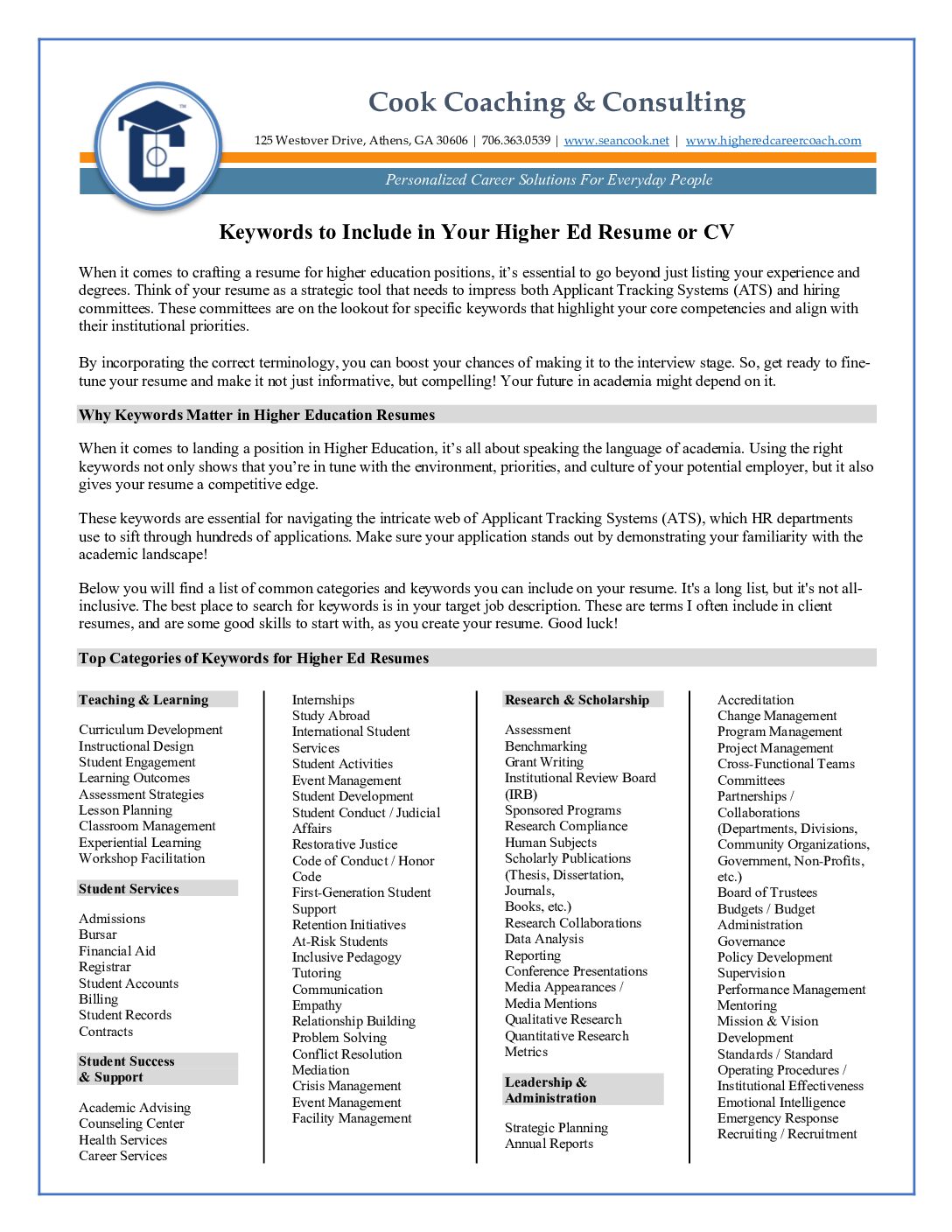
It will not be through the use of buzzwords. It will be through the use of keywords. And the best way to discover the most relevant keywords is to study the employer, read the position description or advertisement carefully, and pull out those elements that seem most important. This introduces the value of “word-farming.”

There are some great tools out there that can help you distill a job description down to the most important keywords. We’ll delve into them in a later post. For now, let’s start at the beginning. If you are going to make a coherent argument, you have to do one thing first…

Know Your Goal

Have you ever heard the term “He couldn’t hit the side of a barn?”
 It implies a lack of precision and lack of focus.

How about “shooting from the hip?”
It implies that a person engages in hasty, gut-level reactions, rather than taking carefully-considered and well-planned actions in an attempt to reach a goal.
Let’s consider these metaphors and attempt to apply them to our thinking about the job search process.

How specific is your job target? Is it the side of a barn, or the barn window?

You see, shooting at the side of a barn is a really aimless activity. It doesn’t take much talent. You could almost do so by accident. Bored teenagers shoot paintballs at the side of a barn for something to do. A serious marksman wouldn’t bother. A marksman would shoot out the windows (or maybe the lights!)

If you ever shot from the hip, it was probably during a moment of reaction, when you had your guard down, felt attacked or confronted, and responded immediately, in a way designed to help you deflect the arguments of your attacker, or to escape from an unpleasant situation. Is that really any way to approach your job search? Some job seekers browse job postings without specific job titles, employers, roles, or responsibilities in mind, taking an “I’ll know the right job when I see it” sort of attitude. If you aren’t imagining an ideal job or ideal roles, you’ll be less able to coherently present your arguments, and when interview time comes (if you are that lucky), you’ll be responding to questions in the same way. Shooting from the hip is a terrible way to interview.

Aimless is as Aimless Does.

I have a piece of paper tacked to the bulletin board above my desk that reads “Aimless is as aimless does.” It reminds me to set specific goals to hold myself accountable for reaching them.

Notice that the key point is that your goal must be specific.

Aim for a bullseye, not a barn.

Would you really be happy just having any random job? Probably not.

You might get by. You might pay your bills. You might even be able to do so for quite a while. But don’t you deserve more?

Know Yourself First

You are a unique person. No one else has seen the world through your eyes. No one else can bring the exact same mix of qualities to the table.

There is a job out there that you are a perfect match for. And you aren’t going to find it if you view every opportunity equally.

If you are going to have a great résumé, you need to have a goal in mind. My belief is that your goal should be to find an ideal job. Not just any job, but a job that is a good match for your education, skills, interests, and motivation.

When I talk to clients who have been looking for an extended period, I usually see a common thread: lack of focus. They are shooting at the side of a barn, and wondering why no one’s giving out marksmanship trophies!

So set a good goal. Make it as specific as possible (we’ll talk more about how to do this in a later post). And understand that you may not reach it.

But, as Benjamin May once said:
“The tragedy in life does not lie in not reaching your goal. The tragedy lies in having no goal to reach.”

Where a Screening Process Might Break Down: The Human Factor

Where a Screening Process Might Break Down: The Human Factor

woman placing hands on cyber mapScreening by Humans

The resume screening process can break down in a variety of ways. In this post, we’ll take a look at the human factor: how errors and bias on the part of persons involved in the screening process might affect your candidacy. 

Screeners who just “wing it.” There are a couple of common ways this might happen. First, if it’s a single person, it could be that he or she has sole authority over hiring and thinks: “I’ll know what I like when I see it.” Or it could be that a supervisor has asked a person or committee to do the screening without giving any clear guidelines. In these cases, it is likely that there will be some loose criteria, but unless the person or committee comes up with some that are clear, it’s pretty much like “shooting at the side of a barn.”

(Yes, employers are just as guilty of this as job-seekers!)

Sometimes bias comes into play. Sometimes screeners ignore stated criteria in favor of their own “preferred” qualifications. At other times, a “preference” may be factored into the equation. For example, some employers have a preference for hiring and promoting from within, or through employee referral programs. Some give preference to those that come directly to a human resource officer than to those entered through the web. Some may give preference to candidates who apply through the company over those forwarded by job boards. And some individuals might give preference to people who went to the same school, were a member of an organization they like, or who they know through social connections.

Sometimes, screeners are lazy or disorganized and skim hastily through the résumés. If it is because the person is lazy, there’s just no telling whether there will be a rhyme or reason to their picks. If it is because they are disorganized, they might give early applicants a more thorough review than those they review closer to the deadline.

So what can you do, in the face of human errors and bias? Not much, really.

  • If a screener is just “winging it,” that is an internal issue for his employer to deal with, and it is well beyond your control. You’ll really never know if this is the case, so don’t spend a lot of time worrying about it. When someone is just making it up as they go along, it doesn’t matter how you’ve presented your arguments. It’s probably a blessing to not work with people who have such a loose grasp on such an important role.
  • You can never control for a screener’s bias. In fact, there is always some sort of bias at play. In the best cases, the bias is toward a candidate with certain skills or experiences. In the worst cases, the biases aren’t stated, but internalized by the candidate, and it’s likely they justified screening a candidate in or out based on some other grounds. The best way to deal with perceived bias is to tightly align your arguments with a potential employer’s known biases. When reading job announcements, look for the terms “preferred,” “would a plus,” “desired,” or “ideal.” if you lack any of the skills or experiences listed with these terms, you will be less competitive than candidate who have those skills and experiences. The best you can do is argue for transferability of skills, aptitude, and motivation.  So write your resume toward related skills and experiences, and describe them in ways that accurately depict your strengths in other areas, and your motivation to close any gaps. This can be done through re-writing bullet points and/or the professional summary on your resume, and through the cover letter. The strategy is simple. Acknowledge the gaps quickly and show how you would fill them, while also showing strong foundational skills in other key skill areas.
  • You can’t control a screener’s laziness or disorganization. But you can apply early (as soon as you see a position posted), and organize your documents in a clear concise manner, that brings the most important details up front and early, so the lazy screener gets en0ugh information from pre-screening the document’s top third of page 1 that they don’t have to read any further to make an initial decision. Basically, make it easy for a lazy person to quickly see what you have to offer.

This post is part of a series adapted from my e-b0ok “7 Points to a Winning Resume.”  Next up in the series, we’ll explore the applicant’s role in the screening process, and how you can increase your possibility for  success.

Where the Screening Process Might Break Down, Part 1: Applicant Tracking Systems

Where the Screening Process Might Break Down, Part 1: Applicant Tracking Systems

Where the Screening Process Might Break Down

In any screening process, there is always room for error. In fact, there is always a degree of error. This applies to machine-driven processes and human-powered ones.

Let’s talk about ways that each type of screening process might break down.

Computer Screening Software

Applicant Tracking Systems (also known as ATS) are highly sophisticated software packages that scan information in the résumé to determine the degree of match between an application and available positions. They do not simply look for keywords. Many can also read for terms in context, much like a human reader. For example, some screening programs are advanced enough to interpret how recent your experience is in a particular area, and rank you accordingly. Some can even relate relevant terms to other key terms or phrases. And they are at times a bit “picky” about how information is formatted. Some things to know about ATS that could result in your résumé being kicked out of the system, garbled, or ranked differently:

  • Keywords without context. Basically, this is what I mean when I say “buzzwords.” They are on the résumé, but it may not be clear why. Today’s ATS systems are smarter than that, and so you are less likely to be able to game the system through simply putting keywords in.
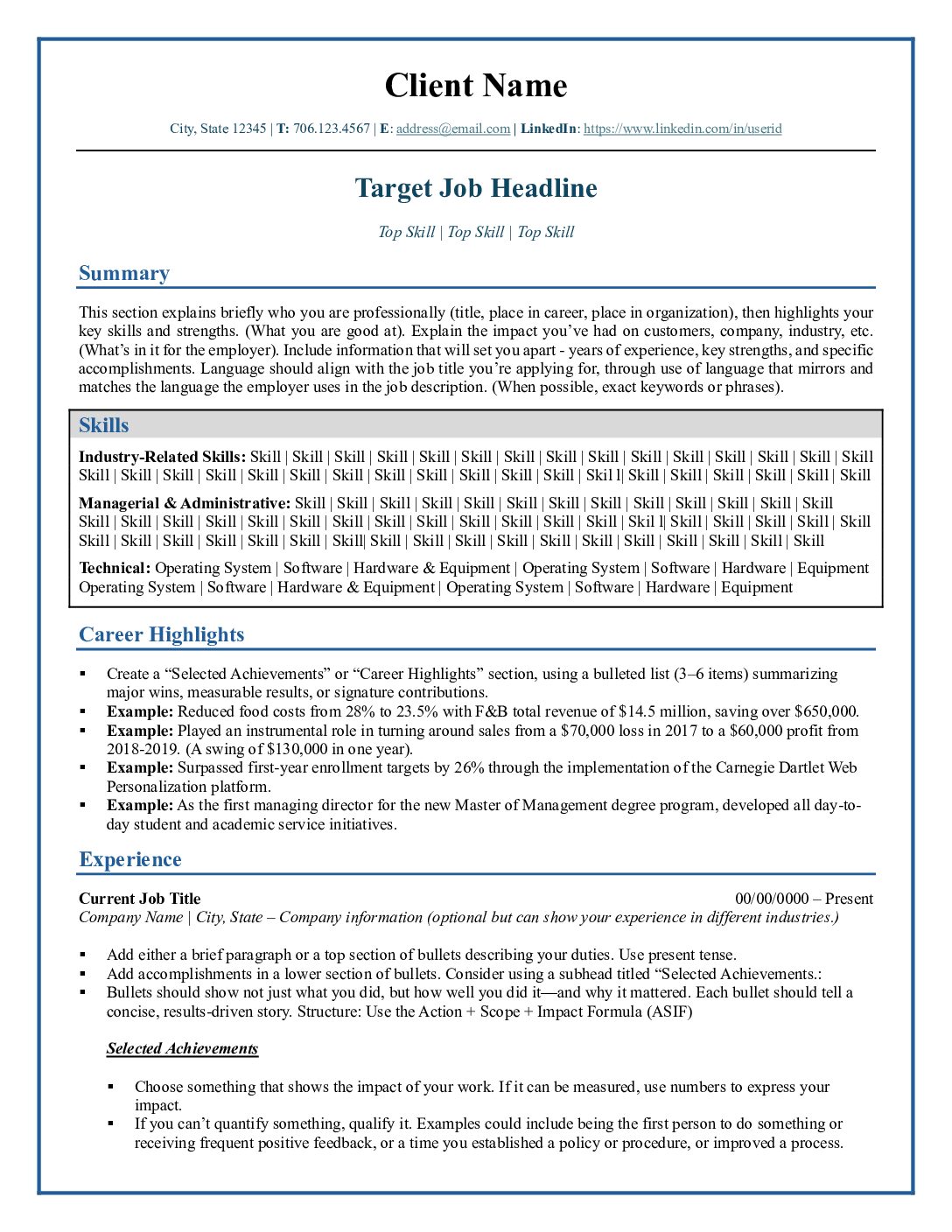
  • Graphic elements, including lines, boxes, tables, shading and non-standard fonts. These may be misunderstood by the ATS system and may result in your résumé coming back as garbled nonsense. Because of the volume of applications many employers receive, it’s not likely the recruiter will bother to follow up with a candidate whose résumé is unreadable. There are probably many qualified candidates that submitted materials that were readable.
  • Files submitted in the wrong format. Many systems ask for Word or pdf for a reason. Word (.doc) documents  are more easily read and scanned by the ATS systems. So submitting in another format might result in the résumé being flagged or ranked lower by the ATS. (for a great free online pdf converter, go here.)
  • Cutting and pasting a text version rather than uploading another acceptable format. This is simple enough: text files may come back with interesting errors in spacing or tabs. If you accidentally cut and paste HTML into a text field, your markups will result in a document coming back loaded with garbage. And even if these things don’t happen, anything you have conveyed or emphasized through formatting or design will be lost. If you are given the option, ALWAYS use the format that will convey both the content and design as you intended. These days. .pdf (portable document format, which is easily read by Adobe Acrobat Reader, Preview for Mac and many web browsers and word processors) is the standard. If given the option to upload a .pdf, do so. As such, both humans and machines will be able to read your content in context.

In my practice as a Certified Professional Resume Writer, I use a tool that emulates a typical ATS and can estimate the potential match of a resume to a job posting, by:

  • Relating keywords between the documents,
  • Estimating how recently a candidate has used a skill, and
  • Estimating the length of experience with different skills.

The tool also tells the user whether an ATS will have difficulty finding some information, which helps identify possible formatting errors that might result in the ATS having difficulty parsing out information. By using keywords that mirror and match the language of the employer, and eliminating formatting errors, a writer can make smart revisions that result in a highly targeted argument for a candidate’s potential match to an employer’s requirements.

In the next installment in this series, we’ll explore the human factor: how human errors and bias can derail your candidacy during the screening process. This post is adapted from my e-book “7 Points to a Winning Resume,” which is available here. I am developing a brief resume-writing crash course based on this e-book, and will have details about that program in a later post.