by sean@higheredcareercoach.com | Jun 10, 2011 | Job Search, job search tools, Resumes and CVs
This week, I’ve been putting out articles on Interview Ecology, and exploring the risks and benefits of introducing the “new and shiny” into the process. We’ve considered whether bringing a iPad into an interview is akin to bringing an invasive species into an eco-system.
This ecosystem approach relies heavily on the idea that anything that distracts or disrupts may destroy the delicate balance of a search process, and bring up dissonance in respect to person-environment fit, resulting in a candidate not getting a particular position.
Which forces me to bring up a particular pet peeve of mine: the all-the-sudden popular and ugly-as-sin QR code. I hate them, because like many fads, most people rushing to use them don’t understand how to make sure they add value to the experience. In general, I feel that most people might as well take a poop on their résumé as put one of these on it, because adding a QR code without adding something of value to the “interview ecosystem” is well…just a load of crap.
I’m already anticipating the response from candidates and tech geeks who think these things are cutting edge and allow a new layer of interactivity that wasn’t possible before. Well, I call bullshit. Scanning these blotches into a smartphone just allows lazy people to avoid typing a URL into their browser, as if the 20 seconds of time spent doing so will add up, like all the partial pennies Richard Pryor dumped into his bank account in Superman III, and will result in the résumé screener having a richer, more exciting , and complete view of the candidate.
Bullshit. Bullshit. BULLSHIT.
The same can be achieved by pointing someone toward a regular URL or hyperlink. QR codes only add new functionality to a paper résumé, which you probably aren’t viewing anyway. And anyone with half a salt lick of sense in their head can run a long URL into an URL shortener. So if space on the résumé is your major concern, that’s no argument, either.
Now, I will admit upfront to being a résumé geek and a purist. I don’t believe all the hogwash people throw around about résumés going away. Advances in technology and social media are just changing how they are delivered. And nothing takes away from the basic truths at play:
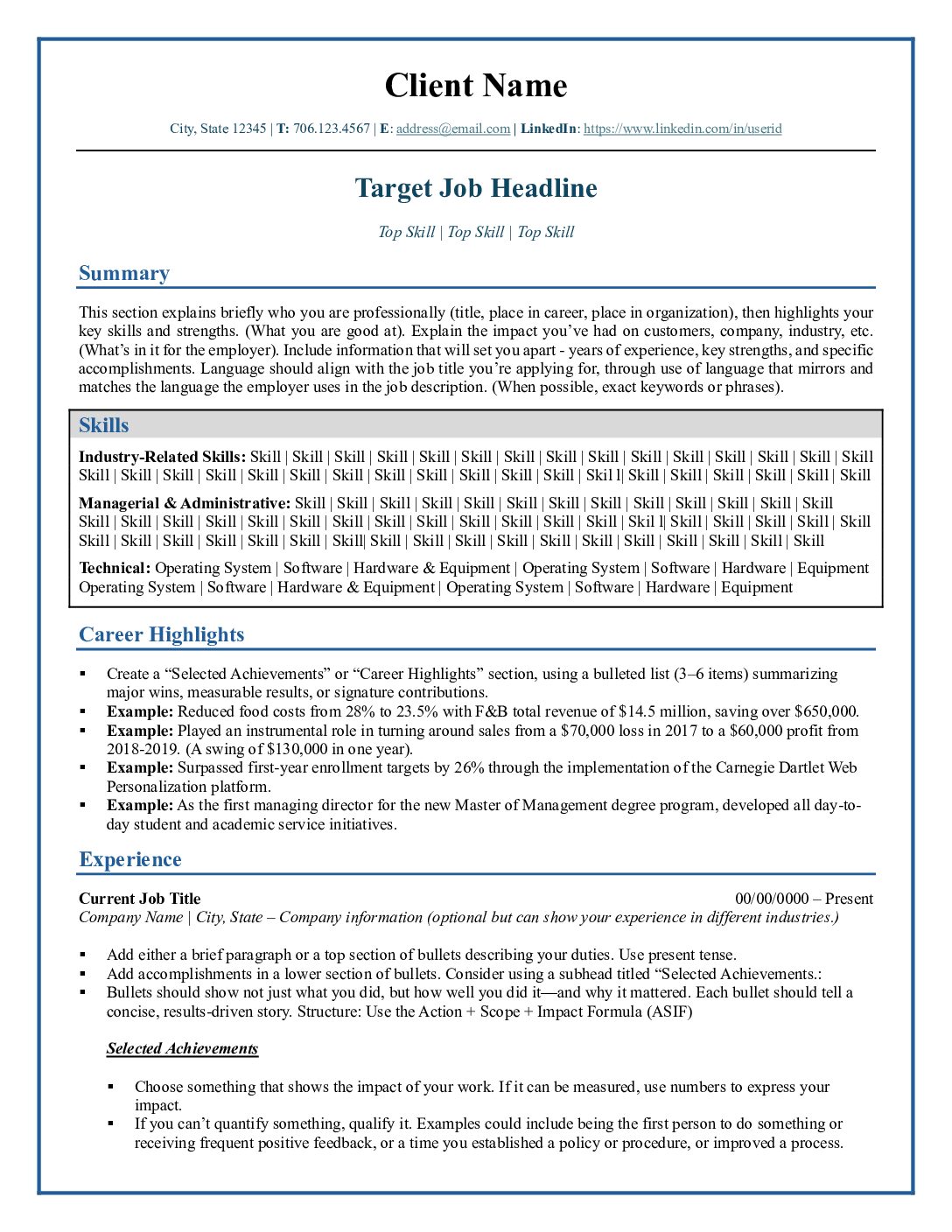
- Your résumé needs to be targeted toward your industry, level of experience, and the level of position you are seeking.
- It needs to be scannable (visually scannable)
- There has to be a sense of logical and visual flow that draws a reader in, and keeps them reading and scanning. And…here’s the big one…
- It needs to be attractive and not full of distracting bullshit.
I had a client recently work with me on his CV and he had a QR code on it, at top right. I asked him why it was there. He replied that he wanted to show himself as cutting edge and tech savvy. So I asked him where the QR Code goes, and what value was added by putting it on there. And…wait for it…it went to an online pdf copy of his CV!
We talked a bit and I told him I didn’t see the point of having it there, if it only went to his CV. He was really tied to keeping it there, so we came to a compromise position. He had also been updating his LinkedIn profile, which had some great recommendations on it, and some other links to relevant information. So we decided to point it there, because doing so added some value to the equation. The result: the QR code went from being poop on his résumé to being rich compost instead.
My criticism of his strategy should not be equated with a critique his level of technical savvy or his readiness for the type of job he was applying for, and I’ve told him as much. In fact, I think he’s a great candidate, or I wouldn’t be working with him. I don’t work with clients I don’t believe in, because that’s not fair to people on either side.
Ultimately, I’m grateful for the perspectives his situation has given me, and what it allows me to share with you.
Here are the big take-aways:
- New technology is great, and showing comfort with it is just fine. But using tech badly could actually hurt your candidacy. Make sure that your use of technology is appropriate and that there is a clear point to using it (like adding interactivity or pointing to recommendations or portfolio work.)
- If using a new way of doing things distracts from your design, content or flow, you really need to weigh the risks of using it against the value added. And if you can’t do this on your own…
- It pays to talk this sort of stuff out with a trusted friend, advisor, or career coach.
What do you think? Tell me in the comments.
Did You Enjoy This Post?
- Please take my reader survey and tell me what you think about Higher Ed Career Coach. It’s 11 questions and shouldn’t take long. Also, SurveyMonkey will be selecting one recipient at the end of June to receive a $25 Amazon gift card. So give your feedback and get a chance to win!
- Please like the Cook Coaching Facebook page and join the career discussion boards there!
- Follow Higher Ed Career Coach on Twitter
- Connect with me on LinkedIn
- Sign Up for our mailing list and get early announcements about upcoming site features, workshops and coaching specials.
- If you are interested in one of the upcoming summer groups or workshops, follow the links below.
by sean@higheredcareercoach.com | Jun 7, 2011 | Interview Tips, Job Search

Showing yourself to be technologically savvy and forward-facing are incredibly important in today’s job market, so it’s no surprise that job-seekers find themselves exploring the best ways to highlight their tech skills and comfort with technology. But there are potential downsides to bringing along “new and shiny” as you enter into a search process. This week, as we continue our exploration into interview ecology, we’ll explore the risks and benefits of introducing different variables into the job-search ecosystem and hopefully, help you make some intelligent choices about how you integrate these different variables into your search strategy.
The Risks of Bringing “New and Shiny” into a Search Process
I recently traded tweets with a job-seeker who was worried about whether bringing his iPad to an interview might seem pretentious to the interviewers. We had a great and wide-ranging exchange about the pros and cons of doing so, and this conversation kind of converged with another recent one with a client and my interests in person-environment theory and the environment, and resulted in this series of posts.
The Delicate Ecosystem of the Everyday Interview
Let’s return to some basics of this proposed “interview ecology” framework:
- If the hiring process is considered as an ecosystem, what are the naturally occurring parts of that system? Some possibilities:
- New variables, before entering into the ecosystem, are assumed to be neutral, and to pose no inherent impact on the environment.
- Once a new variable is introduced into an ecosystem, whether it is beneficial or invasive/destructive is determined by the nature of its interactions with the natural environment, and the impacts on other aspects of the ecosystem (people, places, resources)
- Variables that create harmony, or synergy and are seen as potentially compatible with sustainable growth and balance are deemed to be beneficial.
- Variables that create anxiety or dissonance are seen as incompatible and said to be invasive or destructive.
The Impact of New Variables
Since conversation is the primary form of interaction in an interview, the impacts of new variables on the quality and sustainability of the conversation, and in the formation of assumptions about person-environment fit that derive from that conversation, need to be our main concern and point of discussion in an interview ecology model.
Ultimately, decisions about whether to bring a iPad (or any new tech) into an interview should be weighed against the possibility that it might upset the ecosystem of the interview and distract from the conversation.
Risks to consider:
- Being seen as inattentive (if your attention to the tech causes the interviewers to think you are bored, then you could come across as elitist or pompous, and this will kill your interview)
- Being seen as a someone who might not relate with the students you’ll be serving (if you are a “have” and your students are more likely to be “have nots,” will you be seen as an outsider?)
- Being seen as more interested in technology than people (i.e., your interests aren’t a good match for their needs)
Perceived benefits:
- An ability to take notes without using paper. (Seems pretty basic when you put it that way, doesn’t it?)
- Being seen as innovative and comfortable with technology (The assumption being that you will bring innovation and a tech-friendly sensibility to the position and department.)
- Showing your interest in sustainability (Giving the impression that you will wisely steward resources and consider the impacts of your actions on the work environment.)
- Creating an impression that you are forward-looking and oriented toward progress and development. (Showing that you have a drive to achieve through innovation.)
Weighing the Benefits Against the Risks
| Benefit |
Risk |
| Being seen as innovative |
Being seen as inattentive or bored |
| Showing an interest in sustainability |
Being seen as uninterested in the people or environment that in the system, only interested in resources
|
| Showing an interest in progress |
Showing a lack of interest in people or the realities of the particular organizational culture
|
Other Options
So to mitigate any of these risks and the potentially negative impressions that might come with them, what are some other options?
- Leave the iPad behind (no distractions)
- Bring the iPad but don’t use it (not as distracting, in relation to attention on your part, and still sends out techie signals, but could still be interpreted in ways that imply inability to relate or interest in other things.)
- Bring the iPad but only use it for the Q & A portion of the interview (your questions would be there) or any presentation you need to do, and/or for you to use during breaks.
So it really does come down to mitigation of risks and the benefits against the potential costs. In this case, would the benefits (taking notes and seeming tech-friendly and interested in sustainability–which might not be directly related to the job–and the risks all come down to “fit,” with the downside being that you don’t get the job because of a distraction unrelated to your qualifications and how you presented them.
Given this perspective, what do you think you would do?
Did You Enjoy This Post?
- Please take my reader survey and tell me what you think about Higher Ed Career Coach. It’s 11 questions and shouldn’t take long. Also, SurveyMonkey will be selecting one recipient at the end of June to receive a $25 Amazon gift card. So give your feedback and get a chance to win!
- Please like the Cook Coaching Facebook page and join the career discussion boards there!
- Follow Higher Ed Career Coach on Twitter
- Connect with me on LinkedIn
- Sign Up for our mailing list and get early announcements about upcoming site features, workshops and coaching specials.
- If you are interested in one of the upcoming summer groups or workshops, follow the links below.

by sean@higheredcareercoach.com | Jun 6, 2011 | Higher Education, Interview Tips, Job Search, job search tools, Student Affairs
Today’s institutions spend a lot of time assessing environments and making sure they understand them, so that people will feel comfortable and welcome. We also spend a lot of time struggling with ways to promote sustainability and integrate new technology into our approaches. So let’s crash these concepts together to examine the ecology of the job search, and apply the resulting framework to different aspects of the job search.
(This is one of those moments when I’m going to get a little de-constructionist, so if you are not interested in the theory behind this strategy, come back later this week, as we explore some particular issues and strategies you might take when working through them and making intelligent career choices. I’ll try to come full circle by ending with some more practical to-dos for those who don’t care about theory.)
Interview Ecology: Definition
One of the great things about mashing up concepts into something new is that you can make up a term to describe the new concept. So I’m going to call this interview ecology: the study of the co-created environment that exists when persons interact with each other during a search process, and the impacts on the shared environment, when new variables are introduced.
Key questions for consideration
- If the job search process is an ecosystem, how could we describe the “natural environment” which exists before we introduce humans, interactions, and other variables?
- How will the introduction of a new variable affect the environment and the people in it?
- How could each human player in a given job-search ecosystem control the introduction of new or unexpected variables into the process, and limit any adverse impacts on the environment?
- What new variables might be considered “invasive” (i.e., not present in the “natural environment” of the job search, and creating an imbalance that disrupts or destroys that environment)?
- How should one evaluate the risks and benefits of introducing a new variable into a search process?
Did You Enjoy This Post?
- Please take my reader survey and tell me what you think about Higher Ed Career Coach. It’s 11 questions and shouldn’t take long. Also, SurveyMonkey will be selecting one recipient at the end of June to receive a $25 Amazon gift card. So give your feedback and get a chance to win!
- Please like the Cook Coaching Facebook page and join the career discussion boards there!
- Follow Higher Ed Career Coach on Twitter
- Connect with me on LinkedIn
- Sign Up for our mailing list and get early announcements about upcoming site features, workshops and coaching specials.
- If you are interested in one of the upcoming summer groups or workshops, follow the links below.
by sean@higheredcareercoach.com | Jun 2, 2011 | Interview Tips, Job Search, job search tools, Podcast
 Supervision is hard. Developing a coherent supervisory style is even harder. And explaining your supervisory style in an interview? Really, really hard.
On tomorrow’s episode of The Grill, at 11 a.m. ET, John Mayo and I will be discussing how to approach questions about supervision and your supervisory style in a job interview.
As usual, we’ll throw a few typical interview questions on “The Grill,” and discuss:
- What an interviewer is really asking (the question within the question–i.e., what they really mean)
- How to approach answering the real question
- Good ways to answer
- Bad ways to answer
And then, hopefully, we’ll take your calls. Call us at 1 (347) 989-0055 to take a stab at answering the questions, and we’ll offer you a live critique and our honest feedback. If you’d prefer, you can also Skype in from the episode page on BlogTalkRadio, by using the Blue “S” click-to-talk button on the page. And whether you listen live or not, we’ll continue the discussions on the Cook Coaching Facebook page, where you can also check out past questions and try your luck at answering those, too. And a few times each day, I add some interesting posts there, and you can discuss any past articles from the website.
Since we did not have a live segment last week, anyone who listened to the previous episode, What Comes Easy and What Comes Hard, will be welcome to call in and give a shot at those questions. I had a few people express interest, and had hope to schedule a follow-up teleconference, but some other business details got in the way this week. So please feel free to call in and answer those questions, too.
Please join us as we throw this week’s questions on The Grill. We’re looking forward to talking to you!
Did You Enjoy This Post?
- Please take my reader survey and tell me what you think about Higher Ed Career Coach. It’s 11 questions and shouldn’t take long. Also, SurveyMonkey will be selecting one recipient at the end of June to receive a $25 Amazon gift card. So give your feedback and get a chance to win!
- Please like the Cook Coaching Facebook page and join the career discussion boards there!
- Follow Higher Ed Career Coach on Twitter
- Connect with me on LinkedIn
- Sign Up for our mailing list and get early announcements about upcoming site features, workshops and coaching specials.
- If you are interested in one of the upcoming summer groups or workshops, follow the links below.
by sean@higheredcareercoach.com | May 30, 2011 | Site News
As we come up on the 2 year anniversary of Higher Ed Career Coach, I’ve been working on some changes to increase readership and engagement with existing readers. You’ve probably noticed the Facebook page and discussion boards, and changes in the direction of content, toward practical how-to articles and interview tips, and away from of the more philosophical pieces about higher education and first-person perspectives and reflections. Those won’t go away entirely, but this recent focus has been the result of a couple of things… diving into analytics and seeing what content is getting the most reader response, and asking readers directly what they want to see more of on the site.
The changes are also the result of some ongoing efforts on my part to show my coaching skills and get more business. I’ve been a member for a while now of the Third Tribe Marketing membership site run by CopyBlogger, and I recently joined the Authority Rules conference, to learn how to get more comfortable with marketing by developing ways to market myself authentically.
A big part of this is developing an awareness of how people perceive me and the Higher Ed Career Coach brand. And it’s hard sometimes to separate what you think you’re putting out to the world from how it’s being perceived. So I’m doing a survey during June to find out more about why people visit the site, whether they get what they came for, and what they think about the site and brand.
One person will be selected to receive a $25 Amazon Gift Card once the survey closes on June 30. SurveyMonkey takes care of the selection of the prizewinner and fulfillment. See sweepstakes rules for more details.
To take the survey, follow the link below:
Click here to take the reader survey!