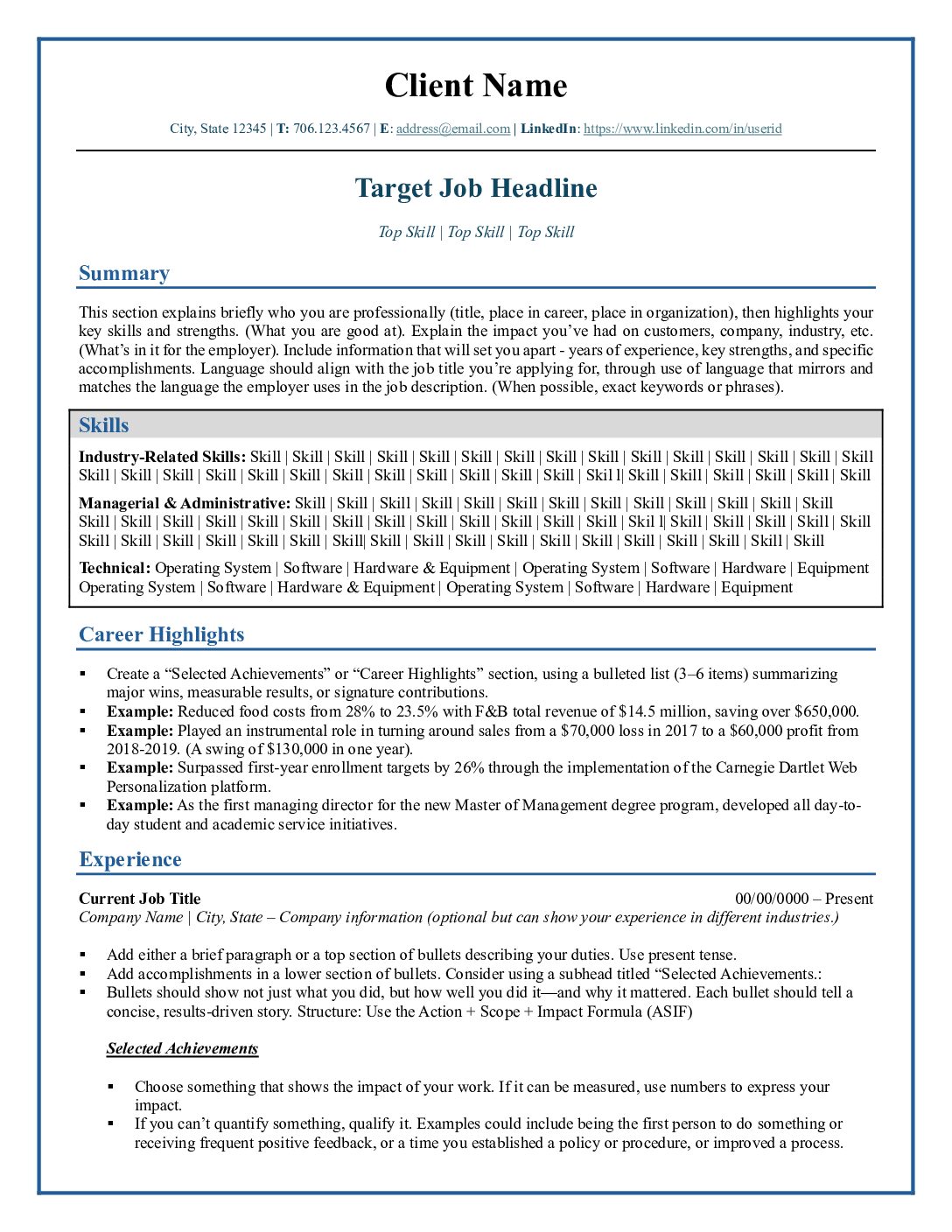
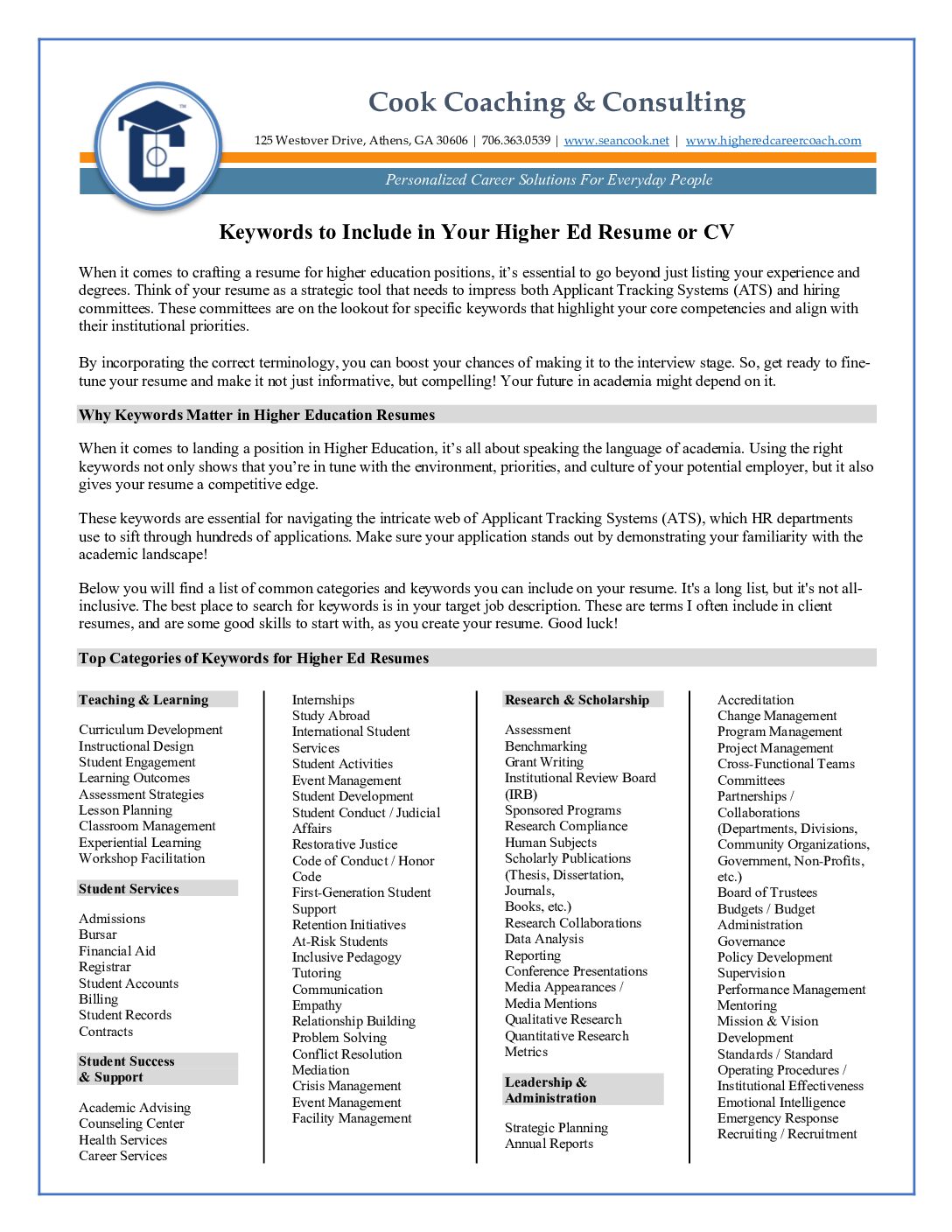
Faculty job postings can feel overwhelming—long, technical, and packed with academic jargon. But they’re not random. Every section is intentional, and together they tell a clear story about what the institution needs, values, and prioritizes. Learning how to decode these signals is one of the most important skills in an academic job search.
Start With the Position Context
The title and rank (e.g., Assistant Professor, Associate Professor, Lecturer, Clinical Faculty) immediately signal expectations around teaching load, research productivity, and service. Tenure-track roles typically emphasize scholarship and long-term institutional contribution, while non-tenure-track roles often prioritize teaching, advising, or professional practice. Understanding this context helps you calibrate how heavily to emphasize research, pedagogy, or applied experience in your materials.
Required vs. Preferred Qualifications Matter More Than You Think
Search committees often use required qualifications as an initial screening tool. If you do not clearly meet—and explicitly address—each required item, your application may never move forward. Preferred qualifications indicate areas where candidates can differentiate themselves. Treat these as strategic opportunities to show added value rather than optional extras. The Chronicle of Higher Education notes that many strong candidates are eliminated simply because they fail to clearly demonstrate how they meet the stated requirements (Chronicle of Higher Education – Career Advice).
Decode the Teaching Expectations
Pay close attention to how teaching is described. Mentions of course load, undergraduate versus graduate instruction, online or hybrid delivery, or specific pedagogical approaches signal instructional priorities. Language around student populations—such as first-generation students or adult learners—points to institutional mission and should shape how you frame your teaching philosophy. Resources from Inside Higher Ed emphasize that teaching statements are most effective when they clearly align with the institution’s instructional context (Inside Higher Ed – Career Advice).
Read Between the Lines on Research and Scholarship
Research expectations are often embedded in subtle language. References to grant activity, collaborative research, or specific subfields suggest what kinds of scholarship are most valued. Some institutions prioritize steady publication; others emphasize externally funded research or interdisciplinary work. Tailor your research statement to mirror this emphasis rather than using a one-size-fits-all approach.
Service Is Not an Afterthought
Terms like “committee work,” “program development,” or “student advising” signal expectations for institutional citizenship. Especially at teaching-focused institutions, service can carry significant weight. Demonstrating a realistic understanding of service expectations shows maturity and fit—qualities search committees consistently value.
Pay Attention to Mission and Values Language
Statements about diversity, equity, community engagement, or access are not filler. They indicate priorities you should directly address in your cover letter and statements. HigherEdJobs recommends explicitly connecting your experience to an institution’s mission to strengthen perceived fit (HigherEdJobs – Career Resources).
Final Takeaway
A faculty posting isn’t just a checklist—it’s a narrative about what the institution values most. The strongest candidates don’t just meet the qualifications; they respond to the underlying story the posting tells. By mirroring the language, emphasizing key points, and aligning your materials with institutional values, you position yourself as a thoughtful, prepared, and mission-aligned candidate.
Every once in a while, you meet someone who has a definite impact on you. It could be because they are kind and encouraging. It could be because they are damn smart. In the case of Ann Marie Klotz, it’s both.
I had a great opportunity last week to interview Ann Marie, a doctoral student from DePaul University (and Director of Residential Education at that institution) about her thoughts on a couple of great topics. The first topic, “Trusting the Job Search Process” was the subject of last week’s podcast, and it was well-received by listeners and came well-recommended by several other higher ed aficionados, including Eric Stoller.
Our conversation covered a lot of ground, and I was able to ask her about another article on her blog, annmarieklotz.wordpress.com, related to her doctoral dissertation research, which examines roadblocks that women commonly experience in climbing the ranks toward a university presidency. “Understanding Our Impact” delved into ways that higher education professionals can reflect on the ways our influence stays with students well beyond their college years, and is based on Klotz’s reading about the reflections of female university presidents on their college experiences, and the role of mentors in supporting or discouraging their achievements.
Contacts from a particularly persistent publicist about getting me to interview someone from Devry about their new Career Advisory Board and career services they are offering their students and alumni.
We’ve covered other issues related to For-Profit Higher Education before, and honestly, I’ve learned a lot. Here are some takeaways I’ve drawn from the above:
From the LinkedIn group discussion:
There are vested interests on both sides, and very strong feelings about the worth of degrees from for-profit schools. For those who have chosen the for-profit route, they come down to improving themselves without sacrificing their families, or fitting further education into their busy lives. For those on the Brick-and-Mortar: defending the perceived differences in the quality of scholarship between online and B & M programs.
There are legitimate concerns on both sides. For on-line pr iogram graduates, a desire to be taken seriously, and to have access to opportunities to contribute to discussions, associations and even teaching opportunities. For B & M graduates, a desire to protect the legitimacy of their scholarship and their degrees, by insisting that programs meet existing standards and accreditation models.
From the USC Report:
The demand for degrees and for an educated workforce is high, and public institutions are increasingly unable to meet this demand, in the face of funding cuts.
There is an emerging public interest in creating common standards about basic courses that would ensure their transferability between institutions, regardless of their public/private status.
Online education will increasingly be a part of the picture, especially for introductory courses.
From my interactions with the publicist and the interview that resulted:
There are for-profit institutions that are trying to serve their students and graduates and make sure their investment results in good jobs that will provide a good return on their investment.
There are some really nice people in the for-profit world, and despite the controversies surrounding for-profit education, their intentions are good, and should not be discounted out of hand, by people who are just more comfortable with the way things have always been.
I share a few more thoughts in today’s BlogTalkRadio podcast, which was pre-recorded, and think that Devry is making efforts worth noting. Please listen and share your comments.
Bryan Koval recently transitioned to a new position at Carnegie Mellon University in Pittsburgh.
Transition is something that I have been thinking about a lot lately. In the past 3 weeks, I have resigned from an old job, started a new job, moved from rural central Pennsylvania to the Oakland neighborhood of Pittsburgh, and begun living apart from my partner (with whom I have been living for the past 7 years). It has been a very up-and-down few weeks. The excitement of new opportunities at Carnegie Mellon University and in Pittsburgh has been tempered with the anxiety that goes along with opening up a new chapter in my career and personal life.
In a roundabout way, thinking about my current transition has helped me to reflect on our students and the important transitions that they experience while living matriculating through higher education. In many ways the business of higher education is all about transition. Each semester sees new students arriving on campus while others depart. During their time with us students choose majors, study abroad, take on leadership opportunities and learn more about who it is that they are, and who they hope to become. We are constantly surrounded by transition.
As you think about your role in higher education, how do you see yourself being a resource to your residents as they experience the many transitions that are a part of the college experience? Schlossberg (1995) defines transition as “any event, or non-event, that results in changed relationships, routines, assumptions, and roles.” By that definition, transitions are happening all of the time! Schlossberg identified four major sets of factors that influence how well a person can cope with transition (Evans, Forney, & Guido-DeBrito, 1998). Let’s identify those factors, and reflect on how we can help our students to manage transition effectively.
Situation: Important factors include the timing of the transition, the duration of the transition, and previous experiences with similar transitions. During a major change, individuals will also be dealing with concurrent stresses and questions about whether or not they feel in control during the transitions. Working closely with students on campus, we may have some real insight that our students would benefit from. We also function within the situation . . . but as someone on the periphery of the situation we may have some unique perspective on the situation.
Self: During transition, we think about who we are in terms of demographic characteristics (socioeconomic status, gender, etc.) and psychological resources. How has our background prepared us to manage this transition? As higher education professionals, we can play a role in helping students to know more about who they are through programming, conversation, and our relationships with each other.
Support: To manage a transition, individuals need to feel a sense of support. A supportive community is one of my favorite aspects of the work I do with students in residence halls and apartments. What can we do as higher education professionals to make sure that everyone in our community feels that they will receive affirmation, assistance, and honest feedback when they need it?
Strategies: To manage transition, you need a plan in order to proceed. When we talk to our students about their transitions (or when they come to use for mentoring and guidance), how can we help them to move forward in productive ways, while leaving it up to the student to decide how best to move forward?
As I come to the end of this blog post, it dawns on me that I have described Schlossberg’s theory meerly as advice for helping students. In reality, this would be a great theory to review if you supervise new staff members or are staying connected with individuals who are leaving your organization and moving on to new positions elsewhere. Best of luck as you transition for Fall 2010, with whichever events (or non-events) come along with that!
References:
Evans, N. J., Forney, D. S., & Guido-DiBrito, F. (1998). Schlossberg’s transition thoery. In Student development in college: Theory, research, and practice (pp. 107-122). San Fransisco, CA: Jossey-Bass.
Schlossberg, N.K., Waters, E.B., & Goodman, J. (1995). Counseling adults in transition (2nd ed.). New York: Springer.
Interested in reading more? This title is available at Amazon.Com. Purchase through the affiliate link below to support this site.
An unexpected consequence of being a doctoral student and working in higher education is trying to help my parents to wrap their heads around what I am doing with my life. When my father introduces me to someone for the first time, its not that unusual for him to refer to me as “the perpetual student.” My mom thinks I am the”head RA.” While I have nothing against Van Wilder, I know that I have my life more in order than my parents believe.
Maybe its a Millennial thing (I’m right on the cusp between being a Gen X-er and a Millennial), but for the longest time it really important to me that my parents are interested in what I am doing and I want to know that they are proud of me. Prior to working in higher education I was a science teacher, and this was basically the ideal situation for having career discussions with my parents. My dad is a retired teacher and my mom is a school secretary. We could talk about lesson plans, the union contract, continuing education credits, and a wide range of other topics for which we were all on the same wavelength. My mom could easily tell her friends “my son is a science teacher” with absolute conviction. Now that I am a student affairs professional, that’s a little more ambiguous.
Forging ahead with a career in higher education has resulted in me re-evaluating my relationship with my parents, as well as looking at how much of my identity is tied up in my career and academic goals. My parents and I have a good relationship, but I have learned that outside of making sure that they know I have a roof over my head and plenty of food on the table, I don’t need to have their approval or support when it comes to work. I’ve made connections with people who can play that role when my folks are not able to.
This whole discussion about my parents helps to put my career in perspective, though. I constantly struggle with work/life/school balance, and knowing that there are people in my life who are more interested in parts of my life that have nothing to do with work and school is really refreshing. My parents don’t care about quantitative research methods. They just care about me, and that is good enough.
Bryan Koval
Bryan Koval holds two degrees from the Pennsylvania State University (B.S. Secondary Education 03, M. Ed. Higher Education 08). He has worked in Residence Life at Penn State for 5 years, and has made meaningful contributions to projects related to living and learning communities, cocurricular learning outcomes, and resident assistant training in the department.
Prior to working in higher education, Bryan taught 7th grade science in Harford County,Maryland. He is currently pursuing a doctoral degree in higher education administration from the George Washington University. Bryan writes about his experience as a working professional and full-time graduate student.
As the semester is winding down, I am faced with the task of closing the residence halls (my day job) while writing 25 pages for two different final assignments for my doctoral classes. I’m also in the midst of some job searching, want to go to a concert in Pittsburgh this week, and way too preoccupied with play-off hockey games (let’s go Pens!) and fantasy baseball. Sounds familiar to just about anyone working in higher education, right?
I’m a little stressed out, but my current juggling act illustrates the importance of time management and organization if you are going to be a doctoral student from a distance. I felt that I would be easily able to balance all of my responsibilities, but I forgot to take one major factor into account: I am a procrastinator. I get some sick thrill out of pulling a project together at the last minute, but this approach is doomed to failure in the context of grad school and full-time employment. This semester I have decided that in order for me to maintain some balance in life and conquer procrastination, I would need to make some changes.
One of the easiest, and most effective, tools for conquering procrastination that I have utilized is group accountability. A number of people in my cohort have formed a reading group, so we split up readings for class, outline them, and then discuss them. When I know that my procrastination will impact other people, I work ahead and get things done well before deadlines. Our group has taken this same approach for reviewing some of our papers and assignments. Basically, I’m piggybacking on positive study habits of other people. It’s timeliness by osmosis.
I have also become more and more dependent on technology as a way to keep myself on track. I had never been a to-do list maker, but I am now. I use the to-do list feature in Mail (the email app I use on my Mac) for work, life, and academic action items. I try to follow an inbox-zero philosophy so that I am on-top of communication that comes through my email. Our reading group also uses a Google Group to keep our materials organized and as a communication hub. Nothing terribly Earth-shattering here . . . but these have been important changes that have paid off for me in a huge way.
Perhaps the most important strategy for staying on-task is doing academic work that is rewarding, motivating, and interesting. Fortunately this has been the rule, rather than the exception, with my doctoral program thus far. Despite my propensity for procrastination, I am interested in my work and want to do well. At the end of the day, that keeps me going.
Bryan Koval
Bryan Koval holds two degrees from the Pennsylvania State University (B.S. Secondary Education 03, M.Ed. Higher Education 08). He has worked in Residence Life at Penn State for 5 years, and has made meaningful contributions to projects related to living and learning communities, cocurricular learning outcomes, and resident assistant training in the department.
Prior to working in higher education, Bryan taught 7th grade science in Harford County, Maryland. He is currently pursuing a doctoral degree in higher education administration from the George Washington University. Bryan writes about his experience as a working professional and full-time graduate student for higheredcareercoach.com.
Work with Sean. I help higher ed professionals take control of their careers with tailored services including resume and CV development, LinkedIn profile optimization and networking strategy, interview coaching, and one-on-one career guidance.


 Every once in a while, you meet someone who has a definite impact on you. It could be because they are kind and encouraging. It could be because they are damn smart. In the case of Ann Marie Klotz, it’s both.