I Meet the Qualifications. Why Didn’t I Get An Interview?
I Meet the Qualifications. Why Didn't I Get An Interview?
Seven Reasons Qualified Higher Education Professionals Get Overlooked

You meet the qualifications for the jobs you’re seeking. You’ve worked hard on writing your resume and cover letters. You have a job search routine, and you’ve stuck with it. No matter what you try, you keep getting politely worded rejection emails that all sound the same. It’s early summer now, and you have very few interviews under your belt. It’s getting hard to “keep hope alive.”
Why didn’t you get an interview?
You might never know exactly why you weren’t chosen, since most employers don’t share detailed feedback. Often, they avoid this to protect themselves legally, even if their hiring process is fair. On top of that, larger issues such as bias, inflexible routines, and overreliance on technology can make it harder for qualified candidates. This leaves many applicants unsure why they were rejected, making it tough to learn from the experience and refine future applications.
The reality is that being qualified doesn’t always mean you’ll get an interview. Search committees often get dozens or even hundreds of applications from people who could do the job. Their real task is to figure out which candidates seem most likely to succeed. The ones who get interviews are usually those who show this most clearly.
Next, we’ll look at common reasons qualified candidates might not get interviews and share practical ways to address each. By tackling these issues, you can make your applications stronger and improve your chances of landing an interview.
Some common mistakes candidates make during the application process include:
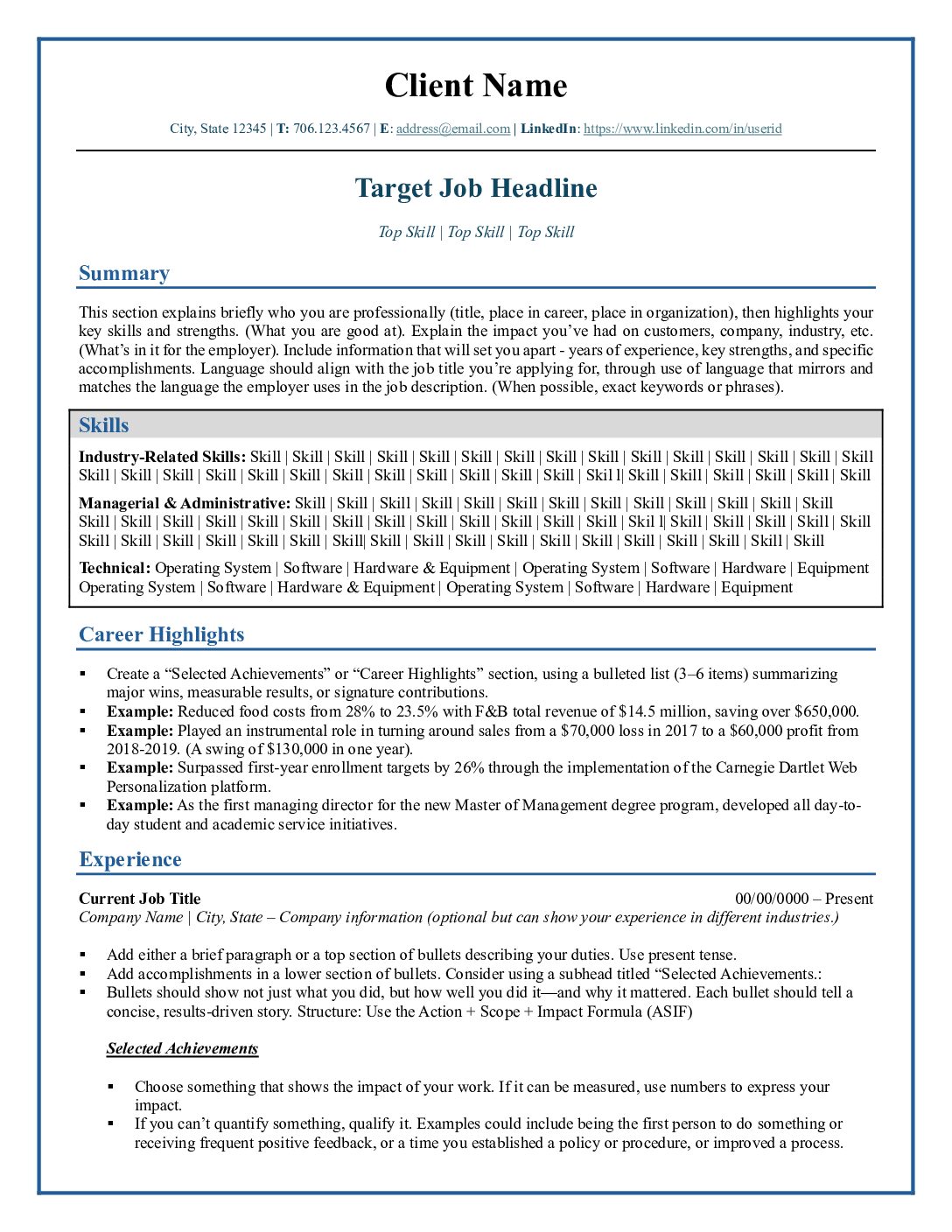
1. Your resume only lists your job duties; it doesn’t show the impact you made.
For example, instead of just saying "coordinated student events," you could say, "coordinated student events that increased campus engagement, resulting in a 20% rise in student turnout over the previous year." Employers usually know what common job titles involve, so you don’t need to list every task. If your job needs some explanation, keep it short. Describe your place in the organization, your main responsibilities, and what makes you stand out from other candidates.
An ability to complete tasks probably shows that you are “qualified,” but being qualified is not enough. Employers screen for qualifications but hire people who can differentiate themselves from other candidates. If you want to stand out, explain your achievements, scope of responsibility (staff supervised, size of budgets, number of projects, etc.), and the impact of your work (did you complete projects on time, save money, or improve processes?) Then show that you have researched the opportunity and the organization and explain how you will fit into their company culture or improve their processes, products, and services.

Keep the acronym ASIF in mind: Achievements, Scope of Responsibility, Impact, and Fit. When you put your materials together, act "as if" you’re the best candidate and give proof in each of these areas. This helps the reader picture your potential success in the job
2. Your cover letters are generic and focus more on your duties than your achievements.
You may think your accomplishments are minimal and may fail to meet the level of achievement someone in the role should have. That may be true, but you can “only step from where you are standing.” Don’t waste any time discounting your experience. Study the position, explain your accomplishments and how they have prepared you to solve an employer’s problems or serve their clients.
The interviewer told me the size of their department's budget and asked how I would approach managing it. I explained how I organized my thoughts when managing a budget, the Penn State-specific processes I learned, and how I had successfully proposed, tracked, and defended budgets in the past. I gave examples of how I used technology to track my budgets and reconcile expenses, the times I justified spending, and the approaches I used to secure more funding when needed.I also mentioned that my budget reporting received recognition from the Associate Dean of the College of Business, who highlighted my approach as exemplary to academic department heads. My department was the only one to receive the exact funding requested that year. The interviewer appreciated my explanation of my budgeting strategies and organizational methods, noting that these approaches were more important than the size of the budget itself.
Do not downplay your experience; instead, relate why it is relevant. In your cover letter, prioritize conveying your readiness for the role and potential for success by sharing clear, relevant examples of your skills and experience.
Years ago, I was interviewing for a Director of Residence Life job. I had been an Assistant Director of Residence Life at Penn State, so I supervised staff, held system-wide responsibilities, and managed multiple budgets and processes. I also managed a significant departmental budget in another job at the business college. The size of the staff and the budgets at the potential employer were much larger and more complex than what I had dealt with at that point in my career.
The interviewer told me the size of their department's budget and asked how I would approach managing it. I explained how I organized my thoughts when managing a budget, the Penn State-specific processes I learned, and how I had successfully proposed, tracked, and defended budgets in the past. I gave examples of how I used technology to track my budgets and reconcile expenses, the times I justified spending, and the approaches I used to secure more funding when needed. I also mentioned that my budget reporting received recognition from the Associate Dean of the College of Business, who highlighted my approach as exemplary to academic department heads. My department was the only one to receive the exact funding requested that year. The interviewer appreciated my explanation of my budgeting strategies and organizational methods, noting that these approaches were more important than the size of the budget itself.
3. You failed to demonstrate that you meet all of the most important qualifications.

Typically, job postings are organized into four distinct sections: first, a description of the institution; second, an overview of the position itself; third, a list of the 'basic qualifications' that are required for the role; and finally, an 'ideal candidate' section that outlines a series of 'preferred qualifications.
Many job seekers stop reading a posting once they see they meet the minimum requirements. But those are just the starting point. Meeting them might get you considered, but if someone else has the qualities and experience listed under the “ideal candidate,” the employer will likely choose them instead.
The good news is that the “ideal candidate” is as fictional as the “perfect job.” The employer may want a candidate who can walk on water, solve problems with the bat of an eye, pave the streets with gold, and never do anything wrong. They are not going to find that person, but that doesn’t mean they won’t try.
To see how you measure up, first make sure you meet all the basic qualifications or can demonstrate similar experience. Then, look at how many of the “ideal candidate” qualities you have. You’re not just competing with a perfect candidate on paper, but also with real people who may meet more of these requirements. If you don’t have any of the preferred qualifications, it’s unlikely you’ll get an interview, since other candidates probably do.
4. You are applying to too many unrelated positions.
Employers look for a coherent professional story. If you apply for a Dean of Students position on Monday, a Director of Admissions role on Tuesday, a Human Resources position on Wednesday, and a Marketing role on Thursday, you may see yourself as versatile.
Employers may see you as unfocused. Many job seekers apply to dozens or even hundreds of positions, expecting that one application will eventually be successful. While this strategy may sometimes produce results, it more often leads to frustration, burnout, and a low interview rate, as applications are rushed and present generic arguments that are poorly aligned with individual opportunities.
A more successful strategy is to think like a marksman. Marksmen carefully select their targets, study the conditions, take aim, and make each shot count. In a job search, that means focusing on positions that closely match your skills and experience, tailoring your application materials to each opportunity, and investing your time where you are most likely to succeed.
A focused, strategic search typically produces better results than a high-volume approach because employers are far more likely to respond to candidates who clearly demonstrate alignment with their needs.
Don’t apply to every job just because you think you could do it. Focus on the ones where you’re most likely to succeed.
5. You Are Ignoring Institutional Fit

Many job seekers focus almost exclusively on whether they meet the qualifications for a position and overlook an equally important factor: institutional fit. Colleges and universities are not interchangeable. A successful candidate at a large research university may struggle at a small liberal arts college, while someone who flourishes in a community college environment may not enjoy the culture or expectations of a highly selective institution.
Employers want to see that you understand their mission, values, students, and organizational culture. Have you worked with similar groups? Do you share their focus on areas such as access, research, workforce development, student success, faith-based education, or community engagement?
Your application should show not just that you can do the job, but that you get what matters to the institution and can help them reach their goals. In your cover letter, connect your past achievements to the institution’s values or initiatives. For example, if a university values diversity, mention how you increased participation from underrepresented students through targeted workshops. This shows you’re a good fit and strengthens your application, since schools want candidates who will thrive in their environment.
6. Your Leadership Narratives Are Weak.
Many people who want leadership roles struggle to explain how they actually lead, often just listing committees or meetings rather than demonstrating real results.
Real leadership means making a difference through decisions, building relationships, and using resources well. For example, instead of just saying you were on a student retention committee, explain how you spotted a problem, helped design solutions, and worked with others to make changes. If your efforts led to a 15% increase in student persistence, say so. This shows you take initiative and get results.
Good leadership stories go beyond listing your title or duties. They show how you found a problem, got others on board with a solution, balanced different priorities, influenced people, overcame challenges, and achieved real results.
Remember, leadership isn’t about your job title. It’s about your ability to make positive changes. Committees want to see that you can make decisions, solve problems, build relationships, and move projects forward. Leadership is about influence, not just your title. If your application only shows that you were involved, but not how you contributed or led, employers might doubt you’re ready for bigger roles.
7. You Make Poor Use of Keywords and Technology.
You make poor use of keywords and technology. Many job seekers don’t understand how important keywords and technology are in the hiring process. While most colleges and universities still rely primarily on human review, applicant tracking systems, search committee databases, and online screening tools can influence how applications are organized, searched, and evaluated.
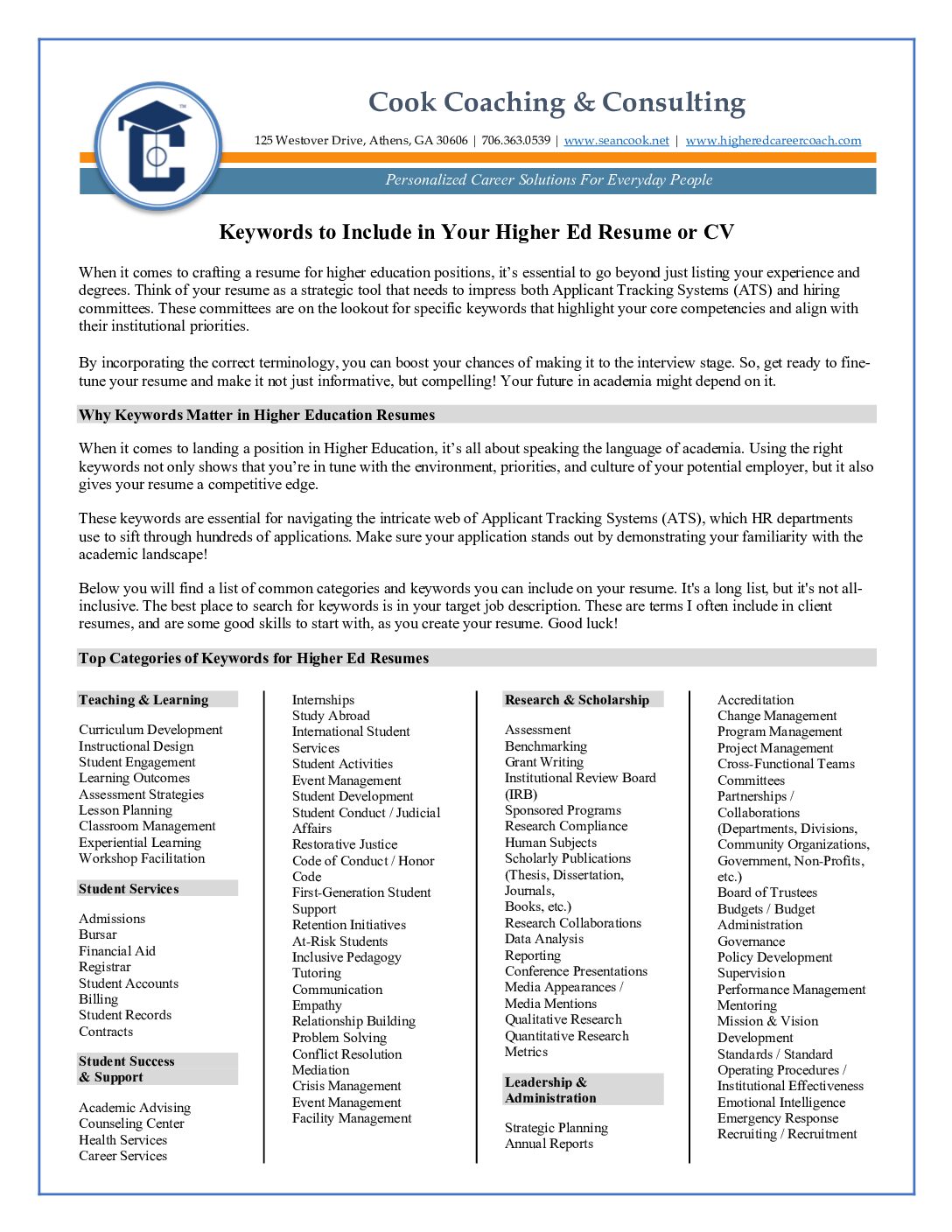
A quick tip: skim the job posting and highlight words or phrases that describe key qualifications, skills, or responsibilities. Then, make sure these keywords appear naturally in your resume and cover letter where they match your experience. This helps both automated systems and human reviewers quickly see the alignment between your background and the job requirements.A common mistake is sending the same resume for every job without using the words from the job posting. If a job asks for experience in areas like student retention, enrollment management, or fundraising, make sure those terms show up in your materials if they match your experience.

Another mistake is expecting reviewers to figure out how your experience matches their needs. Don’t make them do that work—spell it out for them. Use the same terms in the job posting, organize your information clearly, and make it easy for both people and technology to see your qualifications. The point isn’t to trick the system or overload your resume with keywords, but to show your experience matches the job in ways that help reviewers quickly see why you’re a good fit.
Explaining your qualifications isn’t enough. In reality, employers also need to understand your achievements, scope of responsibility, impact, and fit, as well as how well you demonstrate your potential for success. That’s why I stress resume alignment in my teaching.
The most successful candidates don’t just send out applications—they tailor their experience, achievements, and stories to fit what the employer needs. Being qualified is just the first step. The real challenge is convincing employers that you’re one of the top candidates. Still, even with a closely aligned resume, you might not get an interview, since things like institutional priorities or internal candidates can affect decisions. So, while aligning your resume helps a lot, it’s not the only answer to all challenges in the job search.
If you’re not getting interviews, now is the time to take clear, step-by-step action to improve your results.
Start by reviewing how well you show your qualifications and experience, using the strategies in this article as a guide. Check each application for proof of your achievements, responsibilities, impact, and fit with the institution, and update your materials with clear examples for each job. Ask trusted colleagues or career professionals for feedback to help you improve further. By using these targeted strategies, you’ll make yourself a stronger candidate and boost your chances of getting interviews. Take charge of the process, keep working to improve, and be intentional about showing your best self.
No matter how challenging the job search may feel, remember that each step forward builds your skills and resilience. Stay persistent, trust in your growth, and keep believing in your potential—you have what it takes to succeed!
If this article describes your experience, don't assume you're unqualified. More often than not, the issue isn't whether you can do the job. The issue is whether your resume, cover letter, and overall application strategy are making a compelling case for why you should be interviewed.
Being qualified is only the beginning.
Refine your message. Prove your impact. Get hired.
Now Is the Time to Improve Your Resullts
To help you review your applications more effectively, download this simple checklist you can use before you submit each one.
Stuck in Your Job Search?
The good news is that most problems can be fixed. A stronger resume, a more targeted job search, and a clearer understanding of how employers evaluate candidates can dramatically improve your results.
If you'd like an objective assessment of your resume, cover letter, LinkedIn profile, or overall job search strategy, schedule a no-obligation intake meeting with me.
This is a deep-dive consultation where we review your materials, discuss issues in your job search, and explore what assistance you need.
The meeting is 90 minutes, and the cost is $50. There is no obligation to work with me afterward. While we will discuss what service might help you move forward in your job search, there will be no high-pressure sales pitch. No matter what you need, you will leave the meeting with a clearer understanding of how to improve your job search strategy.