Keeping track of your applications and all the related communications between yourself and potential employers is one of the biggest challenges of the job search. Some people use paper lists, some use Excel sheets, and for papers, mail, and important documents, some people use folders and pocket portfolios.
All of that is well and good, and you should definitely use whatever works for you. But there are so many tools available for free on the internet that will make it easier for you to keep track of information. One category of tools, called Social CRM tools, can help you track your communication, follow up with your contacts, and get more information about your contact or your target employer, so you can develop a more comprehensive profile.
I use one of these CRM (Customer Relationship Management or Contact Relationship Management systems) to keep track of information and learn more about my contacts: Gist. (Available at Gist.Com) Gist aggregrates information from your e-mail, calendar and social media interactions and searches the internet for public information to give you a better view of a person or company in your network. In the video, I provide an overview of how Gist works and some ideas about how you can use it to keep track of your job search.
If you like this video, please like it, leave a comment here, and share it with your networks. You can also subscribe to the higheredcareercoach channel to get new videos as I publish them.
Looking for a job in Student Affairs?
Join me and Laura McGivern from theSASearch.Org at 11:30 am ET today (Wednesday) for the #sasearch hashtag chat. We’re talking about keeping track of your job applications and following up with employers about your status. Use the hashtag #sasearch and join in, or use TweetChat or a similar tool to follow the chat.
A good résumécaptures and keeps the attention of the person reading it, and creates in that person a desire to know more about you. Hopefully, that desire will lead the reader to seek out more information about you and to put your candidacy into context. This could mean that the reader goes on to read your cover letter, if they haven’t already. It could mean that you get invited to interview for the position. But it’s not likely that someone will just read your résumé and offer you a job.
Résumés are used by employers for screening candidates, but interviews are used for selecting the best qualified person for the job. So think of your resume as a ticket. It gets you in the door, so you can continue making a case for your candidacy.
If you’ve never been on the hiring side of the table, the screening process may be foreign to you. So let’s dive into that part of the process and try to understand it.
Screening can happen in many different ways.
A single person might do it.
A committee might do it.
Sometimes, a machine might do it. (Initially.)
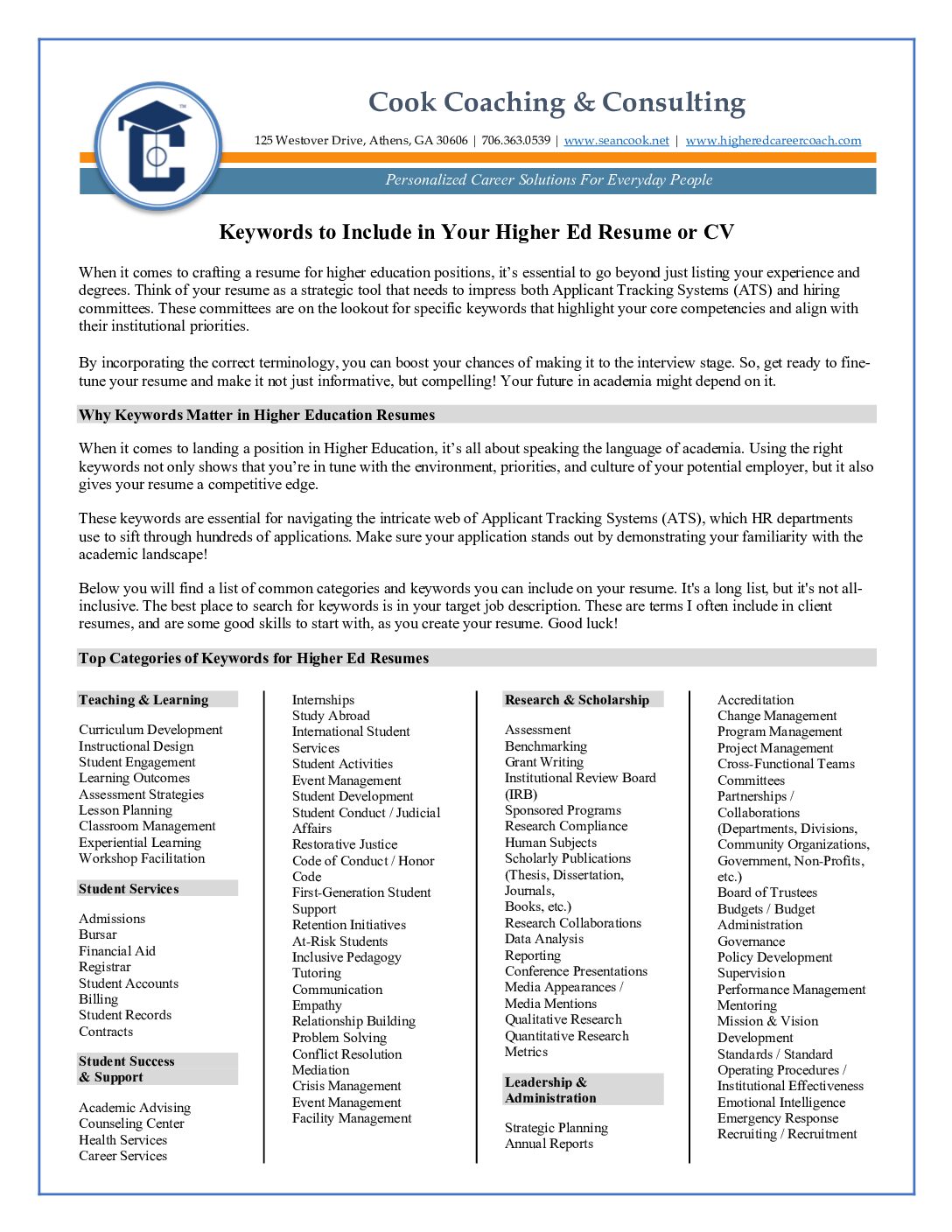
But let’s not confuse the issue. They are all looking for the same things. You might call them keywords or key concepts or key phrases, but essentially they are the same thing.
A keywordis not the same thing, necessarily, as a “buzzword.” It can be, but it really depends. Many job seekers spend time consulting websites, résumé books, and their colleagues and mentors about what the latest hot topics are in their industry. The difference between a “buzzword” and a keyword is this: a “buzzword” is a word that everyone is talking about; it may or may not relate to the position you are applying for; a keyword is a term that relates directly to the specific role to be played, and therefore, is directly relevant.
It’s important to recognize the difference between these two concepts. One (using “buzzwords”) is a cynical ploy that may lack coherence; the other (using keywords) is a smart, strategic move that brings together the aspects of your unique offering, and shows the match between what you offer and the employer’s needs.
This post is an adapted excerpt from my e-book, 7 Points to a Winning Resume, which is available for $10 and comes with a $25 discount you can apply toward a resume-writing or career coaching package.
The New Year is a time when many of us re-evaluate our goals and set new ones. The top resolution people make, according to an article at About.Com, is to spend more time with family and friends. (50% of us place that as our top priority.) Other common ones are to lose weight, get organized and get out of debt. And many of us, whether we say so or not on surveys, l0ok forward to moving on in our careers.
Spring is typically the “high season” for academic job searches, since many institutions begin the hiring season for the next fiscal year in July, and the next academic year in August. Associations sponsor placement conferences, and job boards start to fill with ads.
If you are searching in academia, it’s a great time to get your act together. Here are 5 tips for kick-starting your job search.
Write up all the major elements you will be looking for in a job, including type of institution, roles you would enjoy, salary range, geographic location, size of department, place within the organization, daily tasks, office environment. Don’t leave anything out that you consider important. Write toward the ideal job and let yourself imagine yourself in that ideal situation. Don’t filter yourself. This is about reflecting on your priorities. Later, you will gauge your opportunities against this ideal (and yes, non-existent) position.
Make a list of your top 5 “must haves” (things that a position must include) and top 5 “deal-breakers” (those aspects of a position that you are unwilling to perform). Gauge every position you consider against them. Do not apply for any job that doesn’t have your “must haves” or includes your “deal-breakers.” Trust yourself enough to know what you have to do, and will not do. If you do not find any jobs to apply for, then it’s time to sit with a coach, a mentor, a trusted colleague, or a counselor to figure out it you have realistic expectations for your job search.
Update your résumé or CV. If you are self-directed, and have generally been getting good results, you may need to only do a minor brush-up. Check out my guide 7 Points to a Winning Résumé for ideas about how to write a targeted résume that gets you more interviews. It’s $10 and you get some great extras, including a $25 discount on my coaching or résumé writing packages if you decide you’d rather have professional help. Go to the sales page for more information.
Get social. Networking has always been a great way to get job leads and to understand job roles, formal and informal rules of particular organizations, and the work environment you might be joining. Social networking can extend your reach. The role of social media in the job search has changed drastically over the past few years. It’s no longer a luxury but a basic skill. If you don’t “get” social, you will differentiate yourself in a bad way.
One more thing you can do, if you need some help: talk to a coach. Contact me to set up a free coaching consultation.
I finally finished my first e-book, which I am calling
“7 Points to a Winning Résumé.”
It’s $5 until December 30, and $10 after that. It comes with some special offers.
I have a great salespage you should check out if you are interested, with an overview of the e-book and what else you get. Please feel free to tell your friends and colleagues!
If you are not interested, come back later for more of the regular articles and advice you find here.
And if you have a break from work this month, enjoy it. I hope this month brings you happiness and good times with friends and family.
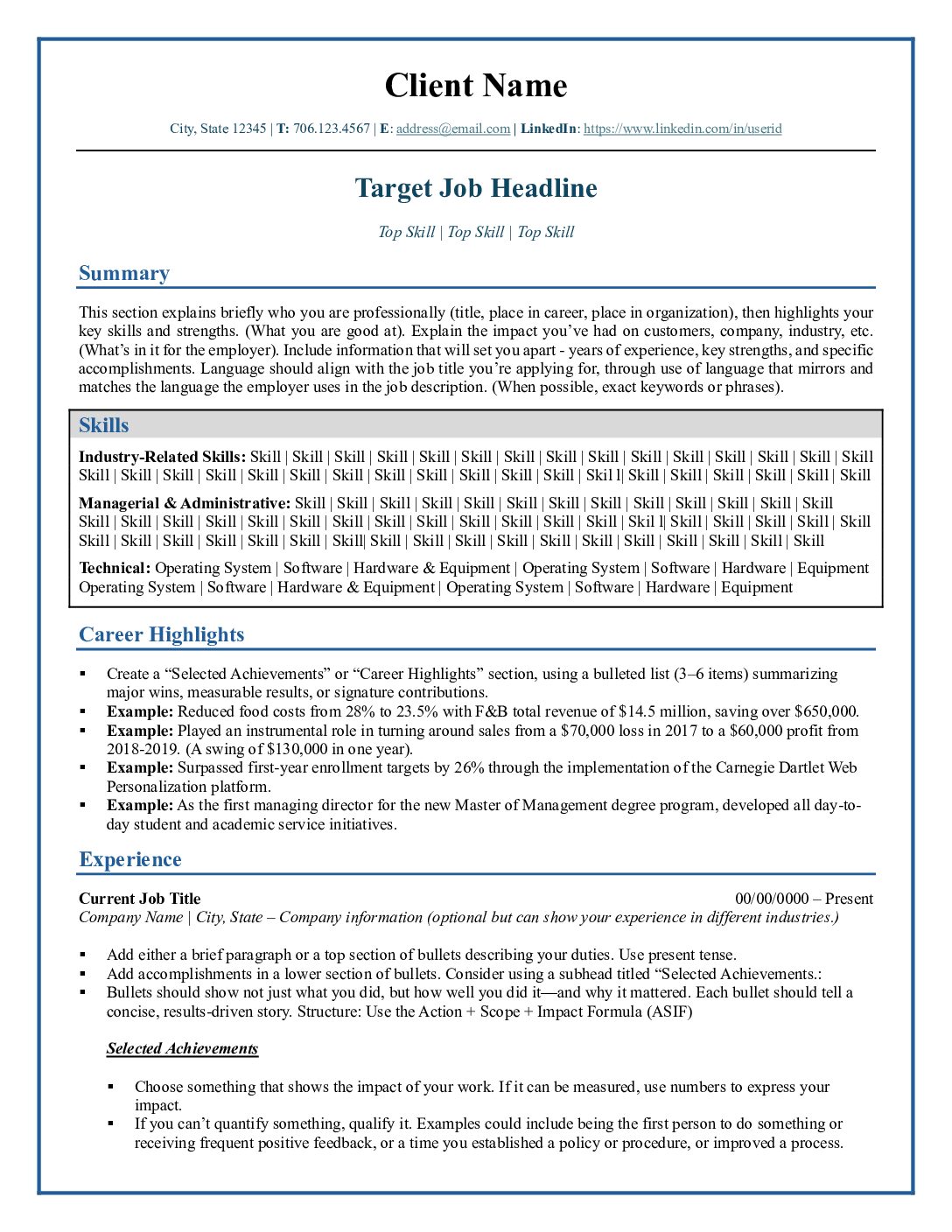
Putting together your résumé can be the most daunting part of a job search. It’s hard to encapsulate your education, skills and experience in just a few pages. There are different formats and styles, and what may be common in one industry may not apply to another.
You’ll get all sorts of advice from well-intentioned people. Some of it will be good, and some of it will stink. At times, it will be hard to filter through that advice and separate the wheat from the chaff.
That’s why I decided to take some of my best advice on putting together a résumé and put it into an e-book format. I know the struggle and I have worked many years to develop an approach that works for me and for my clients.
I used to thought-wrestle whenever I needed to update my résumé. I didn’t know where to start. I didn’t know what information to include, or to highlight. I loved designing the actual layout but at times, went overboard. I changed the format. I changed the font. I changed this, I changed that. And I did most of the changes based on “gut feelings” and personal preferences. I didn’t always have a rhyme or reason for my edits. But that is what happens when you don’t think through the process strategically.
But I was lucky, in that I encountered someone who helped me see the light, and to shift my thinking about the role that a résumé plays in the hiring process. I was working on my résumé and she asked me all sorts of questions about what kind of job I had, what I did in that job and what I accomplished. She asked me about my accomplishments, and about what made me unique, in comparison to other candidates. It was a nice conversation. In fact, that was all thought it was.
Then she said “Okay, let me see your résumé” and I realized what was going really going on. She said “Sean, you did a great job over the last few minutes telling me what you did, how you did it, what you accomplished, and why you are unique. but I don’t really see it on this résumé.“ [Emphasis added.]
She talked to me about conveying transferable skills, accomplishments, unique skills, scope of responsibility and motivation. And she gave me some great simple tips on how to get these things out of my head and onto the paper. This conversation shifted my thinking forever, and was actually the moment my enthusiasm for résumés and career coaching started. I made edits to the résumé, and a short time later, I had five interviews lined up, including the one which resulted in my first job at Penn State. After that, helping students and young professionals became my hobby. I spent a lot of time studying résumés, volunteering for screening committees, interviewing candidates and helping people with their résumés, cover letters and graduate school essays. After 15 years, I decided to try and make it my career.
This guide will not give you all the answers, but it will give you some different ways to think about your résumé, some practical ways to discover what employers are looking for, and some tips on how to make sure they find it in your résumé.
The truth is that you have most of the information you need to put together a great résumé. After all, it’s a representation of who you are as a professional, and you know yourself better than anybody.
But…
You have to get inside the résumé reviewer’s head.
You have to read your materials through the reviewer’s eyes.
And you have to capture and keep the reviewer’s attention.
A Winning Plan
This 7-point plan is geared toward helping you think differently about your résumé: to think like the résumé reviewer, instead of a job-seeker. To understand what knowledge and key skills you need, what experiences to highlight, and what roles to explain. The result, hopefully, will be a shift from guesswork to discovery, and from the loose and theoretical to the concrete and practical. In the end, you will have a résumé that speaks for you, stands out from the competition, and scores you the interviews you need, to get the job that you want.
Look for more information about this e-book next week.
Motivation is sometimes hard to come by, but it’s essential to keeping forward momentum in your career.
If anyone knows this, it’s online marketing strategist Tommy Walker, who went from being fired over pair of pants 3 years ago to writing a magnum-opus guest post “106 Excuses That Prevent You From Ever Being Great” on Chris Brogan’s web site. Brogan, known for almost never accepting guest posts, took a chance on Walker’s piece, and in the process threw any editorial guidelines he might have had out the window, posting all 7,000+ words of it.
The response the post received so far has been phenomenal, with 329 retweets and 1,260 likes on Facebook as this is being written. We’ll talk to Walker about his journey from fired cell phone salesman to successful online marketing strategist and guest blogger, and get tips for knocking down excuses and staying motivated.
This segment was pre-recorded, and will air Friday, October 28, 2011 at 11:00 a.m. ET. To listen, follow this link or use the player in the right sidebar.
Work with Sean. I help higher ed professionals take control of their careers with tailored services including resume and CV development, LinkedIn profile optimization and networking strategy, interview coaching, and one-on-one career guidance.



 I’ll make this post short