by sean@higheredcareercoach.com | Jan 28, 2013 | Job Search, Resumes and CVs
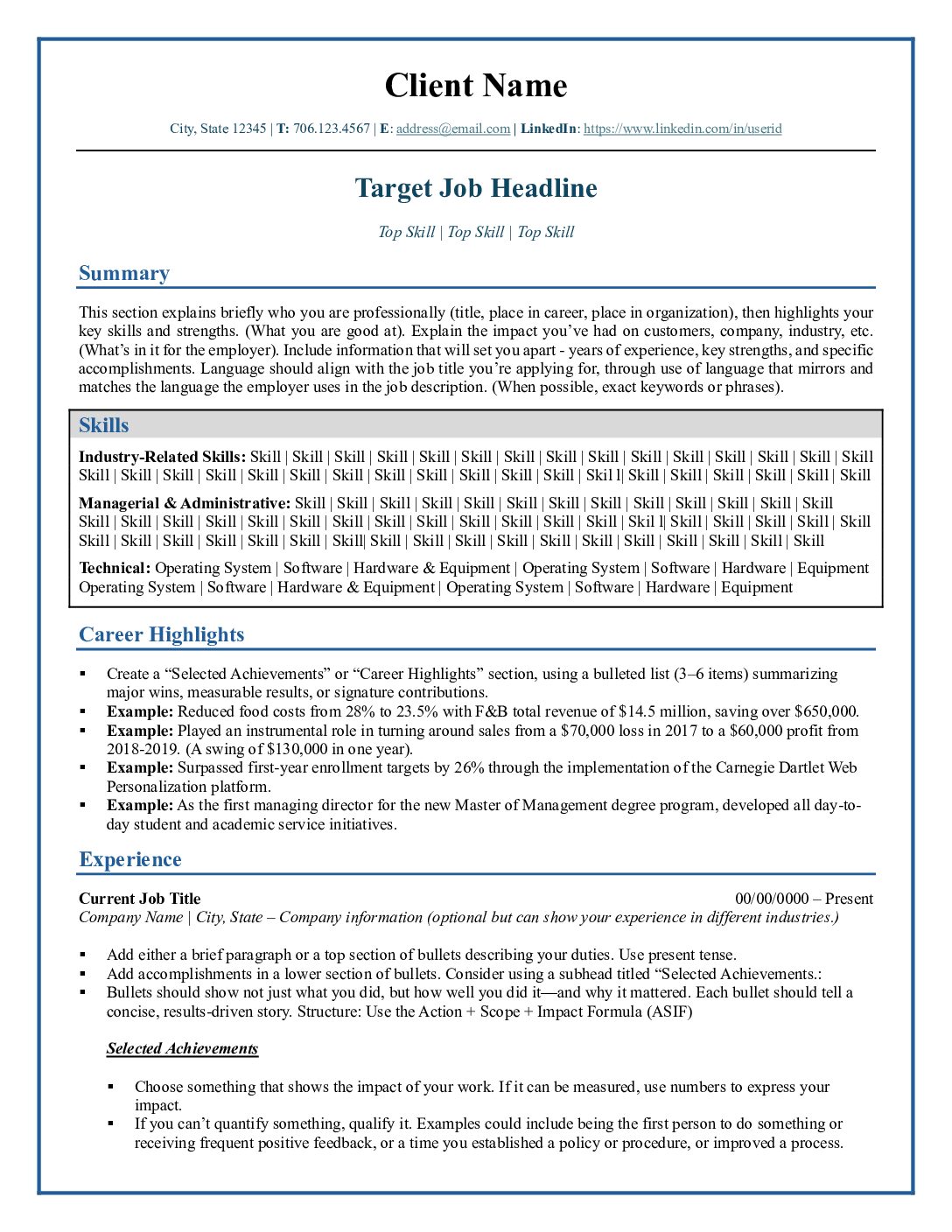
Think of your resume as a ticket. It gets you in the door. That’s it.
A good resume captures and keeps the attention of the person reading it, and creates in that person a desire to know more about you. Hopefully, that desire will lead the reader to seek out more information about you and to put your candidacy into context. This could mean that the reader goes on to read your cover letter. It could mean that you get invited to interview for the position. But it’s not likely that someone will just read your resume and offer you a job.
Resumes are used by employers for screening candidates, but interviews are used for selecting the best qualified person for the job.
If you’ve never been on the hiring side of the table, the screening process may be foreign to you. So let’s dive into that part of the process and try to understand it.
The Screening Process
Screening can happen in many different ways.
- A single person might do it.
- A committee might do it.
- Sometimes, a machine might do it. (Initially.)
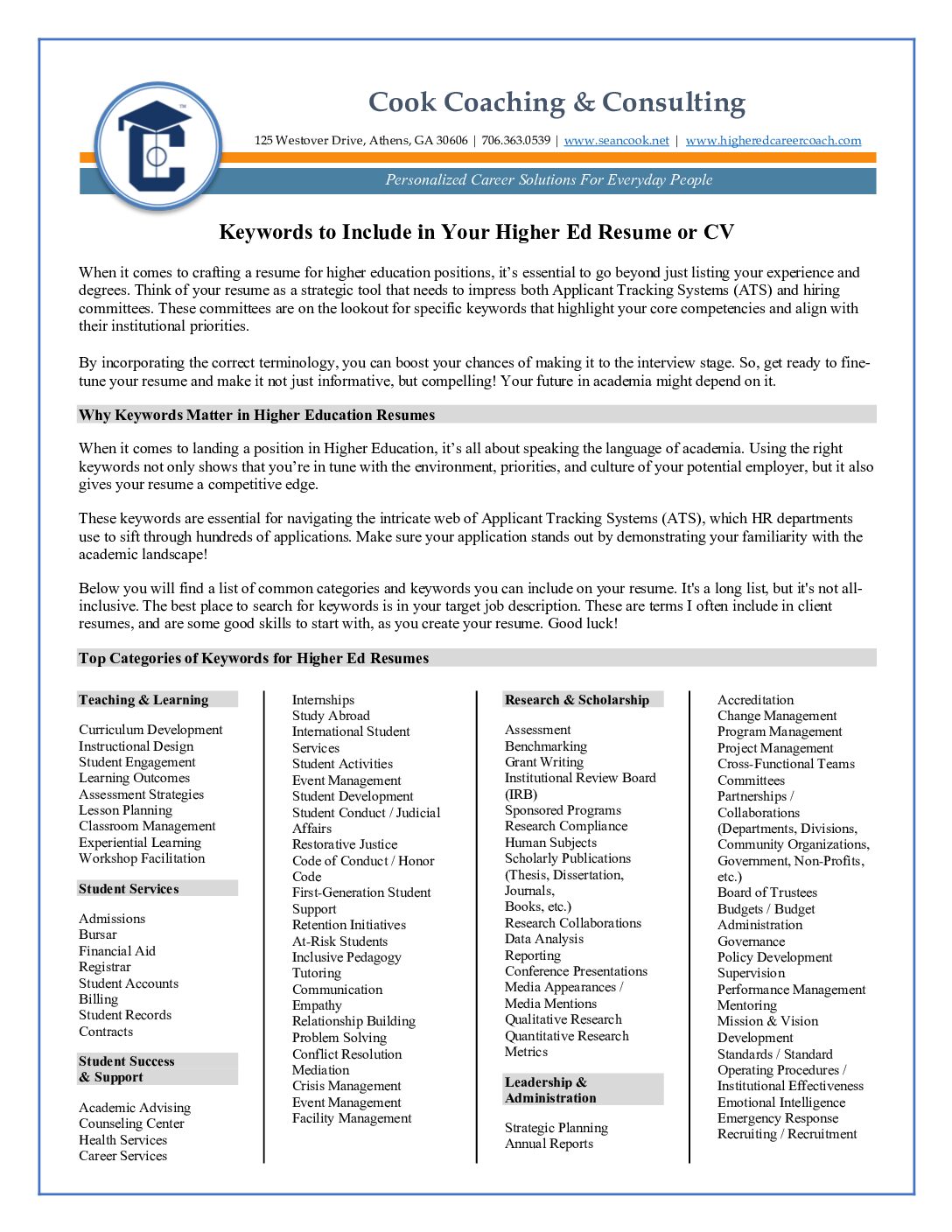
But let’s not confuse the issue. They are all looking for the same things. You might call them keywords or key concepts or key phrases, but essentially they are the same thing.
A keyword is not the same thing, necessarily, as a “buzzword.” It can be, but it really depends. Many job seekers spend time consulting websites, resume books, and their colleagues and mentors about what the latest hot topics are in their industry. The difference between a “buzzword” and a keyword is this: a “buzzword” is a word that everyone is talking about; it may or may not relate to the position you are applying for; a keyword is a term that relates directly to the specific role to be played, and therefore, is directly relevant.
It’s important to recognize the difference between these two concepts. One (using “buzzwords”) is a cynical ploy that may lack coherence; the other (using keywords) is a smart, strategic move that brings together the aspects of your unique offering, and shows the match between what you offer and the employer’s needs.
I’m often asked by job seekers if I have a great list of keywords for jobs in higher education, and I tell them that I do not have a comprehensive list. In fact, I think it would be a disservice to develop one and put it out there as the end-all, be-all guide. In a later post, I’ll tell you why I feel that way, and give you some practical tips on ways find the best keywords for your target position. But next, we’ll delve further into screening processes, how they work, and how they might break down.
This post is adapted from my e-book “7 Points to a Winning Resume,” which I am adapting into a resume-writing crash course, for those who can’t afford to hire a professional resume writer, or who simply want to write a better resume on their own. Over the next couple of weeks, we’ll delve into resume and CV writing strategies, though additional excerpts from the e-book, and guest posts from professional resume writers and career coaches.

by sean@higheredcareercoach.com | Jan 24, 2013 | Job Search, networking, Social Networking, Take 5
 One aspect of career planning that is sometimes overlooked is the importance of networking, both in the real world and online. Statistically, only a fraction of available higher education positions are publicly advertised, so it is critical to cast a wide net in your job search. Online networking can help job seekers connect to advocates and decision-makers.
Here are some great tips to help you put your name and credentials out there and land the right job!
- Start with those who know you best, but don’t be afraid to branch out. The people who can help you most are those who know you best. Let your friends, family, and professional colleagues know you’re on the hunt. Not only can they provide you with valuable leads, they can introduce you to others and help you expand your network. Online networking is a great way to keep in contact with former coworkers, employers, and classmates, and enlist their assistance.
- Learn to use social media effectively. Social media is a great tool for network building if you learn to use it right. Join professional outlets such as LinkedIn and actively engage other social outlets such as Twitter and Facebook. This is a good way to reach out to other professionals in your industry, reestablish contact with former associates, keep your network informed, and stay current on trends in your industry. It is also a good idea to do routine checks of your online presence. Google yourself on a regular basis to look for inconsistencies and false or unflattering information. Prospective employers are turning to web searches more often to check out job candidates ahead of time. Remember that what you do and say online can come back to haunt you.
- Reciprocity is key. Networking is a give and take relationship, not a one way street. Share ideas and information with your network. Actively engage in forums, blogs, and other online communities. Add benefit to your interactions with others in your network, but do so with sincerity and integrity.
- Narrow your focus and follow up. Know exactly what you’re looking for before you look to your network for help and information. Monitor your social media time as well. Remember that these sites are great online networking tools and don’t get caught up in the social aspect of the medium. While these sites are fun and interesting, they are sometimes also a drain on your time and productivity. Make sure to follow up any leads from your network with diligence. Information is only helpful if you use it, and it helps you to maintain credibility. People are less willing to recommend someone who lacks commitment and follow through.
- Network for the long term. Networking should never considered be a quick solution to job placement, but a means of building ongoing professional relationships.
Online networking isn’t about applying pressure or asking for favors. Networking is an excellent way to make contacts and establish professional relationships that are fulfilling and mutually beneficial. Extending your professional network to cyberspace is an excellent way to expand your contact base beyond your immediate geographic location and increase your exposure in the job market.

by sean@higheredcareercoach.com | Oct 10, 2012 | Career Tracks, Career Transitions, Higher Education, Job Search, Student Affairs
 Like most people who end up working in Student Affairs, I didn’t imagine my career when I was a child. I wasn’t even aware that Student Affairs was a career. And, once I chose it as a career, I realized that many people still think it isn’t one.
Texas A & M’s Department of Educational Administration and Human Resource Development has a great humor page, where I found the Top 10 reasons you became a Student Affairs professional, and I particularly connected with #3 . . .
“You enjoy the challenge of trying to tell people what you do for a living.”
The last time I think my parents really understood what I did for a living, I was a resident assistant. And for many of my friends and acquaintances, that is pretty much what they thought I did, up until I left my last formal position in Student Affairs (Assistant Director of Residence Life at Penn State University.) I was in college for a living, and I settled roommate problems and busted people for drinking. (Which many acquiantainces thought was irony in action, on both counts, but that is a story for another day.)
Academics and “serious” professionals don’t know what to make of us, either. For example, Wikipedia’s current entry for Student Affairs has a section on criticism of the field which reads, in part…
“The field of Student Affairs has been criticized for its emphasis on formal, professional training, calling into question whether the field is theoretical or practical. Complicating this criticism is the question of the role of student development theories in student affairs practice. It is claimed that student development theories are used to “proactively identify and address student needs, design programs, develop policies, and create healthy…environments that encourage positive growth in students.”
“Yet, often student affairs practices often bear little resemblance or connection to student development theories. As Paul Bloland (1979) wrote in an article in the NASPA Journal, “We have cultivated an expertise that was not requested, is not sought out, and for which there is little recognition or demand. Many entry-level and (many) seasoned professionals know little of student development theory and practice and, in fact, do not really need such expertise to meet the role expectations of their supervisors or, in too many instances, their institutions.”
Yet, for almost 20 years now, I have planned my life around the idea that Student Affairs is a career. In 2009, I left a stable job to venture out on my own, and establish a career coaching practice dedicated to helping others pursue their passions for working with students and find their own niche in Student Affairs. My perspective is that Student Affairs is actually a calling, within which you will find many career tracks. And it isn’t for everybody. I actually think it is the responsibility of those in the field to both recruit people with potential, and to “counsel out” out those who don’t have the passion and the fortitude to do the work. It’s no kindness to someone to show only the benefits, and none of the sacrifices, that go along with the profession.
In his song “Mr. Bad Example,” Warren Zevon recalled many career exploits of the song’s protagonist, and like those who work in Student Affairs, the protagonist clearly wore many hats, including the following…
“…worked in hair replacements, swindling the bald, where very few are chosen, and fewer still are called.”
The same could be said about Student Affairs. Very few are chosen, and fewer still are called. And I don’t think that a love of student development theory is required for success. I don’t care much about academics, or about student development theory, but I do know that Student Affairs is a calling, and that you can make a great career in it, if you are passionate about working with young people, and believe that helping people find their way is a worthy pursuit, you may be cut of the right material. But only if you have the strength of will and character to ignore the assaults on your dignity, your professional worth and your profession. They come with this line of work. The only thing that is truly important is that you know who you are and what you are about. If you are meant to serve students, you will. It’s just a matter of time. And in many cases, of strategy. If it’s meant to be, you will find your way. Just know, in the meantime, that many are in your corner, and have been in your place, before you. And we are here to help.
October is Careers in Student Affairs month. In honor of this, I am offering a coaching package for new professionals, to help them get off to a good start. It includes the following:
- A professionally written resume, geared toward your preferred target positions ($85 value)
- LinkedIn C0aching Package (1 hour LinkedIn training, plus profile optimization advice ($50 value)
- Practice interview, by phone or Skype ($85 value)
- One additional coaching session ($85 value)
- Access to an online job search group, with activities, lessons, and a private discussion board): $50 value
Purchased separately, this package would be $355, but this deal gives you nearly 30% off! For only $250, you get all of the above, including 6 months of access to the group, and any additional workshops or activities added to the job search group.
I’m opening this deal up only to new professionals (either those finishing school and looking for their first job, or with less than 5 years of professional experience). Availability is limited, and this special will not be repeated.
Sign up now!
This offer is no longer available.

by sean@higheredcareercoach.com | Oct 5, 2011 | Career Skills
Many professionals start strong but struggle to define themselves when they arrive at the “middle” of their career tracks. Early career moves may have pointed them toward other paths than they imagined, or obstacles may keep them from where they would like to go. This could mean taking on new responsibilities, supervising and mentoring young professionals, pursuing further education, or taking different approaches to your career altogether.
So what can you do when you arrive at the midpoint of your career, to successfully manage career transitions?
We’ll talk about mid-career transitions with Caroline Ceniza-Levine, career expert, writer and speaker, co-founder of SixFigureStart. Caroline has 16 years of experience in professional services as a management consultant and executive and corporate recruiter. She has recruited for leading companies in media, financial services, management consulting, pharmaceuticals and technology. A career columnist for CNBC.com,Vault.com, Wetfeet.com, and Forbes.com, as well as an adjunct assistant professor of Professional Development at Columbia University School of International and Public Affairs, Caroline is the co-author of “Six Steps To Job Search Success” and of the best-selling “How the Fierce Handle Fear: Secrets to Succeeding in Challenging Times” Her career advice and job market insights have been quoted on CBS, BusinessWeek, CNN Money, NBC News.com, Newsweek.
Please join us at 11 am ET Friday!
SixFigureStart offers career coaching by former recruiters. Their coaches have hired thousands of people and know firsthand what employers really want. Founded by two professionals with over 40 years of combined HR experience. More information can be found at the links below.

by sean@higheredcareercoach.com | Jul 20, 2011 | cover letters, Job Search, job search tools, Resumes and CVs
 Cover letters come in all different styles, and it’s not always easy to figure out the best way to outline your arguments for a job and keep the reader interested.
 So it’s not surprising to know that many job-seekers obsess over their cover letters. Others spend more time on the résumé, and barely any time at all on the cover letter. Others skip writing cover letters altogether.
The advice you’ll get on cover letters is likely to be mixed, too. You’re likely to hear any or all of the following:
- Write a new letter for each position and try to show your potential match for a company’s current needs;
- Write a generic letter for each type of position, but worry more about the résumé; and
- Forget about the cover letter–nobody reads them anyway, so you’ll be wasting your time.
Given the different approaches candidates take, and the dubious assertion that you always need to write a cover letter, should you bother to write one? And if you do, what approach should you take?
It’s true that some recruiters are avid cover letter readers, others barely skim them, and some skip them until reviewing the resume. But none of these truths justify leaving a cover letter out of your application materials.
Here are 6 reasons why you should write one anyway:
- You are not a mind reader.* As such, you can’t be sure about the preferences of the person(s) screening the applications. (*apologies if you are indeed, a mind reader!)
- If a committee is handling the screening, people on the committee might have different thoughts on the value of a cover letter. Better to cover your bases.
- The recruiter(s) are not mind readers, either. Cover letters provide context about your education, experience, motivation, and possible fit. Your résumé should include plenty of information about education and experience, but the cover letter lets you tie all the pieces together into a coherent whole. Essentially, the job of the cover letter is to make the screener’s job easier, by helping the reader see how your motivation rounds out your education and experience, and molds you into someone who will fit their needs.
- Not sending in a cover letter will make you look lazy. Basically, it sends the message that the recruiter needs to do the work to figure out why you are interested in a job, and then to sell you on the value of working for their organization. And the recruiter probably has enough work to deal with already.
- The recruiter may interpret the lack of a cover letter as an indication that you are desperately applying for anything and everything, and that you haven’t really taken the time to determine why you are interested in the specific position.
- Some recruiters will consider your application incomplete and remove you from further consideration.
What do you think about cover letters? Do you write them for any of the jobs you apply for? Why or why not? Please share your thoughts in the comments.